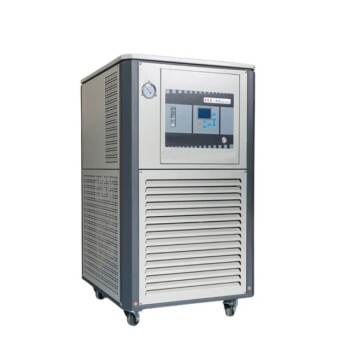
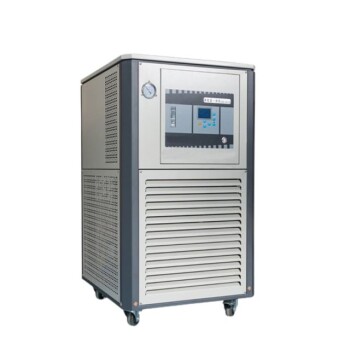
A high-pressure hydrothermal reactor is the fundamental tool for this synthesis because it creates a unique thermodynamic environment—specifically a sealed system at 200 °C—that standard open-vessel heating cannot achieve. This environment forces a solution of copper nitrate and silica to undergo heterogeneous nucleation, causing copper oxide (CuO) to grow directly onto the silica surface rather than precipitating freely in the liquid.
The reactor's high-pressure conditions significantly enhance reactant solubility and drive the formation of complex micro/nano-hierarchical structures. This precise structural growth provides the necessary geometric roughness required to achieve superhydrophobic properties in the final core-shell particles.
Creating the Critical Reaction Environment
The Necessity of Sealed Conditions
To synthesize SiO2@CuO structures effectively, the reaction mixture must be maintained at 200 °C.
In an open vessel, water would boil off at 100 °C; the high-pressure reactor seals the system, allowing water to remain liquid at much higher temperatures. This creates a subcritical environment where the solvent properties of water change, facilitating reactions that are impossible at standard atmospheric pressure.
Enhancing Solubility and Reactivity
The high pressure and temperature within the reactor drastically increase the solubility of the metal salts (copper nitrate) and organic additives.
By increasing the ion product of water and its density, the reactor transforms the water into a highly effective medium for ion transfer. This ensures that the reactants are fully dissolved and highly reactive, promoting a uniform coating process.
Mechanisms of Core-Shell Formation
Driving Heterogeneous Nucleation
The core function of the reactor in this context is to control where the copper oxide forms.
The specific thermodynamic conditions favor heterogeneous nucleation, meaning the CuO nanocrystals preferentially originate on the existing silica spheres rather than forming new, separate particles. This ensures the copper oxide acts as a shell wrapping the silica core.
Developing Hierarchical Structures
The synthesis of SiO2@CuO is not just about coating; it is about texture.
The hydrothermal environment facilitates the growth of CuO in a specific micro/nano-hierarchical pattern. This multi-scale roughness is the "geometric foundation" mentioned in technical literature that enables the material to repel water (superhydrophobicity) in subsequent applications.
Ensuring Tight Physical Contact
Unlike simple physical mixing, the hydrothermal process forces a chemical integration between the core and the shell.
The high-energy environment promotes tight physical and chemical contact between the silica substrate and the growing copper oxide. This adhesion is critical for the mechanical durability of the core-shell structure.
Understanding the Trade-offs
Batch Process Limitations
High-pressure hydrothermal reactors typically operate as batch systems.
While they offer superior control over crystal growth and phase composition, they generally have lower throughput compared to continuous flow processes. Scaling up production requires larger, more expensive vessels or multiple parallel reactors.
Safety and Operational Complexity
Operating at 200 °C under high pressure introduces safety considerations that absent in low-temperature synthesis.
The equipment requires robust sealing mechanisms and precise temperature control systems to prevent over-pressurization. This adds complexity to the experimental setup and requires stricter safety protocols.
Making the Right Choice for Your Goal
- If your primary focus is Superhydrophobicity: Use this reactor to ensure the formation of the specific micro/nano-hierarchical textures required for extreme water repellency.
- If your primary focus is Coating Adhesion: Rely on this method to generate the high reactivity needed for tight physical and chemical bonding between the silica core and the CuO shell.
- If your primary focus is Reproducibility: Utilize the closed system to maintain precise control over phase composition and prevent external contamination.
The high-pressure hydrothermal reactor is not merely a heating vessel; it is a precision instrument that engineers the surface geometry required for advanced material performance.
Summary Table:
| Feature | Hydrothermal Reactor Benefit |
|---|---|
| Temperature Control | Maintains liquid water at 200 °C (Subcritical) |
| Nucleation Type | Favors Heterogeneous Nucleation on Silica surfaces |
| Structural Growth | Creates micro/nano-hierarchical textures |
| Material Adhesion | High-energy environment ensures tight shell-core bonding |
| Primary Application | Synthesis of superhydrophobic materials |
Elevate Your Material Synthesis with KINTEK
Precision is critical when engineering complex core-shell structures like SiO2@CuO. KINTEK specializes in high-performance laboratory equipment, offering a premium range of high-temperature high-pressure reactors and autoclaves designed to meet the rigorous demands of subcritical hydrothermal synthesis.
Our solutions provide the stable thermodynamic environments necessary for superior coating adhesion and hierarchical texture development. Beyond reactors, KINTEK supports your entire research workflow with muffle furnaces, crushing systems, and specialized consumables like PTFE and ceramics.
Ready to achieve exceptional reproducibility in your lab? Contact us today to find the perfect reactor for your research!
References
- Zhongmin Wang, Jiacheng Li. Synthesis and Characterization of Superhydrophobic Epoxy Resin Coating with SiO2@CuO/HDTMS for Enhanced Self-Cleaning, Photocatalytic, and Corrosion-Resistant Properties. DOI: 10.3390/ma17081849
This article is also based on technical information from Kintek Solution Knowledge Base .
Related Products
- Customizable Laboratory High Temperature High Pressure Reactors for Diverse Scientific Applications
- High Pressure Laboratory Autoclave Reactor for Hydrothermal Synthesis
- Customizable High Pressure Reactors for Advanced Scientific and Industrial Applications
- Stainless High Pressure Autoclave Reactor Laboratory Pressure Reactor
- Mini SS High Pressure Autoclave Reactor for Laboratory Use
People Also Ask
- How do high-pressure and high-temperature reactors ensure the effective treatment of lignocellulosic wastewater in WAO?
- What equipment is required for high-pressure high-temperature reactions? Master Extreme Chemistry Safely
- How do you control high pressure in a reactor? A Guide to Safe & Stable Operation
- Why is argon better than nitrogen for inert atmosphere? Ensure Absolute Reactivity & Stability
- How does initial oxygen pressure affect the wet oxidation of pharmaceutical sludge? Master Your Oxidation Depth