Knowledge high pressure reactor Why is a high-pressure reactor with a PTFE liner required for NiCo-LDH synthesis? Ensure Purity & Precise Growth
Author avatar

Tech Team · Kintek Solution

Updated 2 weeks ago

Why is a high-pressure reactor with a PTFE liner required for NiCo-LDH synthesis? Ensure Purity & Precise Growth


A high-pressure reactor with a PTFE liner is essential for NiCo-LDH synthesis because it facilitates a controlled hydrothermal environment for uniform crystal growth while preventing metallic contamination. This setup enables the necessary temperature range of 120°C to 160°C and high internal pressures required to promote the nucleation of nickel and cobalt ions into a precise layered structure.

The combination of a high-pressure reactor and a PTFE liner solves the dual challenge of providing the energy required for LDH crystallization while maintaining a chemically ultrapure environment. It ensures the resulting NiCo-LDH precursors possess the high crystallinity and structural purity needed for advanced applications.

Creating the Hydrothermal Environment

Driving Nucleation and Growth

The synthesis of NiCo-layered double hydroxides requires a hydrothermal environment where temperatures exceed the boiling point of the solvent. This elevated temperature (typically 120°C–160°C) provides the thermal energy necessary for metal precursors to achieve uniform nucleation.

Control of Nanosheet Morphology

High pressure within the sealed vessel increases the solubility of reactants and accelerates the crystal growth process. This specific environment is critical for the formation of vertically grown, well-aligned nanosheet array structures, which are characteristic of high-performance LDH materials.

The Role of Chemical Inertness

Preventing Metallic Contamination

Standard stainless steel reactors are susceptible to leaching when exposed to the strong electrolytes and metal salts used in LDH synthesis. The PTFE (polytetrafluoroethylene) liner acts as a chemically inert barrier, ensuring that no iron, chromium, or nickel ions from the reactor body leach into the solution.

Ensuring Structural Purity

By isolating the reaction liquid from the metallic walls, the PTFE liner maintains the purity of the LDH structure. Any introduction of external metal impurities would interfere with the specific nickel-to-cobalt ratios and degrade the electrochemical properties of the synthesized precursor.

Structural Safety and Integrity

Sustaining High Pressure

While PTFE provides chemical resistance, it lacks the mechanical strength to withstand high internal pressures on its own. The external stainless steel shell of the reactor provides the necessary structural support to safely contain the pressure generated during the hydrothermal process.

Thermal Stability and Heat Transfer

The system is designed to maintain a constant temperature for the duration of the synthesis, which can last several hours. This stability allows the oligomer droplets and metal ions to harden and take shape into uniform nanospheres or sheets without fluctuations that could cause structural defects.

Understanding the Trade-offs

Temperature Limitations

While PTFE is exceptionally inert, it has a functional temperature limit, usually around 250°C, though most hydrothermal reactors are rated lower (200°C) for safety. Exceeding these temperatures can lead to the "creeping" or deformation of the liner, compromising the seal.

Thermal Expansion and Sealing

PTFE has a high coefficient of thermal expansion, meaning it expands significantly more than the stainless steel shell when heated. If the reactor is not designed with appropriate tolerances, this expansion can make the liner difficult to remove or, conversely, cause leaks if the cooling process is too rapid.

How to Apply This to Your Project

Selecting and Maintaining Your Reactor

When utilizing high-pressure reactors for NiCo-LDH synthesis, your choice of equipment should align with your specific material requirements and safety protocols.

  • If your primary focus is maximum structural purity: Ensure the PTFE liner is replaced if it shows any signs of discoloration or pitting, as trapped residues can cross-contaminate future batches.
  • If your primary focus is morphological uniformity: Prioritize reactors with precise temperature control systems, as even minor fluctuations during the 120°C–160°C window can lead to inconsistent nanosheet sizes.
  • If your primary focus is safety and longevity: Never exceed the pressure or temperature ratings engraved on the stainless steel shell, and allow the reactor to cool naturally to room temperature to prevent liner deformation.

Choosing a PTFE-lined high-pressure reactor is a foundational step in ensuring that your NiCo-LDH precursors are synthesized with the crystalline precision and chemical purity required for rigorous technical applications.

Summary Table:

Feature Benefit Role in NiCo-LDH Synthesis
High Pressure Increases reactant solubility Drives nucleation and nanosheet morphology
PTFE Liner Chemical inertness Prevents metallic leaching and ensures purity
SS Shell Mechanical strength Safely contains high-pressure hydrothermal reactions
Controlled Heat Precise thermal energy Promotes uniform crystal growth (120°C-160°C)

Elevate Your Material Synthesis with KINTEK

Achieving high-performance NiCo-LDH precursors requires equipment that balances chemical purity with mechanical resilience. KINTEK specializes in high-quality laboratory solutions, offering a robust selection of high-temperature high-pressure reactors and autoclaves specifically designed for demanding hydrothermal applications.

Beyond reactors, our comprehensive portfolio includes muffle and vacuum furnaces, crushing systems, and hydraulic presses to support your entire research workflow. Whether you are a researcher or a lab manager, KINTEK provides the reliability and precision your advanced materials deserve.

Ready to optimize your lab's performance? Contact us today to find the perfect equipment for your specific synthesis needs!

References

  1. Shenglu Song, Guangjie Shao. Hierarchical Design of Homologous NiCoP/NF from Layered Double Hydroxides as a Long-Term Stable Electrocatalyst for Hydrogen Evolution. DOI: 10.3390/catal13091232

This article is also based on technical information from Kintek Solution Knowledge Base .

Related Products

People Also Ask

Related Products

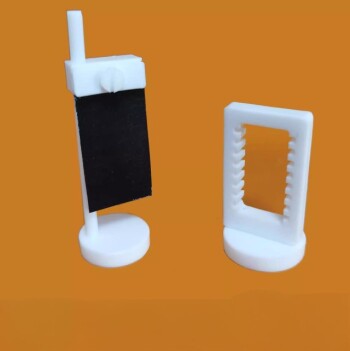
Custom PTFE Teflon Parts Manufacturer for Hydrothermal Synthesis Reactor Polytetrafluoroethylene Carbon Paper and Carbon Cloth Nano-growth

Custom PTFE Teflon Parts Manufacturer for Hydrothermal Synthesis Reactor Polytetrafluoroethylene Carbon Paper and Carbon Cloth Nano-growth

Acid and alkali resistant polytetrafluoroethylene experimental fixtures meet different requirements. The material is made of brand new polytetrafluoroethylene material, which has excellent chemical stability, corrosion resistance, airtightness, high lubricity and non-stickiness, electrical corrosion and good anti-aging ability, and can work for a long time at temperatures from -180℃ to +250℃.

Stainless High Pressure Autoclave Reactor Laboratory Pressure Reactor

Stainless High Pressure Autoclave Reactor Laboratory Pressure Reactor

Discover the versatility of Stainless High Pressure Reactor - a safe and reliable solution for direct and indirect heating. Built with stainless steel, it can withstand high temperatures and pressures. Learn more now.

High Pressure Laboratory Autoclave Reactor for Hydrothermal Synthesis

High Pressure Laboratory Autoclave Reactor for Hydrothermal Synthesis

Discover the applications of Hydrothermal Synthesis Reactor - a small, corrosion-resistant reactor for chemical labs. Achieve rapid digestion of insoluble substances in a safe and reliable way. Learn more now.

Customizable High Pressure Reactors for Advanced Scientific and Industrial Applications

Customizable High Pressure Reactors for Advanced Scientific and Industrial Applications

This laboratory-scale high-pressure reactor is a high-performance autoclave engineered for precision and safety in demanding research and development environments.

Custom PTFE Teflon Parts Manufacturer for Microwave Digestion Tank

Custom PTFE Teflon Parts Manufacturer for Microwave Digestion Tank

PTFE digestion tanks are renowned for their exceptional chemical resistance, high-temperature stability, and non-stick properties. These tanks are ideal for harsh laboratory environments, Their low coefficient of friction and inert nature prevent chemical interactions, ensuring purity in experimental results.

Mini SS High Pressure Autoclave Reactor for Laboratory Use

Mini SS High Pressure Autoclave Reactor for Laboratory Use

Mini SS High Pressure Reactor - Ideal for medicine, chemical, and scientific research industries. Programmed heating temp and stirring speed, up to 22Mpa pressure.

Customizable Laboratory High Temperature High Pressure Reactors for Diverse Scientific Applications

Customizable Laboratory High Temperature High Pressure Reactors for Diverse Scientific Applications

High-pressure lab reactor for precise hydrothermal synthesis. Durable SU304L/316L, PTFE liner, PID control. Customizable volume & materials. Contact us!

Visual High-Pressure Reactor for In-Situ Observation

Visual High-Pressure Reactor for In-Situ Observation

The visual high-pressure reactor uses transparent sapphire or quartz glass, maintaining high strength and optical clarity under extreme conditions for real-time reaction observation.

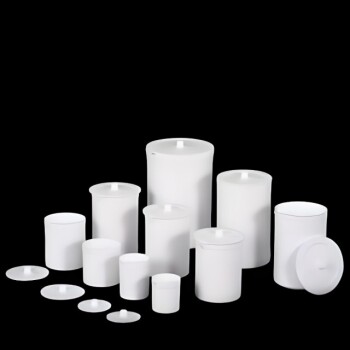
Custom Machined and Molded PTFE Teflon Parts Manufacturer with PTFE Crucible and Lid

Custom Machined and Molded PTFE Teflon Parts Manufacturer with PTFE Crucible and Lid

PTFE crucibles, made from pure Teflon, offer chemical inertness and resistance from -196°C to 280°C, ensuring compatibility with a wide range of temperatures and chemicals. These crucibles feature machine-finished surfaces for easy cleaning and prevention of contamination, making them ideal for precise laboratory applications.

Custom PTFE Teflon Parts Manufacturer for Reagent Wide Mouth Fine Mouth Sample High Temperature Bottles

Custom PTFE Teflon Parts Manufacturer for Reagent Wide Mouth Fine Mouth Sample High Temperature Bottles

The PTFE Reagent Bottle, also known as PTFE Chemical Bottles or Teflon Reagent Bottle, is a robust alternative to traditional glass reagent bottles. These bottles are highly resistant to both acids and alkalis, featuring a leak-proof screw cap. Ideal for laboratory use, they offer excellent chemical resistance, high temperature capabilities up to 260°C, and superior durability.

Custom PTFE Teflon Parts Manufacturer Laboratory High Temperature Mixing Paddle Mixer

Custom PTFE Teflon Parts Manufacturer Laboratory High Temperature Mixing Paddle Mixer

The PTFE mixing paddle mixer is a versatile and robust tool designed for laboratory use, particularly in environments requiring high resistance to chemicals and extreme temperatures. Crafted from high-quality PTFE, this mixer boasts several key features that enhance its functionality and durability.

Laboratory High Pressure Vacuum Tube Furnace

Laboratory High Pressure Vacuum Tube Furnace

KT-PTF High Pressure Tube Furnace: Compact split tube furnace with strong positive pressure resistance. Working temp up to 1100°C and pressure up to 15Mpa. Also works under controller atmosphere or high vacuum.

Custom PTFE Teflon Parts Manufacturer PTFE Beaker and Lids

Custom PTFE Teflon Parts Manufacturer PTFE Beaker and Lids

The PTFE beaker is a laboratory container that is resistant to acid, alkali, high and low temperatures and is suitable for temperatures ranging from -200ºC to +250ºC. This beaker has excellent chemical stability and is widely used for heat treatment samples and volume analysis.

Automatic High Temperature Heated Hydraulic Press Machine with Heated Plates for Lab

Automatic High Temperature Heated Hydraulic Press Machine with Heated Plates for Lab

The High Temperature Hot Press is a machine specifically designed for pressing, sintering and processing materials in a high temperature environment. It is capable of operating in the range of hundreds of degrees Celsius to thousands of degrees Celsius for a variety of high temperature process requirements.

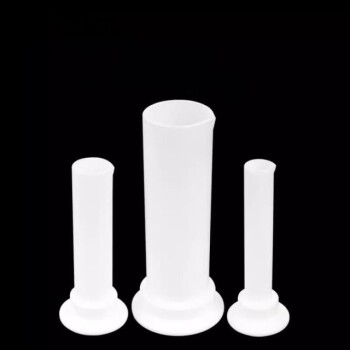
Custom PTFE Teflon Parts Manufacturer for PTFE Measuring Cylinder 10/50/100ml

Custom PTFE Teflon Parts Manufacturer for PTFE Measuring Cylinder 10/50/100ml

PTFE measuring cylinder are a rugged alternative to traditional glass cylinders. They are chemically inert over a wide temperature range (up to 260º C), have excellent corrosion resistance and maintain a low coefficient of friction, ensuring ease of use and cleaning.

Custom PTFE Teflon Parts Manufacturer F4 Conical Flask Triangular Flask 50 100 250ml

Custom PTFE Teflon Parts Manufacturer F4 Conical Flask Triangular Flask 50 100 250ml

The PTFE triangular flask, also known as a Teflon reagent bottle, is a robust, chemical-resistant alternative to traditional glass bottles, suitable for handling both acids and alkalis. These bottles are unbreakable, lightweight, and feature a leak-proof screw cap, making them ideal for laboratory use.

Manual High Temperature Heated Hydraulic Press Machine with Heated Plates for Lab

Manual High Temperature Heated Hydraulic Press Machine with Heated Plates for Lab

The High Temperature Hot Press is a machine specifically designed for pressing, sintering and processing materials in a high temperature environment. It is capable of operating in the range of hundreds of degrees Celsius to thousands of degrees Celsius for a variety of high temperature process requirements.

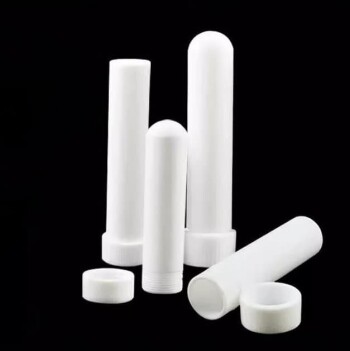
Custom PTFE Teflon Parts Manufacturer for Centrifuge Tubes

Custom PTFE Teflon Parts Manufacturer for Centrifuge Tubes

PTFE centrifugal tubes are highly valued for their exceptional chemical resistance, thermal stability, and non-stick properties, making them indispensable in various high-demand sectors. These tubes are particularly useful in environments where exposure to corrosive substances, high temperatures, or stringent cleanliness requirements are prevalent.

Custom PTFE Teflon Parts Manufacturer for PTFE Containers

Custom PTFE Teflon Parts Manufacturer for PTFE Containers

PTFE container is a container with excellent corrosion resistance and chemical inertness.

PTFE Electrolytic Cell Electrochemical Cell Corrosion-Resistant Sealed and Non-Sealed

PTFE Electrolytic Cell Electrochemical Cell Corrosion-Resistant Sealed and Non-Sealed

Choose our PTFE Electrolytic Cell for reliable, corrosion-resistant performance. Customize specifications with optional sealing. Explore now.


Leave Your Message