Knowledge high pressure reactor Why is a high-pressure reactor with a PTFE liner used in corn stalk liquefaction? Ensure Purity & Longevity
Author avatar

Tech Team · Kintek Solution

Updated 1 month ago

Why is a high-pressure reactor with a PTFE liner used in corn stalk liquefaction? Ensure Purity & Longevity


The use of a high-pressure reactor with a PTFE liner is essential for corn stalk liquefaction because it creates a stable, sealed environment capable of withstanding the intense heat and pressure required for the chemical breakdown of biomass. This specific configuration utilizes the chemical inertness of PTFE to shield the reactor from corrosive acidic catalysts like HEDP, preventing equipment failure and ensuring the purity of the final polyol product.

The PTFE-lined reactor solves the dual challenge of mechanical stress and chemical aggression. While the outer metal shell provides the structural integrity to contain high pressure, the internal liner acts as an impenetrable barrier against corrosive catalysts and prevents metal ion contamination from leaching into the reaction.

Maintaining the Reaction Environment

High-Temperature and Pressure Stability

Corn stalk liquefaction requires a high-pressure solvothermal environment to facilitate the efficient separation and structural deconstruction of lignocellulosic components. The reactor is designed to maintain a constant high temperature—often reaching up to 210°C—while containing the resulting water vapor pressure.

Ensuring Process Safety

The outer stainless steel vessel provides the mechanical strength necessary to handle the internal forces generated during the reaction. Without this high-pressure containment, the volatile environment required for polyol liquefaction could not be safely maintained, leading to process instability or equipment failure.

Chemical Protection and Longevity

Resistance to Corrosive Catalysts

The liquefaction process often employs aggressive acidic catalysts, such as 1-Hydroxyethylidene-1,1-diphosphonic acid (HEDP) or ferric chloride ($FeCl_3$). These substances are highly corrosive to standard metal reactor walls; the PTFE liner provides the necessary chemical stability to resist this attack.

Preventing Metal Ion Leaching

If the reaction solution were to contact the metal reactor shell directly, metal ions would leach into the mixture. The PTFE liner acts as an inert barrier, ensuring that no metal impurities contaminate the resulting liquid, which is critical for maintaining the chemical purity of the synthesized products.

Extending Equipment Service Life

By isolating the corrosive media from the stainless steel body, the liner prevents the pitting and structural thinning of the reactor shell. This protective layer significantly extends the service life of the expensive high-pressure equipment, making the liquefaction process more economically viable.

Understanding the Trade-offs

Thermal Limitations of PTFE

While PTFE is highly resistant to chemicals, it has a functional temperature limit, typically around 250°C. In corn stalk liquefaction, operators must carefully monitor temperatures to ensure they do not exceed the liner's threshold, as overheating can cause the PTFE to soften or deform.

Mechanical Creep and Sealing

Under sustained high pressure and temperature, PTFE can experience "creep" or cold flow, where the material slowly deforms. This requires specialized reactor designs to ensure the sealing performance remains airtight throughout the entire hydrothermal reaction cycle.

Applying This to Your Process

Choosing the right reactor configuration depends on your specific chemical environment and purity requirements.

  • If your primary focus is equipment longevity: Invest in high-quality PTFE liners to prevent acid-induced corrosion of the stainless steel outer shell.
  • If your primary focus is product purity: Utilize the PTFE liner specifically to stop metal ion leaching, which is essential for high-performance chemical synthesis.
  • If your primary focus is high-temperature processing: Ensure your process remains below 250°C, as exceeding this limit will compromise the structural integrity of the PTFE liner.

By matching the chemical inertness of PTFE with the mechanical strength of a high-pressure vessel, you ensure a safe, pure, and repeatable liquefaction process.

Summary Table:

Feature Benefit for Corn Stalk Liquefaction
PTFE Chemical Inertness Resists aggressive acidic catalysts like HEDP, preventing reactor corrosion.
High-Pressure Shell Safely contains the intense hydrothermal environment (up to 210°C).
Inert Barrier Prevents metal ion leaching, ensuring the purity of the final polyol product.
Durable Design Extends equipment service life by protecting the outer vessel from pitting.

Optimize Your Biomass Research with KINTEK

Whether you are performing corn stalk liquefaction or complex chemical synthesis, KINTEK provides the precision-engineered equipment you need to succeed. Our high-temperature high-pressure reactors and autoclaves are designed to withstand the most demanding hydrothermal environments while ensuring maximum sample purity.

Why Choose KINTEK?

  • Superior Corrosion Protection: High-quality PTFE liners protect your investment from aggressive chemical catalysts.
  • Expertly Crafted Solutions: Our portfolio includes everything from CVD/PECVD furnaces and hydraulic presses to electrolytic cells and cooling solutions.
  • Reliable Performance: Achieve repeatable results with laboratory equipment built for durability and safety.

Contact KINTEK today to find the perfect high-pressure reactor for your lab and enhance your process efficiency!

References

  1. Mu Li, Pengfei Liu. Preparation and Characterization of Corn Straw-Based Graphitized Carbon with Ferric Acetylacetonate as Catalyst. DOI: 10.3390/pr11102884

This article is also based on technical information from Kintek Solution Knowledge Base .

Related Products

People Also Ask

Related Products

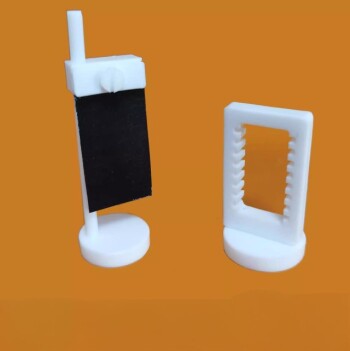
Custom PTFE Teflon Parts Manufacturer for Hydrothermal Synthesis Reactor Polytetrafluoroethylene Carbon Paper and Carbon Cloth Nano-growth

Custom PTFE Teflon Parts Manufacturer for Hydrothermal Synthesis Reactor Polytetrafluoroethylene Carbon Paper and Carbon Cloth Nano-growth

Acid and alkali resistant polytetrafluoroethylene experimental fixtures meet different requirements. The material is made of brand new polytetrafluoroethylene material, which has excellent chemical stability, corrosion resistance, airtightness, high lubricity and non-stickiness, electrical corrosion and good anti-aging ability, and can work for a long time at temperatures from -180℃ to +250℃.

Stainless High Pressure Autoclave Reactor Laboratory Pressure Reactor

Stainless High Pressure Autoclave Reactor Laboratory Pressure Reactor

Discover the versatility of Stainless High Pressure Reactor - a safe and reliable solution for direct and indirect heating. Built with stainless steel, it can withstand high temperatures and pressures. Learn more now.

High Pressure Laboratory Autoclave Reactor for Hydrothermal Synthesis

High Pressure Laboratory Autoclave Reactor for Hydrothermal Synthesis

Discover the applications of Hydrothermal Synthesis Reactor - a small, corrosion-resistant reactor for chemical labs. Achieve rapid digestion of insoluble substances in a safe and reliable way. Learn more now.

Customizable High Pressure Reactors for Advanced Scientific and Industrial Applications

Customizable High Pressure Reactors for Advanced Scientific and Industrial Applications

This laboratory-scale high-pressure reactor is a high-performance autoclave engineered for precision and safety in demanding research and development environments.

Custom PTFE Teflon Parts Manufacturer for Microwave Digestion Tank

Custom PTFE Teflon Parts Manufacturer for Microwave Digestion Tank

PTFE digestion tanks are renowned for their exceptional chemical resistance, high-temperature stability, and non-stick properties. These tanks are ideal for harsh laboratory environments, Their low coefficient of friction and inert nature prevent chemical interactions, ensuring purity in experimental results.

Mini SS High Pressure Autoclave Reactor for Laboratory Use

Mini SS High Pressure Autoclave Reactor for Laboratory Use

Mini SS High Pressure Reactor - Ideal for medicine, chemical, and scientific research industries. Programmed heating temp and stirring speed, up to 22Mpa pressure.

Customizable Laboratory High Temperature High Pressure Reactors for Diverse Scientific Applications

Customizable Laboratory High Temperature High Pressure Reactors for Diverse Scientific Applications

High-pressure lab reactor for precise hydrothermal synthesis. Durable SU304L/316L, PTFE liner, PID control. Customizable volume & materials. Contact us!

Visual High-Pressure Reactor for In-Situ Observation

Visual High-Pressure Reactor for In-Situ Observation

The visual high-pressure reactor uses transparent sapphire or quartz glass, maintaining high strength and optical clarity under extreme conditions for real-time reaction observation.

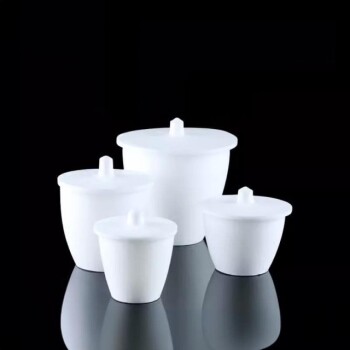
Custom Machined and Molded PTFE Teflon Parts Manufacturer with PTFE Crucible and Lid

Custom Machined and Molded PTFE Teflon Parts Manufacturer with PTFE Crucible and Lid

PTFE crucibles, made from pure Teflon, offer chemical inertness and resistance from -196°C to 280°C, ensuring compatibility with a wide range of temperatures and chemicals. These crucibles feature machine-finished surfaces for easy cleaning and prevention of contamination, making them ideal for precise laboratory applications.

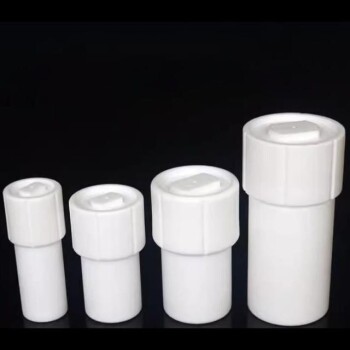
Custom PTFE Teflon Parts Manufacturer for Reagent Wide Mouth Fine Mouth Sample High Temperature Bottles

Custom PTFE Teflon Parts Manufacturer for Reagent Wide Mouth Fine Mouth Sample High Temperature Bottles

The PTFE Reagent Bottle, also known as PTFE Chemical Bottles or Teflon Reagent Bottle, is a robust alternative to traditional glass reagent bottles. These bottles are highly resistant to both acids and alkalis, featuring a leak-proof screw cap. Ideal for laboratory use, they offer excellent chemical resistance, high temperature capabilities up to 260°C, and superior durability.

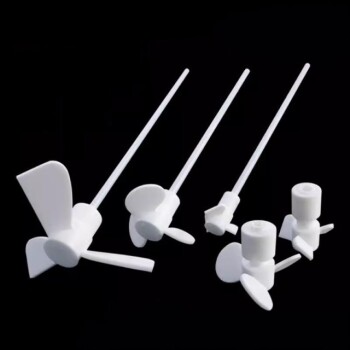
Custom PTFE Teflon Parts Manufacturer Laboratory High Temperature Mixing Paddle Mixer

Custom PTFE Teflon Parts Manufacturer Laboratory High Temperature Mixing Paddle Mixer

The PTFE mixing paddle mixer is a versatile and robust tool designed for laboratory use, particularly in environments requiring high resistance to chemicals and extreme temperatures. Crafted from high-quality PTFE, this mixer boasts several key features that enhance its functionality and durability.

Automatic High Temperature Heated Hydraulic Press Machine with Heated Plates for Lab

Automatic High Temperature Heated Hydraulic Press Machine with Heated Plates for Lab

The High Temperature Hot Press is a machine specifically designed for pressing, sintering and processing materials in a high temperature environment. It is capable of operating in the range of hundreds of degrees Celsius to thousands of degrees Celsius for a variety of high temperature process requirements.

Laboratory High Pressure Vacuum Tube Furnace

Laboratory High Pressure Vacuum Tube Furnace

KT-PTF High Pressure Tube Furnace: Compact split tube furnace with strong positive pressure resistance. Working temp up to 1100°C and pressure up to 15Mpa. Also works under controller atmosphere or high vacuum.

Manual High Temperature Heated Hydraulic Press Machine with Heated Plates for Lab

Manual High Temperature Heated Hydraulic Press Machine with Heated Plates for Lab

The High Temperature Hot Press is a machine specifically designed for pressing, sintering and processing materials in a high temperature environment. It is capable of operating in the range of hundreds of degrees Celsius to thousands of degrees Celsius for a variety of high temperature process requirements.

Custom PTFE Teflon Parts Manufacturer for PTFE Measuring Cylinder 10/50/100ml

Custom PTFE Teflon Parts Manufacturer for PTFE Measuring Cylinder 10/50/100ml

PTFE measuring cylinder are a rugged alternative to traditional glass cylinders. They are chemically inert over a wide temperature range (up to 260º C), have excellent corrosion resistance and maintain a low coefficient of friction, ensuring ease of use and cleaning.

Custom PTFE Teflon Parts Manufacturer PTFE Beaker and Lids

Custom PTFE Teflon Parts Manufacturer PTFE Beaker and Lids

The PTFE beaker is a laboratory container that is resistant to acid, alkali, high and low temperatures and is suitable for temperatures ranging from -200ºC to +250ºC. This beaker has excellent chemical stability and is widely used for heat treatment samples and volume analysis.

Custom PTFE Teflon Parts Manufacturer for Centrifuge Tubes

Custom PTFE Teflon Parts Manufacturer for Centrifuge Tubes

PTFE centrifugal tubes are highly valued for their exceptional chemical resistance, thermal stability, and non-stick properties, making them indispensable in various high-demand sectors. These tubes are particularly useful in environments where exposure to corrosive substances, high temperatures, or stringent cleanliness requirements are prevalent.

Custom PTFE Teflon Parts Manufacturer for PTFE Containers

Custom PTFE Teflon Parts Manufacturer for PTFE Containers

PTFE container is a container with excellent corrosion resistance and chemical inertness.

Custom PTFE Teflon Parts Manufacturer F4 Conical Flask Triangular Flask 50 100 250ml

Custom PTFE Teflon Parts Manufacturer F4 Conical Flask Triangular Flask 50 100 250ml

The PTFE triangular flask, also known as a Teflon reagent bottle, is a robust, chemical-resistant alternative to traditional glass bottles, suitable for handling both acids and alkalis. These bottles are unbreakable, lightweight, and feature a leak-proof screw cap, making them ideal for laboratory use.

PTFE Electrolytic Cell Electrochemical Cell Corrosion-Resistant Sealed and Non-Sealed

PTFE Electrolytic Cell Electrochemical Cell Corrosion-Resistant Sealed and Non-Sealed

Choose our PTFE Electrolytic Cell for reliable, corrosion-resistant performance. Customize specifications with optional sealing. Explore now.


Leave Your Message