The high-pressure Teflon-lined autoclave is the indispensable reactor for MoSe2 synthesis because it creates the specific subcritical conditions required for chemical transformation while maintaining absolute material purity. It enables temperatures (typically 200°C) and autogenous pressures that force molybdenum and selenium precursors to react thoroughly in organic solvents like diethylene glycol. Without this sealed, inert environment, the formation of the characteristic 2D layered structure and the necessary phase purity would be impossible to achieve.
Core Takeaway: The autoclave serves as a controlled "pressure cooker" that provides the thermodynamic energy needed for molybdenum and selenium to bond, while the Teflon liner acts as a chemical shield to prevent contamination and vessel degradation.
Creating the High-Energy Reaction Environment
Achieving Subcritical Conditions
The solvothermal synthesis of Molybdenum Diselenide (MoSe2) requires temperatures that often exceed the boiling point of the solvents used. The sealed autoclave allows the solvent to reach a subcritical state, where increased autogenous pressure significantly accelerates reaction kinetics.
This pressurized environment ensures that the molybdenum and selenium sources interact completely. Without this pressure, the precursors would likely remain unreacted or produce incomplete, amorphous intermediate phases.
Facilitating the 2D Layered Structure
The high-pressure environment is the primary driver for the self-assembly of MoSe2 into its signature two-dimensional (2D) layered morphology. The energy provided by the pressurized system allows atoms to arrange themselves into stable, periodic lattices.
This process is critical for ensuring the regularity and uniformity of the resulting nanosheets. Consistent pressure throughout the vessel leads to a more homogenous product, which is vital for applications in electronics and catalysis.
The Strategic Role of the Teflon (PTFE) Liner
Chemical Inertness and Corrosion Resistance
Solvothermal reactions often involve aggressive chemicals, such as selenium precursors or alkaline agents, which can be highly corrosive at 200°C. The Polytetrafluoroethylene (PTFE) liner is used because it is almost entirely chemically inert.
This liner protects the high-strength metal outer shell of the autoclave from acidic or alkaline attack. By preventing the reactants from touching the metal walls, the liner extends the lifespan of the equipment and prevents dangerous structural failures.
Ensuring High Phase Purity
One of the greatest risks in nanomaterial synthesis is metal ion contamination leaching from the reactor walls. Even trace amounts of iron, nickel, or chromium from a stainless steel autoclave can degrade the electronic properties of MoSe2.
The Teflon liner acts as an absolute barrier, ensuring the purity of the chemical components remains intact. This allows researchers to obtain single-crystal structures with high phase purity, which is necessary for consistent experimental results.
Understanding the Trade-offs
Thermal and Pressure Limitations
While Teflon is exceptionally inert, it has a clear thermal ceiling, typically around 250°C. Exceeding this temperature can cause the liner to soften or release toxic fumes, potentially compromising the seal or the experiment.
Cooling and Crystallization Rates
Because autoclaves are heavy, insulated units, they have high thermal mass, meaning they heat up and cool down slowly. While this slow cooling can benefit crystal growth, it makes it difficult to "quench" a reaction or precisely control the moment synthesis stops.
Scaling and Volume Constraints
The internal volume of a Teflon-lined autoclave is significantly smaller than its external footprint due to the thickness of the liner and the steel shell. This limits the yield per batch, making it more suitable for laboratory research than large-scale industrial production.
Making the Right Choice for Your Goal
How to Apply This to Your Project
- If your primary focus is Phase Purity: Always use a fresh or ultra-cleaned PTFE liner to ensure no cross-contamination from previous synthesis runs affects your MoSe2 crystal lattice.
- If your primary focus is Morphological Control: Closely monitor the filling ratio (typically 60-80%) of the autoclave, as this determines the internal autogenous pressure and the resulting thickness of the 2D nanosheets.
- If your primary focus is Equipment Longevity: Never exceed the manufacturer's maximum temperature rating, as PTFE deformation can lead to "pinching" of the liner, making it difficult to remove and potentially causing seal failure.
The high-pressure Teflon-lined autoclave remains the gold standard for MoSe2 synthesis because it perfectly balances the need for extreme reaction energy with the requirement for a pristine, non-reactive environment.
Summary Table:
| Feature | Benefit for MoSe2 Synthesis | Mechanism |
|---|---|---|
| High Autogenous Pressure | Accelerates reaction kinetics and 2D self-assembly | Solvent reaches subcritical state |
| PTFE (Teflon) Liner | Ensures high phase purity and chemical inertness | Acts as a barrier against metal ion leaching |
| Sealed Environment | Prevents contamination and maintains stoichiometry | High-strength metal outer shell |
| Thermal Stability | Facilitates stable periodic lattice formation | Controlled heating up to 250°C |
Elevate Your Nanomaterial Research with KINTEK Precision
Achieving the perfect 2D layered structure for Molybdenum Diselenide (MoSe2) requires equipment that balances extreme pressure with absolute purity. KINTEK specializes in high-performance high-temperature high-pressure reactors and autoclaves designed to meet the rigorous demands of solvothermal synthesis.
Whether you are focusing on electronic applications or advanced catalysis, our equipment—ranging from PTFE-lined autoclaves to crushing and milling systems and centrifuges—ensures your materials remain free from contamination while achieving optimal crystallinity.
Why choose KINTEK?
- Superior Purity: High-grade PTFE liners and ceramics for zero metal-ion leaching.
- Comprehensive Solutions: From furnaces (CVD, PECVD) to hydraulic presses and cooling solutions, we support your entire workflow.
- Expert Support: Our team helps you select the right volume and temperature ratings to maximize your lab's yield and efficiency.
Contact KINTEK Today to Optimize Your Synthesis
References
- Hoa Thi Bui, Nabeen K. Shrestha. Escalating Catalytic Activity for Hydrogen Evolution Reaction on MoSe2@Graphene Functionalization. DOI: 10.3390/nano13142139
This article is also based on technical information from Kintek Solution Knowledge Base .
Related Products
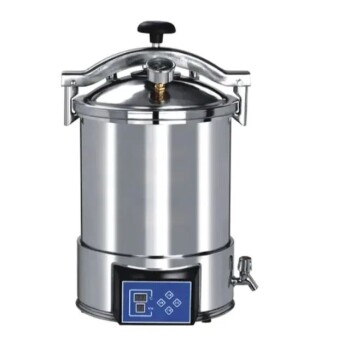
- Portable High Pressure Laboratory Autoclave Steam Sterilizer for Lab Use
- High Pressure Laboratory Autoclave Reactor for Hydrothermal Synthesis
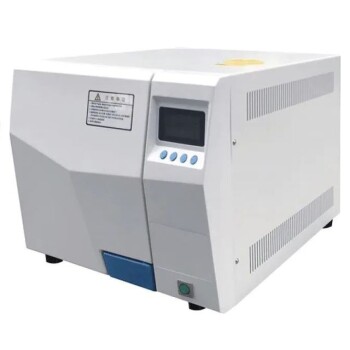
- Desktop Fast High Pressure Laboratory Autoclave Sterilizer 16L 24L for Lab Use
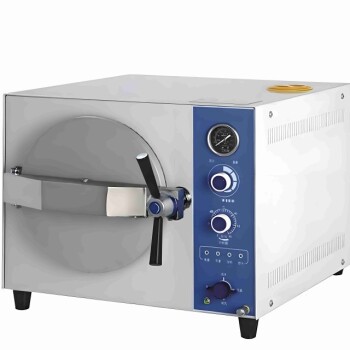
- Laboratory High Pressure Horizontal Autoclave Steam Sterilizer for Lab Use
- Mini SS High Pressure Autoclave Reactor for Laboratory Use
People Also Ask
- Why is a laboratory high-pressure autoclave sterilizer necessary? Ensure Accuracy in Antibacterial Research
- What is the role of a laboratory high-pressure autoclave in the conversion of furfural to piperidine? Optimize Yields
- What are the two types of autoclave used in the laboratory? Gravity vs. Pre-Vacuum Explained
- What precautions should be taken during autoclave in laboratory? A Complete Safety Guide to Prevent Burns and Explosions
- What extreme conditions does a laboratory autoclave simulate? Testing Wear Resistance of Nuclear Fuel Cladding