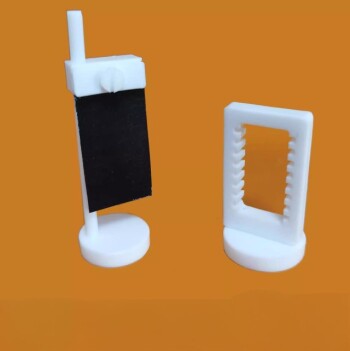
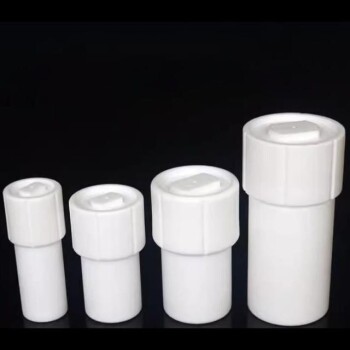
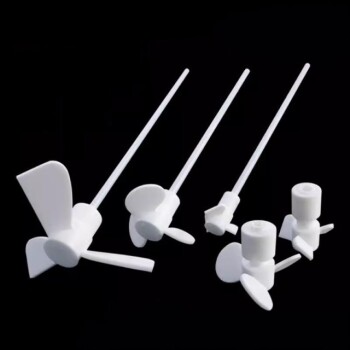
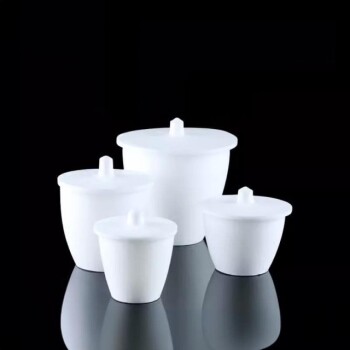
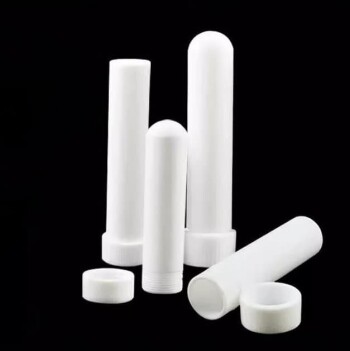
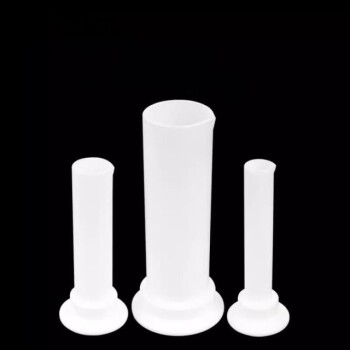
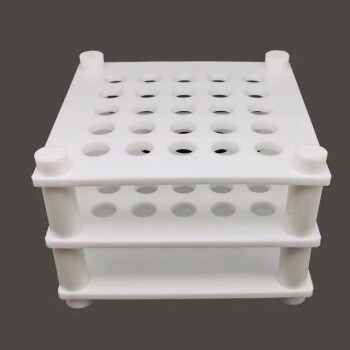
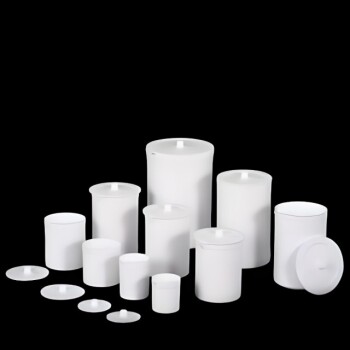
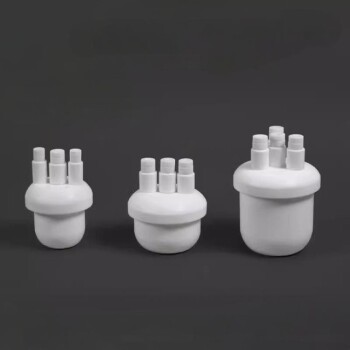
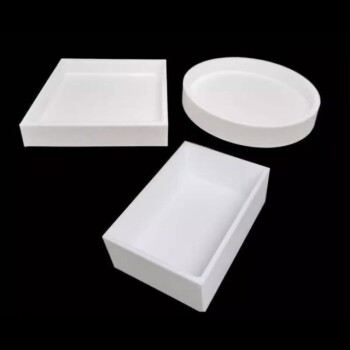
A Polytetrafluoroethylene (PTFE) lining is mandatory for these experiments because it serves as a critical, chemically inert barrier. It isolates the steel reactor walls from the corrosive environment created by high-pressure carbon dioxide and aqueous solutions, preventing equipment damage and ensuring sample purity.
Core Insight: In mineral carbonation, structural strength is not enough; chemical resistance is equally vital. A PTFE liner bridges this gap by shielding the vulnerable steel vessel from corrosive reactants, ensuring the data you collect reflects the reaction, not the degradation of your equipment.
The Critical Role of Chemical Isolation
Preventing Equipment Corrosion
When carbon dioxide is introduced to aqueous solutions under high pressure, it creates a highly corrosive environment.
Steel is vulnerable to this specific chemical attack. Without protection, the reactor walls would suffer from significant corrosion, compromising the structural integrity of the vessel over time.
The PTFE lining effectively neutralizes this threat. It acts as a physical shield, ensuring the corrosive mixture never makes contact with the metallic walls.
Preserving Product Purity
For scientific validity, the final product of your wollastonite carbonation experiment must be chemically pure.
Direct contact between the reaction mixture and the steel walls introduces a major variable: metallic leaching.
The PTFE lining prevents metallic impurities from the steel from dissolving into the reaction system. This guarantees that your results are not skewed by foreign contaminants.
Safety Under Extreme Conditions
Managing High-Pressure Risks
Wollastonite carbonation experiments often require elevated pressures and temperatures to proceed efficiently.
While the steel vessel provides the mechanical strength to contain this pressure, the PTFE lining ensures the vessel remains safe to operate.
By preventing chemical degradation during the process, the liner ensures the reactor maintains its rated safety margins throughout the experiment.
Common Pitfalls to Avoid
Misunderstanding "Stainless" Steel
A common mistake is assuming that high-grade stainless steel is sufficiently inert for all carbonation experiments without a liner.
Under high-temperature and high-pressure conditions involving aqueous CO2, even stainless steel can degrade or release ions. Relying solely on the steel's native passivation layer is a risk that compromises both safety and data integrity.
The Necessity of the Composite System
It is crucial to view the reactor as a composite system: the steel handles the physics (pressure containment), while the PTFE handles the chemistry (corrosion resistance).
Omitting the liner forces the steel to perform a chemical role it is not designed for, leading to inevitable equipment failure or data contamination.
Making the Right Choice for Your Goal
To ensure the success of your carbonation experiments, consider your primary objectives:
- If your primary focus is Data Accuracy: Use a PTFE lining to eliminate the risk of metallic impurities skewing your chemical analysis.
- If your primary focus is Equipment Longevity: Rely on the lining to prevent corrosive pitting and stress corrosion cracking in your steel reactor.
By decoupling chemical resistance from mechanical strength, you ensure a safe, repeatable, and scientifically valid experiment.
Summary Table:
| Feature | Steel Vessel (Structural) | PTFE Lining (Chemical) |
|---|---|---|
| Primary Function | Pressure containment & mechanical strength | Chemical isolation & corrosion resistance |
| Corrosion Resistance | Vulnerable to CO2/aqueous mixtures | Highly inert & chemically resistant |
| Product Purity | Risk of metallic leaching/ion release | Prevents contamination for pure results |
| Durability Role | Maintains structural integrity | Protects vessel walls from degradation |
| Operating Risk | High without protection (pitting/cracking) | Low (shields metal from reactants) |
Secure Your Research with KINTEK’s Precision Engineering
Don’t let equipment corrosion or metallic leaching compromise your mineral carbonation data. KINTEK specializes in advanced laboratory solutions, providing high-performance high-temperature high-pressure reactors and autoclaves equipped with premium PTFE products and ceramics to handle the most demanding chemical environments.
Whether you are conducting wollastonite carbonation or complex material synthesis, our comprehensive range—from crushing and milling systems to isostatic presses and battery research tools—ensures your lab operates at peak efficiency and safety.
Ready to elevate your experiment's accuracy and longevity? Contact KINTEK today to discuss our custom-lined reactor solutions and laboratory consumables tailored to your specific research needs.
References
- Kristoff Svensson, Herbert Pöllmann. The Conversion of Wollastonite to CaCO3 Considering Its Use for CCS Application as Cementitious Material. DOI: 10.3390/app8020304
This article is also based on technical information from Kintek Solution Knowledge Base .
Related Products
- Custom PTFE Teflon Parts Manufacturer for Hydrothermal Synthesis Reactor Polytetrafluoroethylene Carbon Paper and Carbon Cloth Nano-growth
- Customizable High Pressure Reactors for Advanced Scientific and Industrial Applications
- Stainless High Pressure Autoclave Reactor Laboratory Pressure Reactor
- Customizable Laboratory High Temperature High Pressure Reactors for Diverse Scientific Applications
- Custom PTFE Teflon Parts Manufacturer for Reagent Wide Mouth Fine Mouth Sample High Temperature Bottles
People Also Ask
- What is the function of a PTFE reactor in MXene etching? Ensure Safe, High-Purity MAX Phase Conversion
- Why is a PTFE reactor required for titanium-based nano-ceramic coating solutions? Ensure Chemical Inertness & Purity
- Why must a Polytetrafluoroethylene (PTFE) reactor be used for Ti3C2TX MXene etching? Ensure Safety and Purity
- Why are PTFE reactors preferred for silver phosphate glass testing? Ensure Purity and Kinetic Accuracy
- What are the advantages of using polytetrafluoroethylene (PTFE) liners in hydrothermal synthesis reactors? High Purity