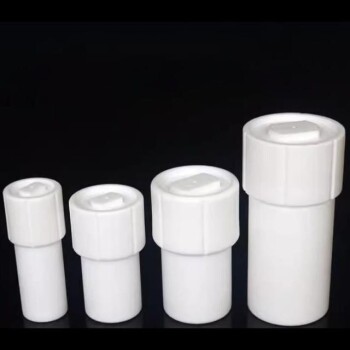
The primary necessity of a sealed stainless steel reactor within a muffle furnace is to decouple the heating environment from the chemical environment. While the muffle furnace provides the requisite thermal energy, the sealed reactor physically isolates the biomass from the oxygen-rich air inside the furnace chamber. This isolation is the fundamental requirement for converting biomass via torrefaction rather than destroying it through combustion.
Core Takeaway A muffle furnace is designed to generate heat, not to control atmosphere. The sealed stainless steel reactor acts as an intervention device, creating an artificial, oxygen-deficient micro-climate that forces the biomass to undergo thermochemical decomposition (torrefaction) instead of burning to ash.
The Mechanism of Atmosphere Control
Preventing Aerobic Combustion
The atmosphere inside a standard muffle furnace consists of ambient air, which is approximately 21% oxygen.
If biomass is exposed directly to this environment at torrefaction temperatures (typically 200°C–300°C), it will ignite. The sealed reactor creates a physical barrier that prevents oxygen from reaching the heated material, ensuring the process remains non-combustive.
Facilitating an Inert Gas Environment
The reactor does more than just block air; it allows for the introduction of specific atmospheric conditions.
As noted in the primary reference, the reactor is designed to work with an external gas source. This allows you to purge the vessel with an inert gas, such as nitrogen. This active displacement of oxygen guarantees that the thermochemical reactions remain purely anaerobic.
Material Suitability and Thermal Integrity
Withstanding High Temperatures
Torrefaction requires sustained exposure to high heat.
Stainless steel is essential because it maintains structural integrity without warping or degrading at torrefaction temperatures. It acts as a reliable thermal conductor, transferring heat from the furnace elements to the biomass inside without becoming a variable in the experiment itself.
Handling Pressure and Volatiles
Biomass releases volatile organic compounds and moisture when heated.
In wet torrefaction scenarios (hydrothermal carbonization), reactors must withstand high pressures created by liquid water at temperatures up to 220°C. While muffle furnace torrefaction is typically "dry," the stainless steel construction ensures the vessel can safely contain temporary pressure spikes from rapid volatile release or moisture evaporation before they are vented.
Understanding the Trade-offs
Thermal Lag
Using a sealed reactor introduces a delay in heat transfer.
The furnace elements must first heat the air, then the steel reactor walls, and finally the biomass. This means the internal temperature of the biomass will inherently lag behind the setpoint of the muffle furnace, requiring careful calibration of residence time.
Complexity of Gas Flow
A sealed system requires active management.
Unlike a simple drying process, using a sealed reactor requires you to manage gas inlet and outlet ports. If the external gas flow is too low, evolved gases from the biomass may alter the chemistry; if too high, it may cool the sample or disturb the thermal equilibrium.
Making the Right Choice for Your Goal
To ensure your experimental setup aligns with your objectives, consider the following:
- If your primary focus is material yield: Prioritize a reactor with robust sealing to ensure zero oxygen ingress, maximizing the solid product (bio-coal) and minimizing ash.
- If your primary focus is chemical analysis: Ensure the reactor design allows for controlled venting to collect and analyze the volatile gases released during the process.
The sealed reactor is the critical component that transforms a standard heating device into a precision instrument for thermochemical conversion.
Summary Table:
| Feature | Purpose in Torrefaction | Benefit |
|---|---|---|
| Atmosphere Isolation | Blocks oxygen-rich furnace air | Prevents combustion/ignition of biomass |
| Stainless Steel Build | High thermal conductivity & durability | Ensures safe heat transfer and pressure containment |
| Inert Gas Integration | Allows nitrogen purging | Creates a purely anaerobic environment for bio-coal yield |
| Pressure Management | Contains volatile organic compounds | Safeguards the furnace and ensures consistent decomposition |
Maximize Your Biomass Research Precision with KINTEK
Transitioning from basic heating to advanced thermochemical conversion requires the right tools. KINTEK specializes in high-performance laboratory solutions, providing the high-temperature high-pressure reactors, autoclaves, and muffle furnaces necessary to achieve superior material yields.
Whether you are focusing on biomass torrefaction, hydrothermal carbonization, or chemical analysis, our stainless steel reactors ensure the perfect anaerobic micro-climate for your samples. Don't let oxygen ingress compromise your bio-coal quality—trust KINTEK’s durable crushing, milling, and thermal systems to deliver repeatable results.
Ready to upgrade your lab's thermal processing capabilities? Contact us today to find the perfect reactor and furnace setup for your research!
References
- Mohamed Khairy, Ahmed Elwardany. The influence of torrefaction on the biochar characteristics produced from sesame stalks and bean husk. DOI: 10.1007/s13399-023-03822-9
This article is also based on technical information from Kintek Solution Knowledge Base .
Related Products
- Stainless High Pressure Autoclave Reactor Laboratory Pressure Reactor
- Mini SS High Pressure Autoclave Reactor for Laboratory Use
- Customizable Laboratory High Temperature High Pressure Reactors for Diverse Scientific Applications
- Customizable High Pressure Reactors for Advanced Scientific and Industrial Applications
- High Pressure Laboratory Autoclave Reactor for Hydrothermal Synthesis
People Also Ask
- Why is a laboratory high-pressure reactor used in the hydrothermal synthesis of hydroxyapatite catalysts?
- Why is a laboratory high-pressure reactor necessary for synthesizing fly ash-based zeolite? Achieve Pure Crystallization
- What role does a laboratory high-pressure reactor play in the leaching process of spent cathode materials? Optimize Recovery
- What conditions do laboratory high-pressure reactors provide for HTC? Optimize Your Biochar Production Processes
- How are high-pressure reactors used to prepare metaphosphate electrocatalysts? Master In-Situ Precursor Growth