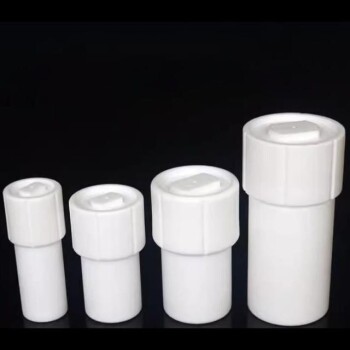
Equipment integrity and chemical purity. A Teflon-lined high-pressure autoclave is strictly required for this process to protect the reaction vessel from the corrosive alkaline environment generated at 200°C. Additionally, the liner serves as a critical barrier that prevents metal ions from the steel vessel from leaching into the solution, ensuring the final nanorods are chemically pure.
The success of converting SOMS into Na2Nb2O6·H2O nanorods relies on maintaining strict chemical inertness under high heat and pressure. The Teflon liner acts as a non-reactive shield, preventing vessel corrosion and ensuring the high phase purity necessary for single-crystal formation.
Managing Harsh Reaction Conditions
Resisting Alkaline Corrosion
The solvothermal conversion of SOMS (Sandia Octahedral Molecular Sieve) requires an environment that is both highly alkaline and heated to 200°C.
Under these specific conditions, standard stainless steel autoclave walls are highly improved to rapid corrosion.
The Teflon liner provides a chemically inert surface that withstands this aggressive attack, preserving the structural integrity of the high-pressure vessel.
Containing High Pressure
While the Teflon provides chemical resistance, the outer steel shell manages the high pressure generated by solvents at 200°C.
The liner allows the reaction to benefit from high-pressure solvothermal dynamics without exposing the pressure-bearing walls to the corrosive reactants.
Ensuring Material Quality
Preventing Ion Leaching
If the reaction solution were to contact the steel walls directly, corrosion would release foreign metal ions (such as iron or chromium) into the mix.
These metal ions act as contaminants that can alter the chemical composition of the final product.
The Teflon liner isolates the reaction mixture completely, eliminating the risk of metallic cross-contamination.
Achieving High Phase Purity
The specific goal of this synthesis is to obtain single-crystal Na2Nb2O6·H2O nanorods.
For single crystals to form correctly, the chemical components must remain pure and free of defects caused by impurities.
By ensuring chemical inertness, the Teflon liner guarantees that the resulting nanorods possess the high phase purity required for advanced applications.
Understanding the Trade-offs
Temperature Limitations
While Teflon is chemically superior for this reaction, it imposes a thermal ceiling on the experiment.
Teflon (PTFE) can deform or degrade at temperatures significantly higher than 200–250°C.
Therefore, while the steel shell could withstand higher heat, the liner restricts the operational temperature range to ensure safety and sample integrity.
Making the Right Choice for Your Synthesis
To ensure the successful synthesis of SOMS nanorods, apply the following principles based on your priorities:
- If your primary focus is Equipment Longevity: Use the Teflon liner to prevent the alkaline solution from pitting and permanently damaging your expensive stainless steel autoclave.
- If your primary focus is Crystallographic Quality: Use the Teflon liner to eliminate metal ion impurities that would otherwise disrupt the formation of single-crystal nanorods.
By isolating the reaction from the vessel walls, you secure both the lifespan of your equipment and the integrity of your nanomaterials.
Summary Table:
| Feature | Benefit for SOMS Conversion |
|---|---|
| Teflon (PTFE) Liner | Provides chemical inertness against highly alkaline environments at 200°C. |
| Steel Outer Shell | Provides structural support and containment for high-pressure dynamics. |
| Contamination Control | Prevents metal ions (Fe, Cr) from leaching into the single-crystal nanorods. |
| Temperature Limit | Optimized for 200°C synthesis while preventing liner deformation. |
Elevate Your Material Synthesis with KINTEK Precision
Don't compromise the purity of your nanostructures. KINTEK specializes in high-performance laboratory equipment, offering a premium range of high-temperature high-pressure reactors and autoclaves specifically designed to withstand the harshest chemical environments.
Whether you are conducting solvothermal conversion of SOMS or advanced battery research, our Teflon-lined vessels ensure zero contamination and maximum equipment longevity. We also provide a comprehensive suite of tools, from crushing systems and hydraulic presses to specialized PTFE consumables and ceramics, tailored for researchers who demand excellence.
Ready to achieve high phase purity in your next experiment? Contact KINTEK experts today to find the perfect autoclave solution for your laboratory.
References
- Rana Faryad Ali, Byron D. Gates. Disordered microporous Sandia octahedral molecular sieves are tolerant to neutron radiation. DOI: 10.1039/d4lf00317a
This article is also based on technical information from Kintek Solution Knowledge Base .
Related Products
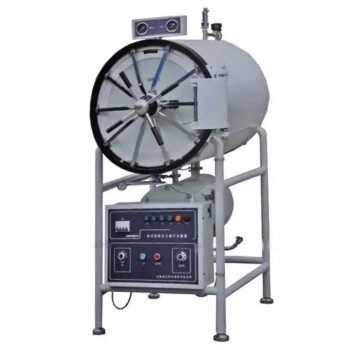
- Laboratory High Pressure Horizontal Autoclave Steam Sterilizer for Lab Use
- Stainless High Pressure Autoclave Reactor Laboratory Pressure Reactor
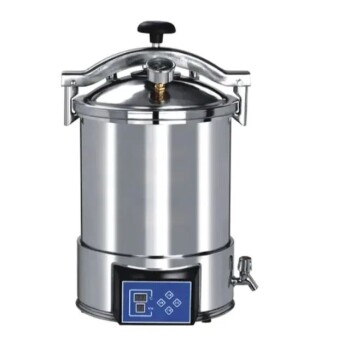
- Desktop Fast High Pressure Laboratory Autoclave Sterilizer 16L 24L for Lab Use
- High Pressure Laboratory Autoclave Reactor for Hydrothermal Synthesis
- Laboratory High Pressure Steam Sterilizer Vertical Autoclave for Lab Department
People Also Ask
- Why is a laboratory high-pressure autoclave sterilizer necessary? Ensure Accuracy in Antibacterial Research
- What is the role of a laboratory high-pressure autoclave in the conversion of furfural to piperidine? Optimize Yields
- What is the primary function of a laboratory autoclave in the pre-treatment of medical plastic waste for liquid fuel?
- What is an autoclave laboratory equipment? The Ultimate Guide to Steam Sterilization
- What is a laboratory autoclave? A Guide to Sterilization with Pressurized Steam