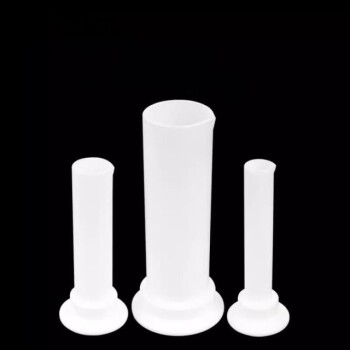
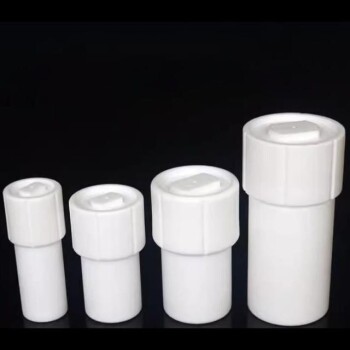
The synthesis of BixIn2-xO3 nanocrystals relies on a Teflon-lined stainless steel autoclave to create and contain a specific, high-energy reaction environment. This equipment serves two distinct but inseparable functions: the stainless steel exterior provides the mechanical strength to withstand the internal pressure generated at 150 °C, while the inner Teflon (PTFE) liner ensures total chemical inertness to prevent precursor contamination.
The core value of this apparatus is its ability to decouple chemical compatibility from mechanical strength. It allows you to subject reactants to aggressive solvothermal conditions without the vessel reacting with the solution or failing under physical stress.
The Dual-Layer Engineering
The autoclave is not a single tool, but a composite system where each layer addresses a specific physical challenge of the solvothermal process.
The Stainless Steel Sleeve: Mechanical Containment
The primary challenge in solvothermal synthesis is pressure generation.
As the temperature rises to 150 °C inside the sealed vessel, the solvent expands and vaporizes, creating significant autogenous pressure. Standard laboratory glass cannot withstand this stress and would shatter.
The external stainless steel sleeve acts as a pressure vessel. It absorbs the mechanical load, maintaining the structural integrity of the closed system and preventing catastrophic failure during the heating cycle.
The Teflon (PTFE) Liner: Chemical Isolation
While stainless steel is strong, it is chemically reactive and prone to leaching metal ions (such as iron or chromium) when exposed to harsh solvents or reactive precursors.
The Polytetrafluoroethylene (PTFE) liner acts as a chemical barrier. It isolates the reaction mixture from the metal shell.
For BixIn2-xO3 nanocrystals, purity is paramount. The inert nature of the PTFE liner ensures that the precursors react only with each other, preventing foreign ions from the vessel walls from contaminating the crystal lattice or altering the stoichiometry.
Why Solvothermal Conditions are Necessary
You might ask why this reaction requires a high-pressure sealed vessel rather than a simple open-air reflux setup. The answer lies in the physics of solubility and nucleation.
Transcending Atmospheric Boiling Points
In an open system, a solvent cannot be heated past its boiling point; it simply evaporates.
By sealing the autoclave, you prevent evaporation. This allows the solvent to remain in a liquid state at temperatures significantly above its atmospheric boiling point.
This "superheated" liquid state is critical for BixIn2-xO3 synthesis. It provides the thermal energy required to drive the reaction without losing the solvent medium necessary for crystal transport.
Modulating Solubility and Nucleation
The combination of high temperature and high pressure fundamentally alters the properties of the solvent.
Under these conditions, the solubility of the reactants increases significantly. This ensures that precursors dissolve fully, creating a homogenous solution.
Simultaneously, the high-energy environment lowers the nucleation barrier. This facilitates the formation of crystal seeds and promotes the growth of uniform, high-quality nanocrystals that would be impossible to synthesize under standard ambient conditions.
Understanding the Trade-offs
While the Teflon-lined autoclave is the industry standard for this synthesis, it has specific limitations that must be managed to ensure safety and success.
Thermal Limits of PTFE
Teflon is not indestructible. While it handles chemical attack well, it has a thermal ceiling.
At temperatures approaching or exceeding 200–250 °C, PTFE can begin to deform or soften ("creep"). If the synthesis requires temperatures beyond this range, the liner may fail, exposing the steel shell to the reactants.
The "Black Box" Limitation
A stainless steel autoclave is opaque. Unlike glass reactors, you cannot visually monitor the reaction progress, color changes, or precipitation in real-time.
This necessitates a trial-and-error approach to optimizing reaction times, as the outcome can only be assessed after the reactor has cooled and been opened.
Making the Right Choice for Your Goal
To ensure the successful synthesis of BixIn2-xO3, apply these principles to your experimental design:
- If your primary focus is Crystal Purity: Ensure the PTFE liner is free of scratches or previous residues; even minor defects in the liner can trap contaminants that leach into the BixIn2-xO3 lattice.
- If your primary focus is Safety: Calculate the expected pressure of your solvent at 150 °C and verify it falls well within the pressure rating of your specific stainless steel casing.
- If your primary focus is Reproducibility: Standardize the fill volume of the autoclave (typically 60-80%); variations in headspace volume directly affect the internal pressure and, consequently, the crystal size.
Success in solvothermal synthesis comes from respecting the autoclave not just as a container, but as an active participant in the thermodynamic process.
Summary Table:
| Feature | Component | Function in BixIn2-xO3 Synthesis |
|---|---|---|
| Mechanical Strength | Stainless Steel Sleeve | Withstands autogenous pressure at 150 °C to prevent vessel failure. |
| Chemical Inertness | Teflon (PTFE) Liner | Prevents metal ion leaching and precursor contamination for high purity. |
| Thermal Energy | Sealed Environment | Enables solvents to exceed boiling points, driving reaction kinetics. |
| Nucleation Control | High-Pressure System | Lowers nucleation barriers to produce uniform, high-quality nanocrystals. |
Elevate Your Materials Research with KINTEK
Precision in solvothermal synthesis starts with reliable equipment. KINTEK specializes in premium laboratory solutions, offering a comprehensive range of high-temperature high-pressure reactors and autoclaves designed to withstand rigorous chemical and physical demands. Whether you are synthesizing BixIn2-xO3 nanocrystals or developing advanced battery materials, our Teflon-lined systems ensure the chemical isolation and mechanical integrity your research deserves.
From high-temperature furnaces and hydraulic presses to specialized electrolytic cells, KINTEK provides the tools needed for consistent, reproducible results. Contact us today to find the perfect autoclave for your lab!
References
- Tingjiang Yan, Geoffrey A. Ozin. Bismuth atom tailoring of indium oxide surface frustrated Lewis pairs boosts heterogeneous CO2 photocatalytic hydrogenation. DOI: 10.1038/s41467-020-19997-y
This article is also based on technical information from Kintek Solution Knowledge Base .
Related Products
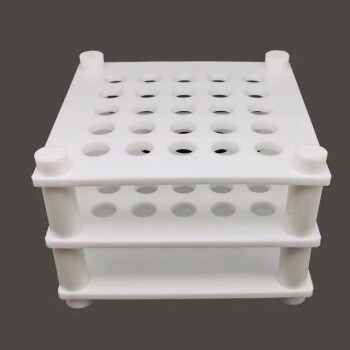
- Custom PTFE Teflon Parts Manufacturer for Centrifuge Tube Racks
- Custom PTFE Teflon Parts Manufacturer Corrosion Resistant Cleaning Rack Flower Basket
- Custom PTFE Teflon Parts Manufacturer for Cleaning Racks
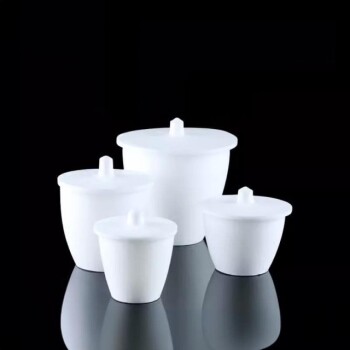
- Custom Machined and Molded PTFE Teflon Parts Manufacturer with PTFE Crucible and Lid
- Custom Machined and Molded PTFE Teflon Parts Manufacturer for Laboratory ITO FTO Conductive Glass Cleaning Flower Basket
People Also Ask
- Why is slender PTFE tubing necessary for flow control in multi-channel catalyst aging? Ensure Equal Gas Distribution
- Why are PTFE containers required for PCT leaching tests? Ensure Chemical Inertness and Analytical Precision
- Why are PTFE containers necessary for selective HF etching of MAX phases? Ensure Safe & Pure MXene Synthesis
- What role do PTFE containers play in trace metal detection? Ensure Analytical Precision in Photocatalysis Studies
- Why is a PTFE container required for acid leaching of silicon nanosheets? Ensure High Purity and Safety