A vacuum freeze dryer is strictly necessary to prevent the irreversible agglomeration of graphene oxide (GO) sheets. Unlike standard heat drying, which causes the material to stack and lose its unique properties, freeze drying utilizes sublimation to remove moisture while preserving the delicate, single-layer structure of the nanomaterial.
Standard drying methods cause graphene oxide layers to collapse into dense, graphite-like clumps that are difficult to separate. Vacuum freeze drying bypasses the liquid phase entirely, ensuring the final powder retains the high surface area and dispersibility required for practical applications.
The Mechanism of Moisture Removal
Utilizing Sublimation
The core function of a vacuum freeze dryer is to remove water through sublimation. In this process, frozen moisture within the graphene oxide sample transitions directly from a solid state (ice) to a gas (vapor), completely skipping the liquid phase.
Avoiding Capillary Forces
When liquid water evaporates during standard drying, it exerts strong capillary forces on the graphene oxide sheets. These forces pull the sheets tightly together, leading to stacking. By removing water as a vapor from the solid state, freeze drying neutralizes these forces.
Preserving Material Properties
Preventing Agglomeration
The primary reference indicates that standard drying results in severe agglomeration and stacking of GO sheets. Once these sheets stack, they interact via Van der Waals forces, making it nearly impossible to separate them back into single layers later.
Ensuring Dispersibility
For graphene oxide to be useful, it often needs to be mixed into organic solvents or polymer matrices. A freeze-dried powder remains "fluffy" and porous, allowing it to disperse uniformly and quickly into these mediums.
Maximizing Specific Surface Area
The performance of graphene oxide is directly tied to its surface area. The freeze-drying process locks the material into an expanded structure, ensuring the resulting powder retains a high specific surface area essential for chemical reactivity and composite reinforcement.
Understanding the Trade-offs
Process Efficiency vs. Material Quality
While vacuum freeze drying is the superior method for quality, it is generally more time-consuming and energy-intensive than simple heat drying. It requires precise temperature control and vacuum maintenance over long periods.
Equipment Complexity
Using a freeze dryer introduces more variables into the post-treatment phase compared to a standard oven. However, this complexity is the unavoidable cost of obtaining a functional nanomaterial rather than a low-value graphite aggregate.
Making the Right Choice for Your Goal
To ensure your graphene oxide synthesis yields a usable product, apply the following guidelines:
- If your primary focus is creating polymer composites: You must use freeze drying to ensure the GO sheets remain separated enough to integrate thoroughly with the polymer matrix.
- If your primary focus is creating liquid dispersions: You must use freeze drying to prevent the powder from clumping and sinking when introduced to organic solvents.
The choice of drying method dictates whether you produce high-grade graphene oxide or simply regenerate low-grade graphite.
Summary Table:
| Feature | Vacuum Freeze Drying | Standard Heat Drying |
|---|---|---|
| Mechanism | Sublimation (Solid to Gas) | Evaporation (Liquid to Gas) |
| Structural Impact | Preserves single-layer structure | Causes irreversible stacking/clumping |
| Surface Area | High (porous & fluffy) | Low (dense aggregates) |
| Dispersibility | Excellent in solvents/polymers | Poor; difficult to re-separate |
| Material Quality | High-grade functional GO | Low-value graphite-like aggregate |
Elevate Your Graphene Research with KINTEK Precision
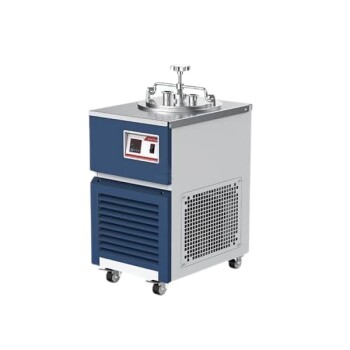
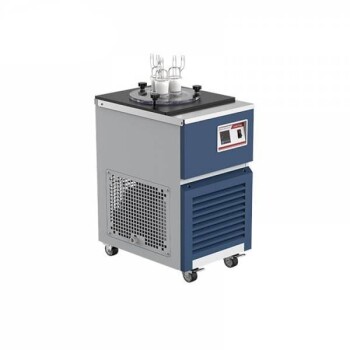
Don't let standard drying methods compromise your nanomaterial's potential. KINTEK specializes in advanced laboratory solutions, offering high-performance vacuum freeze dryers and cold traps designed to preserve the delicate structure of graphene oxide.
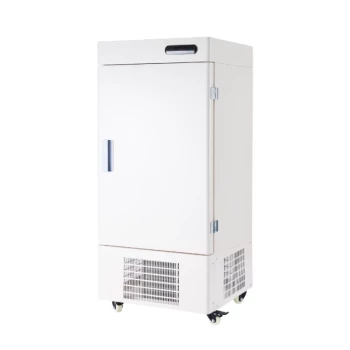
Whether you are developing polymer composites or advanced liquid dispersions, our portfolio—from ULT freezers to high-temperature reactors—provides the reliability your lab demands. Contact KINTEK today to discover how our equipment can enhance your synthesis results and ensure maximum material performance.
References
- Fengna Dai, Youhai Yu. Preparation and Characterization of Reduced Graphene Oxide /TiO2 Blended Polyphenylene sulfone Antifouling Composite Membrane With Improved Photocatalytic Degradation Performance. DOI: 10.3389/fchem.2021.753741
This article is also based on technical information from Kintek Solution Knowledge Base .
Related Products
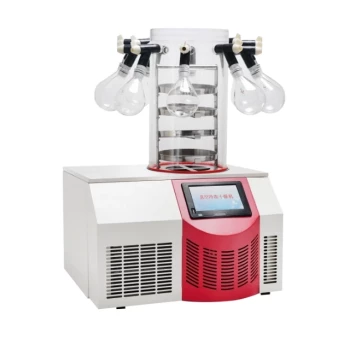
- Benchtop Laboratory Vacuum Freeze Dryer
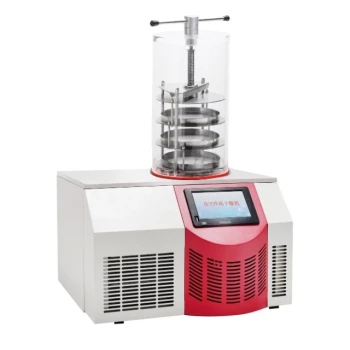
- High Performance Laboratory Freeze Dryer
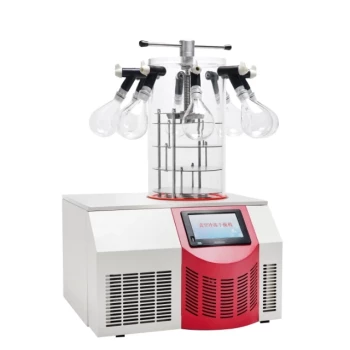
- High Performance Laboratory Freeze Dryer for Research and Development
- Benchtop Laboratory Freeze Dryer for Lab Use
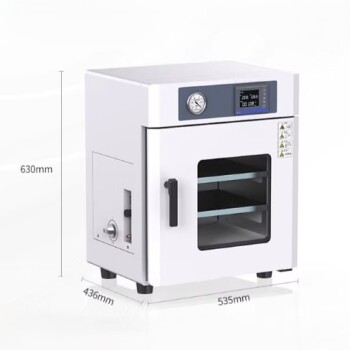
- 56L Vertical Laboratory Vacuum Drying Oven
People Also Ask
- What are the technical advantages of using a laboratory freeze dryer for porous carbon precursors? Preserve 3D Networks
- How do laboratory freeze dryers support scientific research? Preserve Sample Integrity for Reproducible Results
- Why is a laboratory freeze dryer preferred over traditional heating? Preserve Biochar Structure & Maximize Porosity
- What types of liquid samples can be processed using a laboratory freeze dryer? Preserve Your Sensitive Materials
- What role do laboratory freeze dryers play in the food industry? Unlock Superior Food Preservation