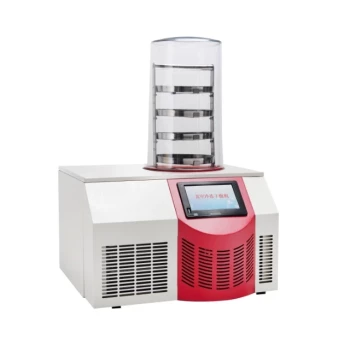
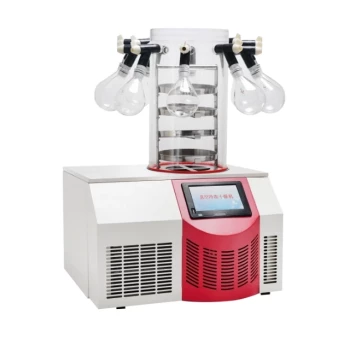
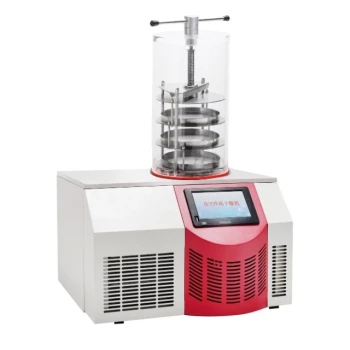
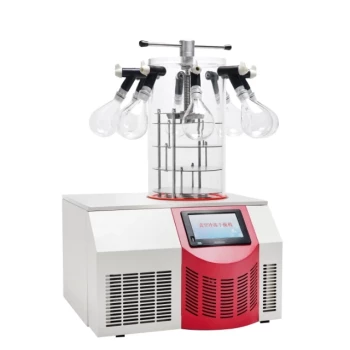
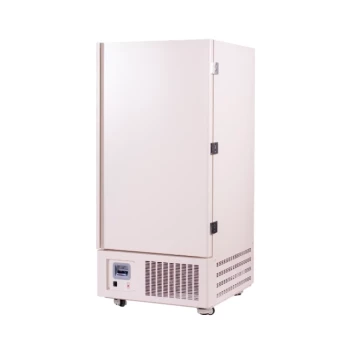
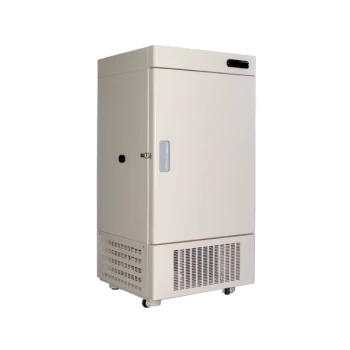
The necessity of a vacuum freeze dryer in keratin recovery stems from its unique ability to remove water through sublimation—turning ice directly into vapor—under vacuum conditions. This process allows for dehydration at low temperatures, ensuring the final keratin powder retains its essential biological and structural properties.
Core Takeaway Unlike conventional drying methods that rely on heat, vacuum freeze drying prevents thermal damage to the keratin protein. This preserves its secondary structure and chemical functionality, yielding a loose, porous powder with high rehydration capacity suitable for advanced applications.
The Mechanics of Preservation
Sublimation Over Evaporation
The defining feature of this process is the removal of water by sublimating ice into water vapor.
By operating under vacuum conditions, the system bypasses the liquid phase entirely. This ensures the solvent is removed without subjecting the material to the physical stresses of evaporation.
Low-Temperature Dehydration
Because the process relies on sublimation, it occurs at significantly lower temperatures than standard drying techniques.
This low-temperature environment is critical for protecting heat-sensitive biological materials. It acts as a safeguard against the degradation that typically occurs when proteins are exposed to thermal stress.
Impact on Material Quality
Protecting Biological Activity
The primary value of recovering keratin lies in its utility as a functional protein. Vacuum freeze drying effectively preserves the biological activity of the keratin.
It maintains the protein's secondary structure and chemical functional groups intact. This ensures the recovered powder performs effectively in downstream applications rather than acting as inert filler.
Ensuring Structural Integrity
The physical form of the final powder is determined during the drying phase. Freeze drying produces a loose, porous structure.
This porosity is essential for the material's utility. A porous structure guarantees a high rehydration capacity, allowing the powder to dissolve or disperse easily when reused.
Understanding the Risks of Alternative Methods
Thermal Denaturation
If a vacuum freeze dryer is not used, operators typically resort to conventional high-temperature drying.
The primary trade-off with high-temperature methods is thermal denaturation. Heat unravels the protein structure, destroying the biological activity and chemical functionality that make the keratin valuable.
Agglomeration and Hardening
Conventional drying often leads to physical defects in the powder.
Without the structure-preserving effects of sublimation, the keratin tends to suffer from agglomeration. This results in hard, clumped masses that are difficult to rehydrate, significantly reducing the practical usability of the recovered material.
Optimizing Your Keratin Recovery Process
While the high-pressure reactor mentioned in supplementary contexts is vital for the extraction phase (breaking chemical bonds via high energy), the drying phase requires the opposite approach: gentle, low-energy preservation.
- If your primary focus is Bio-functionality: Prioritize vacuum freeze drying to ensure the secondary structure and chemical groups remain active.
- If your primary focus is Solubility: Rely on freeze drying to create a porous, non-agglomerated powder that rehydrates instantly.
- If your primary focus is Process Efficiency: Recognize that while extraction requires high heat/pressure, drying requires vacuum/cold to prevent undoing the value created during extraction.
The vacuum freeze dryer is not just a drying tool; it is a preservation instrument that safeguards the quality of the recovered keratin.
Summary Table:
| Feature | Vacuum Freeze Drying | Conventional Heat Drying |
|---|---|---|
| Mechanism | Sublimation (Ice to Vapor) | Evaporation (Liquid to Vapor) |
| Temperature | Low (Cryogenic/Sub-ambient) | High (Thermal Stress) |
| Protein Structure | Preserved (Secondary structure intact) | Denatured (Loss of functionality) |
| Physical Form | Loose, porous powder | Hard, agglomerated clumps |
| Rehydration | High/Instant | Poor/Difficult |
| Bioactivity | Fully Maintained | Significantly Reduced |
Elevate Your Protein Recovery with KINTEK Precision
Transitioning from leather waste to high-value keratin powder requires a delicate balance of high-energy extraction and low-temperature preservation. KINTEK specializes in high-performance laboratory equipment designed to safeguard your material's structural integrity.
Whether you need high-pressure reactors for the initial extraction or advanced vacuum freeze dryers (freeze dryers) and cold traps to produce superior, porous powders, KINTEK provides the tools necessary for excellence in biomaterial research.
Ready to optimize your keratin recovery process? Contact us today to explore our comprehensive range of laboratory solutions!
References
- Yanchun Li, Deyi Zhu. Research progress on resource utilization of leather solid waste. DOI: 10.1186/s42825-019-0008-6
This article is also based on technical information from Kintek Solution Knowledge Base .
Related Products
- Benchtop Laboratory Vacuum Freeze Dryer
- High Performance Laboratory Freeze Dryer
- High Performance Laboratory Freeze Dryer for Research and Development
- Benchtop Laboratory Freeze Dryer for Lab Use
- Vacuum Cold Mounting Machine for Sample Preparation
People Also Ask
- What are the technical advantages of using a laboratory freeze dryer for porous carbon precursors? Preserve 3D Networks
- How do laboratory freeze dryers support scientific research? Preserve Sample Integrity for Reproducible Results
- Why is a laboratory freeze dryer preferred over traditional heating? Preserve Biochar Structure & Maximize Porosity
- What types of liquid samples can be processed using a laboratory freeze dryer? Preserve Your Sensitive Materials
- What role do laboratory freeze dryers play in the food industry? Unlock Superior Food Preservation