Temperature is the single most critical variable in oxide dissolution kinetics. Because oxide dissolution is a thermodynamic process, the rate at which it occurs changes exponentially with temperature, not linearly. High-precision control is mandatory to maintain a constant energy barrier, ensuring that the data collected reflects true reaction kinetics rather than experimental error.
Precise temperature control allows for the isolation of the activation energy ($E_a$) by eliminating thermal noise. Without this stability, the exponential sensitivity described by the Arrhenius equation renders kinetic modeling and long-term service predictions unreliable.
The Thermodynamic Foundation
The Exponential Impact of Heat
Oxide dissolution is governed by thermodynamics. This means the relationship between temperature and the reaction rate is defined by the Arrhenius equation.
Under this principle, the dissolution rate constant changes exponentially with temperature variations.
Even a minor deviation in temperature can result in a disproportionately large shift in the dissolution rate, rendering experimental data noisy or invalid.
Maintaining the Energy Barrier
To accurately study dissolution, you must assume a stable environment.
A high-precision reactor ensures a constant energy barrier throughout the dissolution process.
If the temperature fluctuates, the thermal energy available to the system shifts, making it impossible to distinguish between reaction kinetics and environmental variance.
Isolating Kinetic Parameters
Calculating Activation Energy ($E_a$)
The primary goal of these experiments is often to determine the activation energy ($E_a$).
$E_a$ represents the minimum energy required for the chemical reaction to occur.
You can only calculate this value accurately if the temperature is held strictly constant during specific measurement intervals. Precision control allows you to mathematically isolate $E_a$ from the rate data.
Building Reliable Models
Data collected in the lab is rarely just for immediate analysis; it is used to build kinetic models.
These models are the mathematical framework used to predict how materials will behave in the real world.
If the input data is flawed due to poor thermal regulation, the resulting models will fail to represent the physical reality of the oxide's behavior.
Common Pitfalls in Experimental Design
The Fallacy of Averaging
A common mistake is assuming that fluctuating temperatures can simply be averaged out over the course of an experiment.
Because the dependence is exponential, the rate of dissolution at the "average" temperature is not the same as the average of the rates at the fluctuating temperatures.
Instability inevitably skews the data toward higher rates, leading to an underestimation of the material's stability.
The Risk to Long-Term Prediction
Inaccurate kinetic parameters have compounding effects.
When you extrapolate short-term lab data to predict long-term service evolution, small errors become massive deviations.
Without high-precision control, you cannot reliably predict how materials will degrade over years of service in various environments.
Making the Right Choice for Your Goal
To ensure your oxide dissolution data is scientifically valid, assess your experimental setup against your specific objectives:
- If your primary focus is establishing kinetic models: You must prioritize thermal stability to accurately calculate the activation energy ($E_a$) without noise.
- If your primary focus is predicting material lifespan: You require precise inputs to prevent small experimental errors from compounding into large forecasting failures.
Precision in temperature control is not merely a procedural refinement; it is the prerequisite for valid thermodynamic analysis.
Summary Table:
| Feature | Impact on Oxide Dissolution Experiments | Why It Matters |
|---|---|---|
| Arrhenius Consistency | Manages exponential rate sensitivity | Prevents minor thermal shifts from invalidating data. |
| Energy Barrier Stability | Maintains a constant activation energy ($E_a$) | Isolates true reaction kinetics from environmental noise. |
| Data Modeling | Provides high-fidelity input for kinetic models | Ensures reliable long-term service life predictions. |
| Precision Control | Eliminates the "Fallacy of Averaging" | Avoids skewed results caused by non-linear rate fluctuations. |
Elevate Your Research Precision with KINTEK
Don't let thermal instability compromise your kinetic modeling. KINTEK specializes in advanced laboratory solutions designed for the most demanding thermodynamic studies. Our high-precision high-temperature high-pressure reactors and autoclaves provide the rock-solid thermal stability required to isolate activation energy and predict material behavior with absolute confidence.
Whether you are conducting oxide dissolution experiments or complex chemical syntheses, our comprehensive range—including muffle furnaces, vacuum systems, and electrolytic cells—is engineered to meet the rigorous standards of global research facilities.
Ready to achieve superior experimental accuracy? Contact our technical experts today to find the perfect reactor system for your laboratory.
References
- Jianwei Wang. Thermodynamic equilibrium and kinetic fundamentals of oxide dissolution in aqueous solution. DOI: 10.1557/jmr.2020.81
This article is also based on technical information from Kintek Solution Knowledge Base .
Related Products
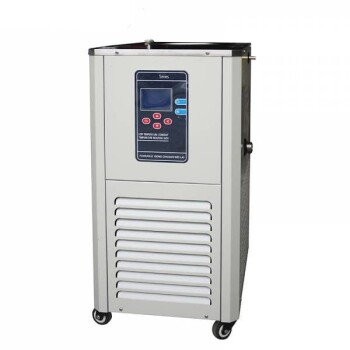
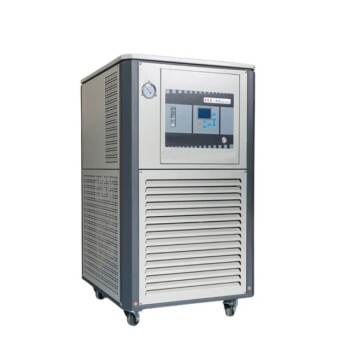
- 5L Chilling Circulator Cooling Water Bath Circulator for Low Temperature Constant Temperature Reaction Bath
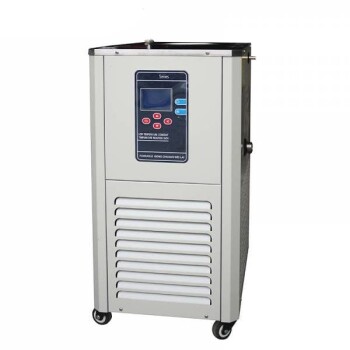
- 50L Chiller Water Bath Cooling Circulator Low Temperature Constant Temperature Reaction Bath
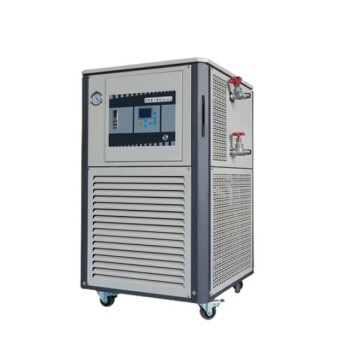
- 30L Chiller Water Bath Cooling Circulator Low Temperature Constant Temperature Reaction Bath
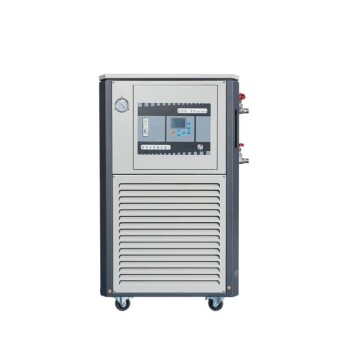
- High Temperature Constant Temperature Heating Circulator Water Bath Chiller Circulator for Reaction Bath
- 10L Chilling Circulator Cooling Water Bath Low Temperature Constant Temperature Reaction Bath
People Also Ask
- What is the necessity of a circulating water bath in chlorate production? Optimize Yield & Purity with Precision
- Why is a circulating water chiller required for Prussian Blue nanoparticles? Ensure Stability & Batch Reproducibility
- What function does a circulating cooling chiller perform during the gas adsorption isotherm testing of nanoporous carbon?
- How does a constant temperature circulator support the leaching reaction of gold scrap? Optimize Gold Recovery Results
- How do constant temperature circulators impact weight-loss immersion tests? Ensure Precision in Corrosion Analysis