Reaching an ultimate vacuum level of 3 x 10^-3 Pa is a mandatory prerequisite in PECVD (Plasma-Enhanced Chemical Vapor Deposition) to systematically purge the chamber of residual air and water vapor. This specific pressure threshold is critical because it prevents impurity atoms from interacting with the precursor gases, thereby protecting the film structure from unwanted chemical contamination during the growth phase.
High-quality composite films require a pristine starting environment. By establishing a deep vacuum before deposition begins, you ensure the purity of the reaction gases, which is the only way to achieve perfect lattice fringes in advanced materials like graphene and g-C3N4.
The Physics of Impurity Control
Eliminating Residual Gases
The primary adversary in any vacuum deposition process is the atmosphere itself. Before you introduce your process gases, the chamber must be cleared of residual air and water vapor.
If the pressure remains above 3 x 10^-3 Pa, the density of these residual molecules remains high enough to interfere with the deposition. This interference is not merely physical; it is chemical.
Preventing Atomic Integration
When a chamber is not evacuated to this sufficient level, impurity atoms from the residual atmosphere remain present.
During the high-energy plasma phase, these impurities can become energized and trapped within the growing film. This incorporation compromises the intended stoichiometry and degrades the material's fundamental properties.
Impact on Advanced Material Growth
Ensuring Reaction Gas Purity
For complex composite films, such as those involving graphene, g-C3N4, or fluorine-doped layers, the purity of the reaction environment is non-negotiable.
The high-vacuum baseline ensures that when you introduce your specific reaction gases, they remain pure. They do not react with background contaminants, ensuring the chemical reactions proceed exactly as modeled.
Achieving Perfect Lattice Fringes
The structural integrity of a film is often measured by the quality of its crystal lattice. The primary reference indicates that adhering to this vacuum standard results in perfect lattice fringes.
This structural perfection is a direct indicator that the film was grown without atomic-level interruptions or defects caused by foreign contaminants.
Common Pitfalls in Vacuum Management
The Risk of "Good Enough"
A common error in fabrication is initiating the deposition process before the chamber reaches the ultimate vacuum of 3 x 10^-3 Pa to save process time.
While this may increase throughput, it inevitably leads to structural contamination. The presence of even trace amounts of water vapor can oxidize sensitive materials or disrupt the nucleation of the crystal lattice.
Interpreting Film Defects
If your resulting films exhibit poor structural quality or irregular lattice fringes, the root cause is often insufficient initial pumping.
You cannot compensate for a poor base vacuum by increasing flow rates or adjusting plasma power; the impurities are already embedded in the chamber environment.
Maximizing Film Quality Through Vacuum Protocols
To ensure consistent results in your composite film fabrication, consider the following regarding your vacuum strategy:
- If your primary focus is Structural Perfection: Strictly enforce the 3 x 10^-3 Pa threshold to guarantee perfect lattice fringes in materials like graphene and g-C3N4.
- If your primary focus is Impurity Management: Use this vacuum level as a critical control point to prevent the integration of impurity atoms from residual air and water vapor.
Establishing a rigorous base pressure protocol is the single most effective step to guarantee the purity and structural integrity of your final composite film.
Summary Table:
| Parameter | Requirement/Goal | Impact of Failure |
|---|---|---|
| Ultimate Vacuum Level | 3 x 10^-3 Pa | Increased impurity incorporation |
| Residual Contaminants | Air & Water Vapor | Oxidization and chemical contamination |
| Film Morphology | Perfect Lattice Fringes | Structural defects and poor nucleation |
| Material Examples | Graphene, g-C3N4, F-doped layers | Compromised stoichiometry and properties |
Elevate Your Thin-Film Research with KINTEK Precision
Don't let residual contaminants compromise your material's structural integrity. KINTEK specializes in advanced laboratory solutions, providing high-performance PECVD systems and vacuum-capable furnaces designed to achieve the rigorous pressure levels required for graphene and composite film growth.
Our extensive portfolio includes:
- Advanced High-Temperature Furnaces: Tube, Vacuum, CVD, and PECVD systems for precise material synthesis.
- Precision Sample Preparation: Crushing, milling, and hydraulic presses for consistent pellet formation.
- Laboratory Essentials: High-pressure reactors, electrolytic cells, and high-quality crucibles.
Ready to achieve perfect lattice fringes in your next project? Contact our technical experts today to find the ideal equipment for your high-vacuum deposition needs and ensure your research reaches its full potential.
References
- Dayu Li, Chao Zhang. Superhydrophobic and Electrochemical Performance of CF2-Modified g-C3N4/Graphene Composite Film Deposited by PECVD. DOI: 10.3390/nano12244387
This article is also based on technical information from Kintek Solution Knowledge Base .
Related Products
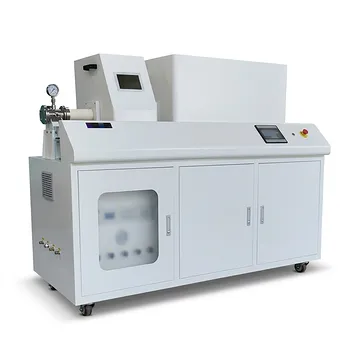
- Chemical Vapor Deposition CVD Equipment System Chamber Slide PECVD Tube Furnace with Liquid Gasifier PECVD Machine
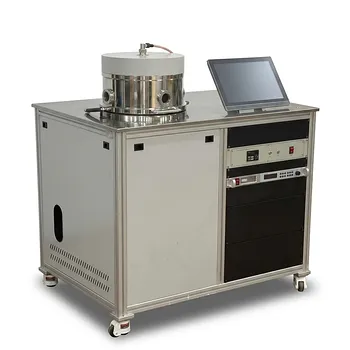
- RF PECVD System Radio Frequency Plasma-Enhanced Chemical Vapor Deposition RF PECVD
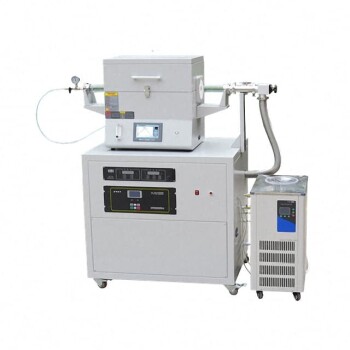
- Inclined Rotary Plasma Enhanced Chemical Vapor Deposition PECVD Equipment Tube Furnace Machine
- Inclined Rotary Plasma Enhanced Chemical Vapor Deposition PECVD Equipment Tube Furnace Machine
- 915MHz MPCVD Diamond Machine Microwave Plasma Chemical Vapor Deposition System Reactor
People Also Ask
- What are the advantages of chemical vapor deposition? Achieve Superior Thin Films for Your Lab
- What types of substrates are used in CVD to facilitate graphene films? Optimize Graphene Growth with the Right Catalyst
- What is the chemical vapor deposition growth process? Build Superior Thin Films from the Atom Up
- How expensive is chemical vapor deposition? Understanding the True Cost of High-Performance Coating
- Why is Chemical Vapor Deposition (CVD) equipment uniquely suited for constructing hierarchical superhydrophobic structures?