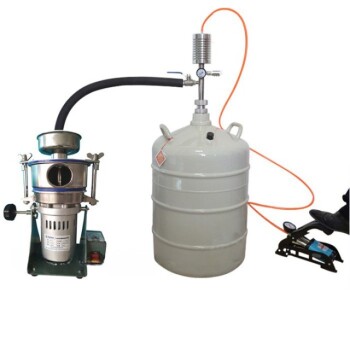
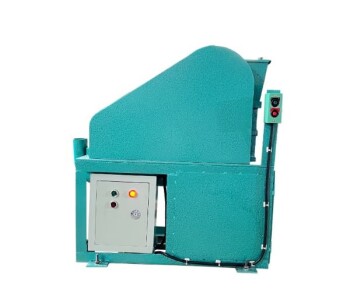
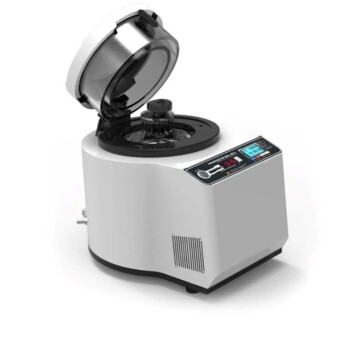
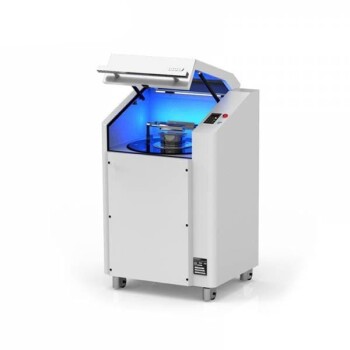
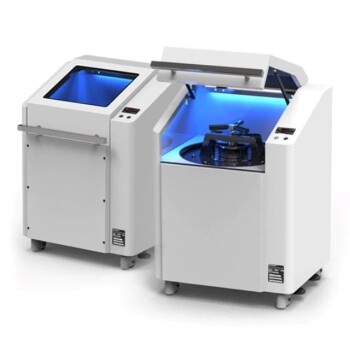
Processing rock samples into an ultra-fine powder below 75 microns is essential for neutralizing physical and chemical interferences that distort X-ray measurements. By utilizing high-energy laboratory crushing and milling equipment, you eliminate matrix effects and the influence of mineral grain size on X-ray fluorescence intensity. This level of refinement ensures a smooth sample surface and uniform composition, which are the fundamental requirements for achieving laboratory-grade repeatability and absolute accuracy with pXRF technology.
To obtain quantitative data from pXRF analysis, the sample must be transformed from a heterogeneous rock into a homogeneous powder. This process minimizes light scattering and ensures that the elemental distribution is uniform enough for the X-ray beam to provide a representative and accurate reading.
Overcoming Physical and Chemical Interferences
Eliminating the "Grain Size Effect"
Large mineral grains within a raw rock sample can cause significant fluctuations in X-ray intensity because different minerals absorb and emit X-rays at different rates. Reducing the particle size to below 75 microns ensures that no single large crystal dominates the detection area, creating a consistent response across the entire sample.
Neutralizing Matrix Effects
Matrix effects occur when the chemical composition of the surrounding material interferes with the X-ray signal of the target element. Grinding the sample into an ultra-fine powder homogenizes these different mineral phases, allowing the pXRF's internal calibration to more accurately account for the chemical environment.
Maximizing Specific Surface Area
Reducing particles to micro-scales drastically increases the specific surface area, which is critical for consistent X-ray interaction. Finer particles allow for a higher degree of liberation between different minerals, ensuring that the detector receives a balanced signal from all constituents rather than just the surface-exposed minerals.
Optimizing the Detection Surface for Precision
Minimizing Light Scattering and Shadowing
Rough, uneven surfaces on raw rock or coarse gravel scatter the X-ray beam and create "shadow effects" that lead to under-reported elemental concentrations. A finely ground powder can be pressed into a flat, level pellet, providing a perfectly smooth detection surface that reflects signals directly back to the sensor.
Ensuring Sample Representativeness
Rock samples are inherently heterogeneous; a pXRF window only analyzes a small fraction of the total sample surface. Milling the entire sample to below 75 microns ensures that the small volume analyzed is statistically representative of the entire rock specimen, preventing "nugget effects" where a single high-grade crystal skews the data.
Preparing for Secondary Processing
Achieving a sub-75 micron particle size is often a prerequisite for further sample preparation steps, such as pressed pellet formation or borate fusion. These methods require ultra-fine powders to ensure the structural integrity of the pellet and the uniform heat conduction necessary for high-accuracy analytical results.
Understanding the Trade-offs
Risk of Cross-Contamination
The primary downside of high-energy milling is the potential for cross-contamination between samples if the equipment is not meticulously cleaned. Using cleaning agents like sterile silica sand between runs is necessary but adds time and cost to the sample preparation workflow.
Material Loss and Processing Time
Achieving ultra-fine powders requires significant mechanical energy and time, which may slow down high-volume exploration projects. Additionally, extremely fine dust can be lost during the transfer from the mill to the analysis cup, potentially affecting the mass balance of the sample.
Equipment Wear and Maintenance
Milling rock samples—which often contain abrasive minerals like quartz—causes wear on the grinding bowls and pucks. To maintain accuracy, operators must monitor for media contamination (e.g., chrome from steel bowls or tungsten from carbide bowls) that could be mistakenly identified as part of the sample chemistry.
How to Apply This to Your Project
Recommendations Based on Your Analysis Goals
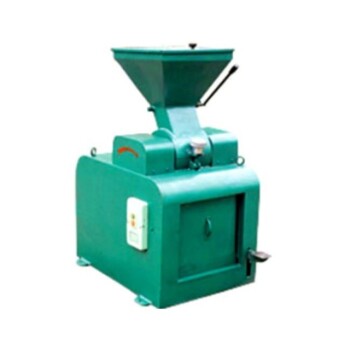
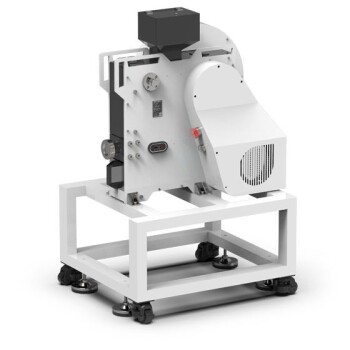
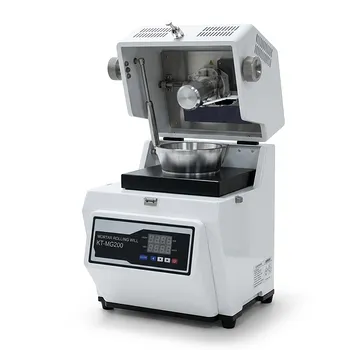
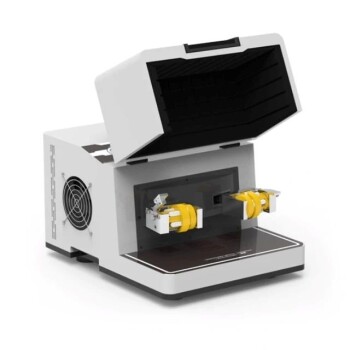
- If your primary focus is quantitative laboratory-grade data: Use a vibratory disc mill or puck mill to ensure 100% of the sample passes through a 75-micron sieve.
- If your primary focus is rapid field screening: You may use a manual mortar and pestle, but understand that the accuracy will be significantly lower due to inconsistent grain sizes.
- If your primary focus is identifying trace elements: Prioritize using specialized milling media, like zirconia or agate, to avoid introducing metallic contaminants from steel grinding components.
By strictly controlling particle size through laboratory milling, you bridge the gap between qualitative field observations and the rigorous accuracy required for definitive geochemical modeling.
Summary Table:
| Feature | Impact on pXRF Analysis | Benefit of <75μm Processing |
|---|---|---|
| Grain Size | Large crystals cause X-ray fluctuations | Eliminates "grain size effect" for consistent response |
| Matrix Effect | Chemical composition interferes with signals | Homogenizes mineral phases for accurate calibration |
| Surface Texture | Rough surfaces scatter beams/create shadows | Provides a smooth surface for direct signal reflection |
| Homogeneity | Small window views non-representative areas | Ensures the analyzed volume represents the whole sample |
Elevate Your Geochemical Precision with KINTEK
Achieving sub-75 micron particle size is the foundation of reliable pXRF data. KINTEK specializes in high-performance crushing and milling systems, sieving equipment, and hydraulic pellet presses designed to transform heterogeneous rock into perfectly homogeneous samples.
Whether you need contamination-free grinding with zirconia or agate media or high-throughput processing for mining exploration, our laboratory solutions ensure maximum repeatability and absolute accuracy.
Ready to optimize your sample preparation workflow? Contact our experts today to find the ideal equipment for your laboratory and field requirements.
References
- Shuguang Zhou, Shibin Liao. Evaluation of Portable X-ray Fluorescence Analysis and Its Applicability As a Tool in Geochemical Exploration. DOI: 10.3390/min13020166
This article is also based on technical information from Kintek Solution Knowledge Base .
Related Products
- Mini Planetary Ball Mill Machine for Laboratory Milling
- Laboratory Sealed Hammer Crusher for Efficient Sample Preparation
- Vibrating Disc Mill Small Laboratory Grinding Machine
- Laboratory Jaw Crusher
- High Energy Planetary Ball Mill Milling Machine for Laboratory
People Also Ask
- How does a laboratory ball mill ensure the mixing quality of Mn3Zn0.8Sn0.2N and Ti? Achieve Perfect Homogeneity
- Why is a laboratory ball mill required for ultra-fine fly ash? Unlock Nano-Scale Adsorption Power
- Why is a laboratory ball mill used in Co-Ni catalyst research? Optimize CO2 Conversion with Precise Milling
- What is the function of a laboratory ball mill in the pretreatment of waste tire char (WTC)? Optimize Material Reactivity
- What is the primary function of a laboratory ball mill in the modification of sulfide-based solid electrolytes with LiPO2F2?