Knowledge Why is it necessary to vacuum and introduce argon gas during ball milling? Protect Your Ti-Fe Composite Purity
Author avatar

Tech Team · Kintek Solution

Updated 2 days ago

Why is it necessary to vacuum and introduce argon gas during ball milling? Protect Your Ti-Fe Composite Purity


Vacuuming the ball milling jar and backfilling it with argon gas establishes a critical inert protective environment. This process is strictly necessary to prevent the oxidation of reactive metal powders—specifically titanium—during the milling process. Without this atmosphere, the intense heat and friction generated by high-energy collisions would cause the titanium to react with oxygen, destroying the chemical purity of your raw materials.

High-energy ball milling converts kinetic energy into heat, rendering active metals like titanium highly susceptible to oxidation. An argon atmosphere acts as a chemical shield, isolating the powder to maintain the alloy’s intended composition.

The Thermodynamic Challenge of Milling

High-Energy Collisions and Heat

Ball milling is an aggressive mechanical process. As the milling balls impact the powder and the jar walls, significant amounts of kinetic energy are converted into thermal energy.

This results in a sharp increase in localized temperature. The friction generated between the particles and the grinding medium further escalates the heat within the jar.

The Reactivity of Titanium

Titanium is classified as an active metal. While stable at room temperature due to a passivation layer, it becomes highly reactive when subjected to high temperatures and mechanical stress.

During milling, particles are fractured, exposing fresh, unoxidized surfaces. When these fresh surfaces are exposed to heat and friction in the presence of air, titanium will oxidize rapidly.

Creating the Inert Environment

The Function of Vacuuming

Simply adding argon is not enough; you must first remove the existing atmosphere. Vacuuming eliminates the air and moisture currently trapped inside the jar.

This step ensures that no residual oxygen remains to react with the powder once the milling begins.

The Role of Argon Gas

Argon is a noble gas, meaning it is chemically inert. By filling the jar with argon after vacuuming, you create a protective "blanket" around the powder particles.

This atmosphere prevents the active titanium from interacting with oxygen, regardless of the heat or friction levels reached during the process.

Understanding the Risks of Oxidation

Chemical Impurity

If the protective atmosphere is compromised, the titanium powder will convert into titanium oxides. This fundamentally changes the chemistry of your Ti-Fe matrix composite.

Instead of a pure metal alloy, you may unintentionally create a material with brittle ceramic inclusions, compromising the mechanical properties of the final product.

Uncontrolled Surface Reactions

Ball milling often requires long durations to achieve the desired particle size. Without a consistent inert environment, the powders are subjected to uncontrolled oxidation over several hours.

This degrades the quality of the powder and makes the sintering or consolidation phases of your project unpredictable.

Ensuring Material Integrity

If your primary focus is Chemical Purity: Ensure a deep vacuum is pulled before introducing argon to eliminate all traces of atmospheric oxygen and moisture.

If your primary focus is Process Consistency: Monitor the seal integrity of your milling jar to prevent argon leakage and oxygen ingress during long milling durations.

By strictly controlling the atmosphere, you ensure that the high energy of the milling process refines the structure of your material rather than degrading its chemistry.

Summary Table:

Feature Role in Ti-Fe Ball Milling Impact on Powder Quality
Vacuuming Removes residual air and moisture Prevents initial oxidation and contamination
Argon Gas Provides an inert, protective atmosphere Shields active Ti surfaces from chemical reactions
Heat Control Dissipates energy from collisions Prevents thermal degradation of the alloy matrix
Surface Protection Coats freshly fractured particles Ensures chemical integrity and mechanical properties

Elevate Your Material Research with KINTEK Precision

Don't let oxidation compromise your Ti-Fe composite results. KINTEK specializes in providing high-performance laboratory solutions, including advanced crushing and milling systems, vacuum atmosphere furnaces, and durable PTFE or ceramic milling jars. Whether you are working on battery research, metallurgy, or advanced ceramics, our comprehensive range of high-pressure reactors, hydraulic presses, and cooling solutions ensures your materials maintain absolute purity.

Ready to optimize your milling process? Contact our technical experts today to find the perfect equipment and consumables for your lab!

Related Products

People Also Ask

Related Products

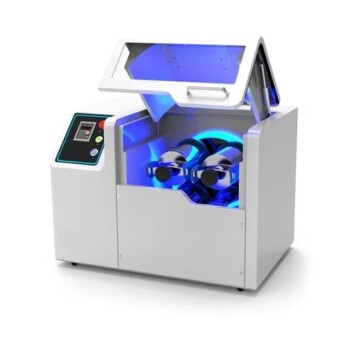
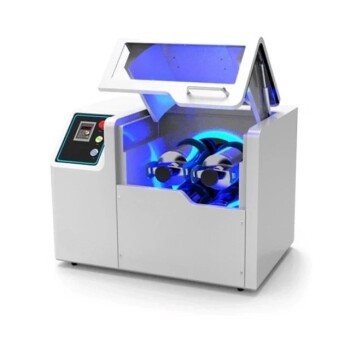
High Energy Planetary Ball Mill Machine for Laboratory Horizontal Tank Type

High Energy Planetary Ball Mill Machine for Laboratory Horizontal Tank Type

The KT-P2000H uses a unique Y-axis planetary trajectory, and utilizes the collision, friction and gravity between the sample and the grinding ball.

Stainless Steel Laboratory Ball Mill for Dry Powder and Liquid with Ceramic Polyurethane Lining

Stainless Steel Laboratory Ball Mill for Dry Powder and Liquid with Ceramic Polyurethane Lining

Discover the versatile stainless steel dry powder/liquid horizontal ball mill with ceramic/polyurethane lining. Ideal for ceramic, chemical, metallurgical, and building materials industries. High grinding efficiency and uniform particle size.

High Energy Planetary Ball Mill for Laboratory Horizontal Tank Type Milling Machine

High Energy Planetary Ball Mill for Laboratory Horizontal Tank Type Milling Machine

KT-P4000H uses the unique Y-axis planetary motion trajectory, and utilizes the collision, friction and gravity between the sample and the grinding ball to have a certain anti-sinking ability, which can obtain better grinding or mixing effects and further improve the sample output.

High-Energy Omnidirectional Planetary Ball Mill Machine for Laboratory

High-Energy Omnidirectional Planetary Ball Mill Machine for Laboratory

The KT-P2000E is a new product derived from the vertical high-energy planetary ball mill with a 360°rotation function. The product not only has the characteristics of the vertical high-energy ball mill, but also has a unique 360°rotation function for the planetary body.

High Energy Planetary Ball Mill Milling Machine for Laboratory

High Energy Planetary Ball Mill Milling Machine for Laboratory

Experience fast and effective sample processing with the F-P2000 high-energy planetary ball mill. This versatile equipment offers precise control and excellent grinding capabilities. Perfect for laboratories, it features multiple grinding bowls for simultaneous testing and high output. Achieve optimal results with its ergonomic design, compact structure, and advanced features. Ideal for a wide range of materials, it ensures consistent particle size reduction and low maintenance.

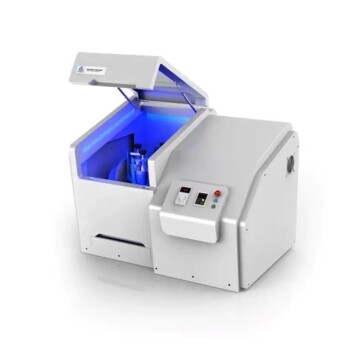
Laboratory Planetary Ball Mill Cabinet Planetary Ball Milling Machine

Laboratory Planetary Ball Mill Cabinet Planetary Ball Milling Machine

The vertical cabinet structure combined with ergonomic design enables users to obtain the best comfortable experience in standing operation. The maximum processing capacity is 2000ml, and the speed is 1200 revolutions per minute.

High Energy Planetary Ball Mill Milling Machine for Laboratory

High Energy Planetary Ball Mill Milling Machine for Laboratory

The biggest feature is that the high energy planetary ball mill can not only perform fast and effective grinding, but also has good crushing ability

High-Energy Omnidirectional Planetary Ball Mill Milling Machine for Laboratory

High-Energy Omnidirectional Planetary Ball Mill Milling Machine for Laboratory

The KT-P4000E is a new product derived from the vertical high-energy planetary ball mill with a 360° swivel function. Experience faster, uniform, and smaller sample output results with 4 ≤1000ml ball mill jars.

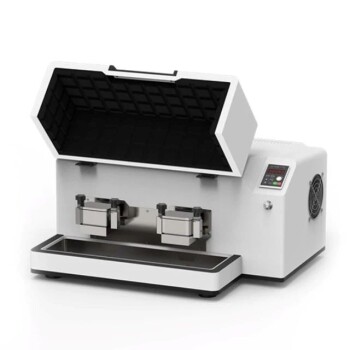
Hybrid High Energy Vibratory Ball Mill for Lab Use

Hybrid High Energy Vibratory Ball Mill for Lab Use

KT-BM400 is used for rapid grinding or mixing of dry, wet and frozen small amount of samples in the laboratory. It can be configured with two 50ml ball mill jars

Laboratory Horizontal Planetary Ball Mill Milling Machine

Laboratory Horizontal Planetary Ball Mill Milling Machine

Improve sample uniformity with our Horizontal Planetary Ball Mills. KT-P400H reduces sample deposition and KT-P400E has multi-directional capabilities. Safe, convenient and efficient with overload protection.

Laboratory Four-Body Horizontal Jar Mill

Laboratory Four-Body Horizontal Jar Mill

The four-body horizontal tank mill ball mill can be used with four horizontal ball mill tanks with a volume of 3000ml. It is mostly used for mixing and grinding laboratory samples.

Laboratory Planetary Ball Mill Rotating Ball Milling Machine

Laboratory Planetary Ball Mill Rotating Ball Milling Machine

KT-P400E is a desktop multi-directional planetary ball mill with unique grinding and mixing capabilities. It offers continuous and intermittent operation, timing, and overload protection, making it ideal for various applications.

Laboratory Micro Horizontal Jar Mill for Precision Sample Preparation in Research and Analysis

Laboratory Micro Horizontal Jar Mill for Precision Sample Preparation in Research and Analysis

Discover the Micro Horizontal Jar Mill for precise sample preparation in research and analysis. Ideal for XRD, geology, chemistry, and more.

High Energy Vibratory Laboratory Ball Mill Double Tank Type

High Energy Vibratory Laboratory Ball Mill Double Tank Type

High-energy vibration ball mill is a small desktop laboratory grinding instrument. It uses 1700r/min high-frequency three-dimensional vibration to make the sample achieve the result of grinding or mixing.

High Energy Vibratory Laboratory Ball Mill Grinding Mill Single Tank Type

High Energy Vibratory Laboratory Ball Mill Grinding Mill Single Tank Type

High-energy vibration ball mill is a small desktop laboratory grinding instrument.It can be ball-milled or mixed with different particle sizes and materials by dry and wet methods.

Laboratory Single Horizontal Jar Mill

Laboratory Single Horizontal Jar Mill

KT-JM3000 is a mixing and grinding instrument for placing a ball milling tank with a volume of 3000ml or less. It adopts frequency conversion control to realize timing, constant speed, direction change, overload protection and other functions.

Mini Planetary Ball Mill Machine for Laboratory Milling

Mini Planetary Ball Mill Machine for Laboratory Milling

Discover the KT-P400 desktop planetary ball mill, ideal for grinding and mixing small samples in the lab. Enjoy stable performance, long service life, and practicality. Functions include timing and overload protection.

Lab Vibration Mill

Lab Vibration Mill

Vibration Mill for Efficient Sample Preparation, Suitable for Crushing and Grinding a Variety of Materials with Analytical Precision. Supports Dry / Wet / Cryogenic Grinding and Vacuum/Inert Gas Protection.

High Energy Vibratory Ball Mill for Lab Use

High Energy Vibratory Ball Mill for Lab Use

The high-energy vibrating ball mill is a high-energy oscillating and impacting multifunctional laboratory ball mill. The table-top type is easy to operate, small in size, comfortable and safe.

Laboratory Ten-Body Horizontal Jar Mill for Lab Use

Laboratory Ten-Body Horizontal Jar Mill for Lab Use

The Ten-body horizontal jar mill is for 10 ball mill pots (3000ml or less). It has frequency conversion control, rubber roller movement, and PE protective cover.


Leave Your Message