Polyetheretherketone (PEEK) is the definitive material choice for in-situ electrochemical cells primarily due to its exceptional chemical inertness against high-strength alkaline environments. It is uniquely capable of withstanding corrosive electrolytes, such as 30 wt.% sodium hydroxide (NaOH), even at elevated temperatures of 80°C. Beyond chemical survival, PEEK offers the structural integrity required for complex cell designs and the radiological transparency necessary for advanced monitoring.
While many engineering materials degrade in the caustic environment of chlor-alkali electrolysis, PEEK provides a critical trifecta: resistance to alkaline corrosion, structural rigidity for sealing, and transparency to X-ray radiation.
Surviving the Chemical Environment
Resistance to Alkaline Corrosion
The primary challenge in chlor-alkali electrolysis is the aggressive nature of the electrolyte. PEEK is selected because it exhibits exceptional chemical inertness when exposed to high-strength alkalines. It remains stable in concentrations as high as 30 wt.% NaOH, ensuring the cell body does not dissolve or contaminate the experiment.
Thermal Stability
Chemical resistance must often be maintained at elevated temperatures to match experimental conditions. PEEK maintains its structural and chemical integrity at 80°C. This thermal stability ensures consistent performance during heated electrolysis cycles.
Facilitating In-Situ Analysis
Low X-ray Absorption
In-situ experiments often require "looking inside" the cell while it operates, typically using X-ray techniques. PEEK exhibits low absorption under X-ray radiation. This allows researchers to visualize internal processes without the cell body obscuring the data.
Radiation Durability
Beyond simply allowing X-rays to pass through, the material must not degrade under exposure. PEEK displays high durability under X-ray radiation. This ensures that the monitoring process itself does not compromise the structural lifespan of the cell.
Structural and Mechanical Integrity
Enabling Complex Geometries
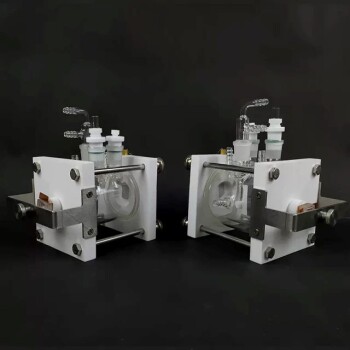
The mechanical properties of PEEK allow for precision manufacturing. It is suitable for constructing cell bodies featuring complex in-situ flow channels. This allows researchers to engineer precise hydrodynamic conditions within the cell.
High Sealing Performance
Leakage in an electrochemical cell containing hot, concentrated caustic soda is a safety and experimental failure. PEEK provides high sealing performance. Its rigidity and dimensional stability ensure that connections remain tight even under the thermal and chemical stress of operation.
Understanding the Design Trade-offs
Balancing Rigidity and Transparency
In material selection, there is often a trade-off between a material's physical strength and its interference with analytical equipment. Metals offer strength but block X-rays; soft polymers are transparent but may deform or leak.
The PEEK Advantage
PEEK is utilized because it minimizes these standard trade-offs. It offers the mechanical strength needed for high-pressure sealing and complex machining, without behaving as a radiopaque barrier. It effectively bridges the gap between structural engineering needs and analytical scientific requirements.
Making the Right Choice for Your Experiment
To determine if PEEK is the correct material for your specific cell design, consider your primary experimental constraints:
- If your primary focus is Chemical Stability: PEEK is essential if you are working with high-concentration alkalines (up to 30 wt.% NaOH) at elevated temperatures (80°C).
- If your primary focus is In-Situ Monitoring: PEEK is the optimal choice if you require a cell body that is durable yet transparent to X-ray radiation for internal visualization.
- If your primary focus is Mechanical Design: PEEK allows you to machine complex internal flow channels while maintaining the high sealing performance required for safety.
PEEK serves as the foundational enabler for advanced chlor-alkali research by simultaneously solving the problems of corrosion, mechanical design, and observational transparency.
Summary Table:
| Feature | Key Benefit | Experimental Impact |
|---|---|---|
| Chemical Resistance | Inert to 30 wt.% NaOH | Prevents cell degradation and contamination |
| Thermal Stability | Stable up to 80°C | Ensures integrity during heated electrolysis cycles |
| X-ray Transparency | Low radiation absorption | Enables clear in-situ internal visualization |
| Mechanical Rigidity | High sealing & machinability | Supports leak-proof designs with complex flow channels |
Optimize Your Electrochemical Research with KINTEK
Elevate your chlor-alkali experiments with KINTEK’s precision-engineered laboratory solutions. We specialize in high-performance electrolytic cells and electrodes designed to withstand the harshest caustic environments, alongside a comprehensive range of high-temperature furnaces (vacuum, tube, atmosphere) and high-pressure reactors.
Whether you need custom-machined PEEK cell bodies for in-situ analysis or essential PTFE and ceramic consumables, KINTEK delivers the structural integrity and chemical resistance your research demands.
Contact our experts today to find the perfect equipment for your lab!
References
- Marcus Gebhard, Christina Roth. Design of an In-Operando Cell for X-Ray and Neutron Imaging of Oxygen-Depolarized Cathodes in Chlor-Alkali Electrolysis. DOI: 10.3390/ma12081275
This article is also based on technical information from Kintek Solution Knowledge Base .
Related Products
- H-Type Double-Layer Optical Electrolytic Electrochemical Cell with Water Bath
- Electrolytic Electrochemical Cell for Coating Evaluation
- PTFE Electrolytic Cell Electrochemical Cell Corrosion-Resistant Sealed and Non-Sealed
- Electrolytic Electrochemical Cell with Five-Port
- Side Window Optical Electrolytic Electrochemical Cell
People Also Ask
- What is the overall structure of the H-type double-layer optical water bath electrolytic cell? Precision Design for Controlled Experiments
- How is the electrolyte managed in H-type electrolytic cells for specific reactions? Achieve Precise Control and High Purity
- What checks should be performed on the H-type electrolytic cell before use? Ensure Accurate Electrochemical Data
- What is important regarding temperature control for the H-type electrolytic cell? Ensure Precision and Data Integrity
- What is the overall structure of the H-type electrolytic cell? Understanding Dual-Chamber Electrochemical Designs