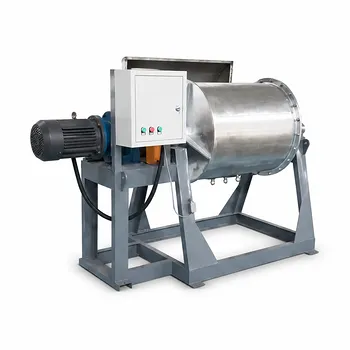
High-energy ball milling is the critical mechanism for achieving molecular-level homogeneity and optimal conductivity in carbon electrode slurries. By utilizing intensive mechanical impact and shear forces over an extended period (often up to 48 hours), this process ensures that porous carbon, graphite, binders, and solvents are deeply integrated. This level of refinement is necessary to break down material agglomerates and ensure a uniform dispersion, which directly dictates the film quality during printing and the final electrical efficiency of the electrode.
High-energy ball milling transforms raw materials from separate phases into a cohesive, nanostructured slurry by applying extreme mechanical force to overcome particle attraction. This process is the foundation for creating a continuous conductive network, which is essential for both manufacturing reliability and the final electrochemical performance of the device.
The Mechanism of High-Energy Milling
Intensive Mechanical Impact and Shear
High-energy systems, such as planetary ball mills, utilize high-frequency rotation to generate powerful mechanical forces. These forces act on the raw powders—including graphite, silicon, or metal oxides—to physically refine their particle size. This refinement increases the contact area between components, which is vital for subsequent chemical or physical interactions.
Overcoming Particle Agglomeration
Nanomaterials, particularly Carbon Nanotubes (CNTs) and carbon black, have a natural tendency to form severe agglomerates in their dry state. High-energy milling provides the necessary energy to break these clusters apart, ensuring that individual particles are liberated. Without this force, the slurry would contain "clumps" that lead to uneven coatings and electrical "dead zones" in the finished electrode.
Molecular-Level Dispersion
The goal of the milling process is to achieve a state where binders and conductive additives are distributed at a molecular level. This deep mixing ensures that the polymer binder uniformly wets the surface of the active material particles. In systems like the Cold Sintering Process, this uniform wetting is a prerequisite for forming high-density, highly conductive composite structures.
Impact on Manufacturing and Performance
Ensuring Film Quality for Screen Printing
The physical consistency of the slurry determines how it behaves during the screen-printing process. A well-milled slurry possesses the rheological properties required to flow through fine meshes and level out into a smooth, defect-free film. Any residual large particles or poorly dispersed binders would result in clogging or inconsistent film thickness across the current collector.
Constructing the Conductive Network
An effective electrode requires a continuous path for electrons to flow; high-energy milling facilitates this by embedding conductive phases into the matrix. For example, milling can physically embed CNTs into metal matrices or wrap conductive carbon around active material particles. This ensures that every part of the electrode is electrically "active," which significantly enhances the rate performance of the battery or supercapacitor.
Enhancing Material Reactivity and Surface Energy
The intense friction and impact during milling can disrupt the crystalline structure of materials, sometimes turning crystalline graphite into an amorphous state. This transition increases the surface energy and reactivity of the carbon atoms, making them more responsive during subsequent thermal processing or chemical reactions. In some cases, this added energy can even reduce the temperatures required for high-temperature sintering steps.
Understanding the Trade-offs
Processing Time and Energy Consumption
While 48 hours of milling ensures deep mixing, it represents a significant bottleneck in production timelines and high energy costs. The long duration is often necessary for molecular-level uniformity, but it requires a careful balance against throughput requirements.
Risk of Over-Processing and Contamination
Excessive milling can lead to "over-processing," where the material structure is damaged beyond the intended state, potentially reducing electrical performance. Additionally, the high-speed rotation of grinding balls (often made of stainless steel or ceramic) introduces a risk of media wear, which can contaminate the high-purity carbon slurry with metallic or ceramic impurities.
Making the Right Choice for Your Goal
When integrating high-energy ball milling into your production workflow, consider your primary performance metrics:
- If your primary focus is Maximum Conductivity: Prioritize longer milling durations to ensure the most robust conductive network and eliminate all micro-agglomerates.
- If your primary focus is Manufacturing Throughput: Optimize rotation speeds and ball-to-powder ratios to achieve the required particle size reduction in the shortest possible window.
- If your primary focus is Material Purity: Utilize specialized grinding media, such as zirconia or high-carbon steel, to minimize the impact of media wear on the chemical composition of the slurry.
High-energy ball milling is not merely a mixing step, but a transformative mechanical process that defines the functional architecture of the carbon electrode.
Summary Table:
| Key Feature | Mechanism | Impact on Electrode Performance |
|---|---|---|
| Homogeneity | Molecular-level dispersion | Ensures uniform binder wetting and active material distribution |
| De-agglomeration | Intensive mechanical impact | Breaks down CNT and carbon black clusters for smooth coating |
| Conductive Network | Phase embedding | Creates a continuous electron path, enhancing rate performance |
| Surface Energy | Structural disruption | Increases material reactivity and improves sintering efficiency |
Optimize Your Electrode Performance with KINTEK Precision
Achieving the perfect carbon slurry requires more than just mixing—it requires the intensive mechanical force that only high-quality milling systems can provide. KINTEK specializes in advanced laboratory equipment designed for the rigors of energy storage research. From our high-performance crushing and milling systems to our precision hydraulic presses and high-temperature furnaces, we provide the tools you need to build a robust conductive network.
Whether you are refining battery materials or developing next-generation supercapacitors, our portfolio—including vacuum furnaces, planetary ball mills, and specialized ceramics—is engineered to ensure material purity and manufacturing reliability.
Ready to elevate your material processing? Contact our technical experts today to find the ideal milling solution for your laboratory needs.
References
- Jie Sheng, Wenjun Wu. EtOH/H<sub>2</sub>O ratio modulation on carbon for high-<i>V</i><sub>oc</sub> (1.03 V) printable mesoscopic perovskite solar cells without any passivation. DOI: 10.1039/d2ma01090a
This article is also based on technical information from Kintek Solution Knowledge Base .
Related Products
- High-Energy Omnidirectional Planetary Ball Mill Milling Machine for Laboratory
- High Energy Planetary Ball Mill Milling Machine for Laboratory
- High Energy Planetary Ball Mill Milling Machine for Laboratory
- High Energy Planetary Ball Mill for Laboratory Horizontal Tank Type Milling Machine
- High-Energy Omnidirectional Planetary Ball Mill Machine for Laboratory
People Also Ask
- How does a planetary ball mill solve mixing challenges with PEO? Unlock solid-state synthesis for insoluble dopants
- What is the role of a planetary ball mill in preparing doped high-nickel cathode materials? Enhance Battery Stability
- Why is a planetary ball mill used for LNMO precursor powders? Optimize Particle Uniformity & Battery Performance
- What is the function of a planetary ball mill in the solid-state synthesis of LiTa2PO8? Achieve High-Purity Electrolytes
- What is the critical role of a planetary ball mill in the processing of inorganic fillers? Enhance Battery Performance