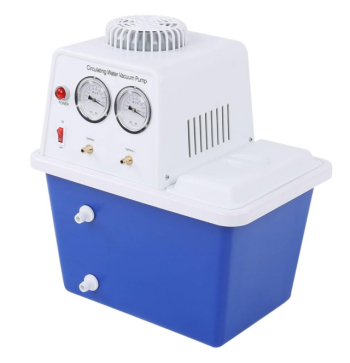
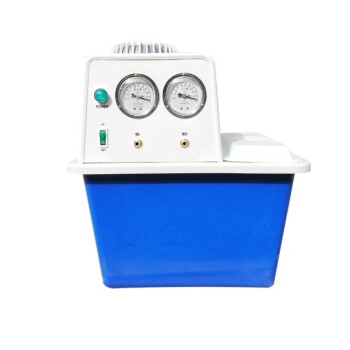
Precision thermal management is mandatory for the reliability of photoelectrochemical battery systems. A circulating water bath is required to accurately control the temperature of the electrolyte entering the cell—often maintaining it at a constant level, such as 45°C—to ensure valid experimental data and system safety.
A precision circulating water bath serves a dual critical function: it creates a stable thermodynamic environment to simulate real-world photovoltaic conditions while actively dissipating waste heat to prevent catastrophic component failure.
The Role of Thermal Stability
Accurate Electrolyte Control
The primary function of the water bath is to lock in the temperature of the electrolyte. By maintaining a strict constant (e.g., 45°C), the system removes thermal fluctuations that would otherwise skew electrochemical performance data.
Simulating Real-World Thermodynamics
Photovoltaic modules do not operate in a vacuum; they function under specific environmental thermal stresses. Through constant temperature circulation, the system mimics these real-world thermodynamic conditions. This ensures that laboratory results accurately reflect how the battery will perform in actual deployment environments.
Thermal Management and System Protection
Dissipating Waste Heat
The process of photoelectrochemical conversion inevitably generates waste heat. The circulating water bath acts as an active heat exchange medium. It continuously draws this excess thermal energy away from the cell, preventing heat accumulation.
Preventing Component Failure
Without active cooling, heat does not dissipate evenly. This can lead to localized overheating, creating "hot spots" within the system. The water bath mitigates this risk, protecting sensitive cell components from permanent physical damage or degradation.
Understanding the Trade-offs
System Complexity and Maintenance
While a precision bath ensures safety and accuracy, it introduces additional mechanical complexity to the battery setup. Operators must monitor fluid levels and pump performance to ensure continuous flow. A failure in the circulation loop can result in rapid thermal runaway, as the passive cooling capacity of the cell is often insufficient.
Making the Right Choice for Your Goal
To optimize your photoelectrochemical system, align your thermal management strategy with your specific objectives.
- If your primary focus is Data Validity: Prioritize the precision of the temperature control to exactly match the intended real-world environmental conditions.
- If your primary focus is Hardware Longevity: Ensure the circulation flow rate is sufficient to rapidly remove waste heat and prevent localized hot spots.
Effective thermal management is the bridge between theoretical chemistry and reliable, real-world application.
Summary Table:
| Feature | Function in Photoelectrochemical Systems | Impact on Research |
|---|---|---|
| Temperature Control | Maintains constant electrolyte temperature (e.g., 45°C) | Ensures repeatable and valid experimental data |
| Environmental Simulation | Mimics real-world thermodynamic stresses | Improves accuracy of real-world performance predictions |
| Waste Heat Dissipation | Actively removes excess thermal energy | Prevents localized hotspots and component degradation |
| Active Cooling | Continuous heat exchange medium | Protects sensitive cell components from thermal failure |
Elevate Your Research Precision with KINTEK
Don't let thermal fluctuations compromise your laboratory results or hardware longevity. KINTEK specializes in high-performance cooling solutions, including precision circulating water baths, ULT freezers, and cold traps designed specifically for rigorous photoelectrochemical and battery research.
Whether you are managing electrolyte stability or protecting sensitive electrolytic cells and electrodes, our expert team provides the reliable thermal management tools you need to bridge the gap between theoretical chemistry and real-world application.
Ready to optimize your lab's efficiency? Contact us today to find the perfect thermal management solution!
References
- António Vilanova, Adélio Mendes. Optimized photoelectrochemical tandem cell for solar water splitting. DOI: 10.1016/j.ensm.2017.12.017
This article is also based on technical information from Kintek Solution Knowledge Base .
Related Products
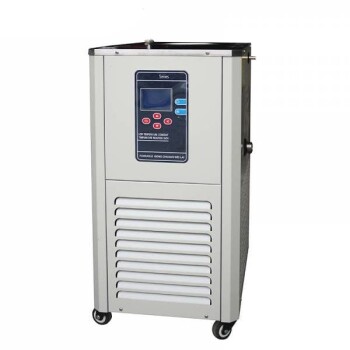
- High Temperature Constant Temperature Heating Circulator Water Bath Chiller Circulator for Reaction Bath
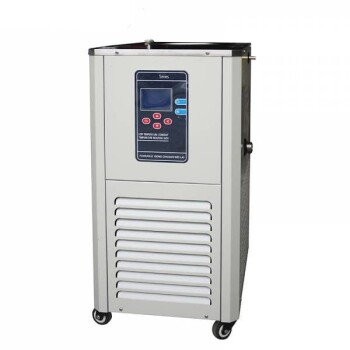
- 50L Chiller Water Bath Cooling Circulator Low Temperature Constant Temperature Reaction Bath
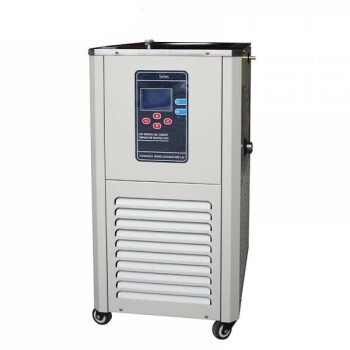
- 40L Chiller Water Bath Cooling Circulator Low Temperature Constant Temperature Reaction Bath
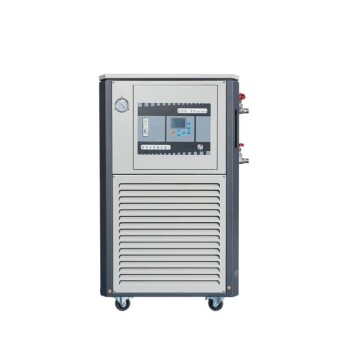
- 30L Chiller Water Bath Cooling Circulator Low Temperature Constant Temperature Reaction Bath
- 5L Chilling Circulator Cooling Water Bath Circulator for Low Temperature Constant Temperature Reaction Bath
People Also Ask
- What is the necessity of a circulating water bath in chlorate production? Optimize Yield & Purity with Precision
- How do constant temperature circulators impact weight-loss immersion tests? Ensure Precision in Corrosion Analysis
- How does a constant temperature circulator support the leaching reaction of gold scrap? Optimize Gold Recovery Results
- Why is a constant temperature water bath used for precursor storage in CVD? Achieve Stable Nanocrystalline SiC Deposition
- Why is a high-precision constant temperature water bath necessary for anaerobic digestion? Ensure Success at 37±0.02°C