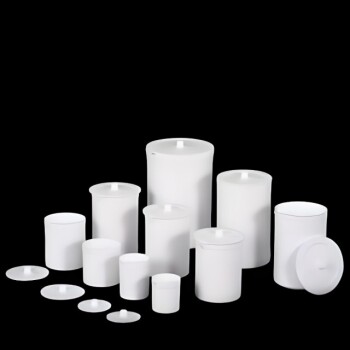
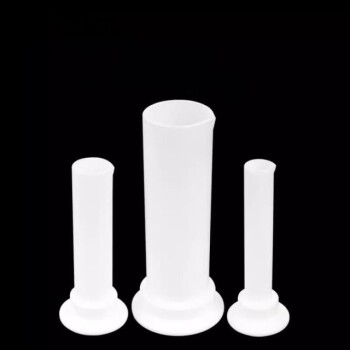
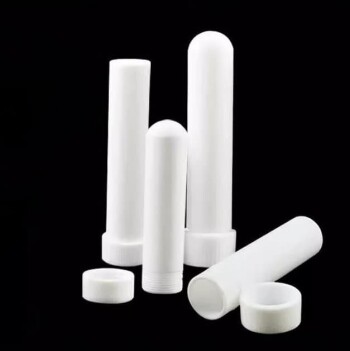
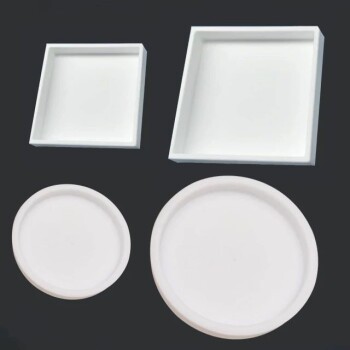
The solvothermal synthesis of Mg-MOF-74 requires a high-pressure reactor with a PTFE liner to create a controlled, high-temperature environment that exceeds the atmospheric boiling point of solvents while protecting the product from metallic contamination.
This specific configuration allows solvents like dimethylformamide (DMF) and ethanol to remain in a liquid state at 125°C, providing the energy necessary for the self-assembly of magnesium ions and organic ligands (H4DOBDC). The PTFE liner acts as a critical chemical barrier, preventing corrosive reaction mixtures from leaching iron or other metals from the stainless steel reactor body into the MOF crystal structure.
Core Takeaway: Successful Mg-MOF-74 synthesis depends on the synergy between solvothermal pressure, which drives crystal nucleation, and chemical inertness, which ensures the structural purity and crystallinity of the final framework by isolating the reaction from the metal reactor walls.
The Role of the High-Pressure Environment
Facilitating Liquid-Phase Reactions Above Boiling Points
Solvothermal synthesis often operates at temperatures significantly higher than the standard boiling points of the organic solvents involved. By using a sealed high-pressure reactor, the internal pressure rises as the temperature increases, forcing the solvents to stay in a liquid state.
Driving Crystal Nucleation and Growth
The high-pressure environment is essential for the self-assembly of magnesium ions and H4DOBDC ligands. This "energetic" state provides the thermodynamic driving force required for the ordered growth of the MOF-74 framework, which would not occur under ambient pressure conditions.
The Necessity of the PTFE Liner
Chemical Inertness and Corrosion Resistance
The reaction mixture for Mg-MOF-74 typically involves DMF and ethanol, which can become aggressive toward metals at elevated temperatures. A PTFE (Polytetrafluoroethylene) liner is utilized because it is almost entirely chemically inert, resisting corrosion even in the presence of strong electrolytes or acidic precursors.
Preventing Metal Ion Contamination
If the reaction solution were to contact the stainless steel reactor body directly, metal ions (like iron or nickel) could leach into the solution. These impurities would integrate into the MOF lattice, destroying the purity and specific surface area of the Mg-MOF-74 crystals.
Maintaining System Integrity and Sealing
PTFE also serves as an effective sealing material under thermal expansion. It ensures the reactor remains gastight for the duration of the 24-hour synthesis, preventing solvent loss and maintaining the constant pressure required for consistent crystal morphology.
Understanding the Trade-offs
Thermal Conductivity Limitations
PTFE is an excellent insulator, which means it has low thermal conductivity compared to the surrounding steel. This creates a "thermal lag" where the internal solution takes longer to reach the target 125°C than the external oven temperature might suggest.
Temperature Constraints of PTFE
While PTFE is ideal for the 125°C-160°C range, it begins to soften or deform at temperatures approaching 250°C. For syntheses requiring extreme heat, users must carefully monitor the physical integrity of the liner to prevent catastrophic seal failure or "creep."
How to Apply This to Your Project
Recommendations for Synthesis Success
- If your primary focus is Maximum Crystal Purity: Always use a fresh or thoroughly "pre-cleaned" PTFE liner to ensure no cross-contamination from previous synthesis batches.
- If your primary focus is High-Throughput Production: account for the thermal lag of the PTFE liner by allowing extra time for the reactor to reach equilibrium before starting the 24-hour timer.
- If your primary focus is Safety and Longevity: Inspect the PTFE liner for "pitting" or discoloration after every run, as compromised liners can lead to reactor body corrosion and dangerous pressure leaks.
By strictly maintaining this high-pressure, inert environment, you ensure the production of high-quality Mg-MOF-74 with the precise structural integrity required for advanced gas storage and catalysis applications.
Summary Table:
| Component | Primary Function | Benefit for Mg-MOF-74 |
|---|---|---|
| High-Pressure Reactor | Raises solvent boiling point | Drives crystal nucleation and self-assembly |
| PTFE Liner | Chemical barrier & isolation | Prevents metal ion leaching and contamination |
| Sealing Mechanism | Maintains gastight environment | Ensures constant pressure and crystal morphology |
| Thermal Control | Regulates heat energy | Provides thermodynamic drive for framework growth |
Elevate Your Material Synthesis with KINTEK
Precision is the foundation of high-performance MOF research. KINTEK specializes in advanced laboratory equipment designed to meet the rigorous demands of solvothermal synthesis. Our industry-leading high-temperature high-pressure reactors and autoclaves, paired with premium PTFE liners and products, provide the chemical inertness and pressure stability required to achieve maximum purity in your Mg-MOF-74 frameworks.
Whether you need reliable hydrothermal reactors, vacuum furnaces, or high-purity ceramic crucibles, KINTEK delivers the quality and consistency your research deserves.
Ready to optimize your lab's performance? Contact KINTEK today to discover how our specialized equipment can drive your next breakthrough.
References
- Yue Yu, Li Jia. Preparation and Mercury Removal Performance of Mg-MOF-74 Composites. DOI: 10.3390/atmos14101551
This article is also based on technical information from Kintek Solution Knowledge Base .
Related Products
- Custom PTFE Teflon Parts Manufacturer for Hydrothermal Synthesis Reactor Polytetrafluoroethylene Carbon Paper and Carbon Cloth Nano-growth
- Stainless High Pressure Autoclave Reactor Laboratory Pressure Reactor
- High Pressure Laboratory Autoclave Reactor for Hydrothermal Synthesis
- Customizable High Pressure Reactors for Advanced Scientific and Industrial Applications
- Custom PTFE Teflon Parts Manufacturer for Microwave Digestion Tank
People Also Ask
- What is the function of a PTFE reactor in MXene etching? Ensure Safe, High-Purity MAX Phase Conversion
- Why is a PTFE reactor required for titanium-based nano-ceramic coating solutions? Ensure Chemical Inertness & Purity
- Why must a Polytetrafluoroethylene (PTFE) reactor be used for Ti3C2TX MXene etching? Ensure Safety and Purity
- Why are PTFE reactors preferred for silver phosphate glass testing? Ensure Purity and Kinetic Accuracy
- What are the advantages of using polytetrafluoroethylene (PTFE) liners in hydrothermal synthesis reactors? High Purity