Lab-grown diamond machines are used to create diamonds in a laboratory setting using either High Pressure High Temperature (HPHT) or Chemical Vapor Deposition (CVD) processes. These machines work by bombarding a diamond with specific types of radiation and analyzing what the stone outputs. With CVD diamonds, the machine can even enable a skilled gemologist to see microscopic growth lines where each layer of diamond material was built on the next. Many major diamond suppliers have purchased these machines to screen their inventories for undisclosed man-made diamonds. Lab-grown diamond machines are environmentally friendly, safe and cheaper to produce than mined diamonds.
Toggle Categories
Get Instant Support
Choose your preferred way to connect with our team
-
Get Free Quote Fill out form for detailed pricing
-
Send Email Detailed inquiry support
-
WhatsApp Quick mobile chat
Response Time
Within 8 hours on working days, 24 hours on holidays
lab grown diamond machine

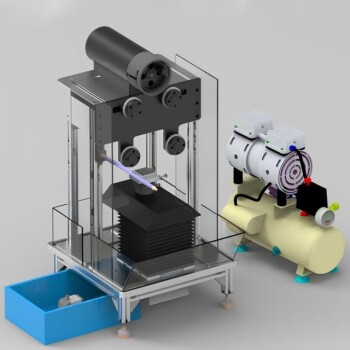
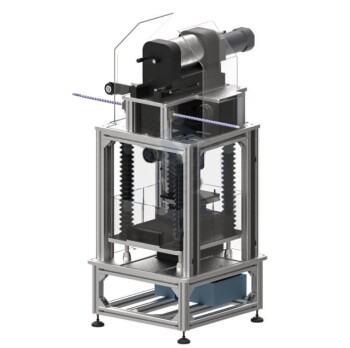
Our Lab Grown Diamond Machine (PECVD) solutions cater to all budgets and needs. With our extensive portfolio, we guarantee to provide quality solutions that exceed expectations. Our machines use specific types of radiation to analyze the diamond's output, enabling us to distinguish between natural and lab-grown diamonds. We offer bespoke design services for unique applications. Our machines are environmentally friendly, safer, and cheaper to produce than mined diamonds.
Applications of Lab Grown Diamond Machine
- Research and Development: Scientists and researchers use lab grown diamond machines to study the properties and behavior of diamonds. This research can lead to the development of new applications for diamonds, such as in cutting tools, electronics, and medical devices.
- Production of Synthetic Diamonds: Lab grown diamond machines are used in the production of synthetic diamonds. These machines use PECVD methods to create diamonds that are chemically, physically, and optically identical to mined diamonds.
Advantages of Lab Grown Diamond Machine
- Enables the production of high-quality lab-grown diamonds
- Environmentally friendly and cheaper to produce than mined diamonds
- Subtype of plasma-enhanced CVD, microwave plasma CVD, is the most popular and reliable method for CVD diamond manufacturing
- Lab-grown diamonds have the same physical and chemical properties as natural diamonds
With the growing demand for lab-grown diamonds, our Lab Grown Diamond Machine is becoming increasingly popular. It is a safe and environmentally friendly alternative to mined diamonds, and our machine can produce diamonds that are of the highest quality and customizable to meet your needs.
FAQ
What Types Of Diamond Growth Machines Are Available?
Several machines are available for growing artificial diamonds, including hot filament CVD, DC current plasma flame CVD, microwave plasma-enhanced chemical vapor deposition (MPCVD), and micro plasma CVD (MPCVD). Among these, MPCVD is widely used due to its homogeneous heating by microwave. Additionally, the growth rate of diamond can be increased by increasing plasma density, and nitrogen can be added to improve diamond growth rate. To achieve a flat surface, various polishing techniques, including mechanical and chemo-mechanical polishing, can be used. Large size diamond growth can be achieved through mosaic growth or heteroepitaxial growth.
What Are The Advantages Of Lab Grown Diamonds?
The advantages of lab grown diamonds include knowing their origin, lower price point, being more environmentally friendly, and the ability to create colored diamonds more easily. Lab grown diamonds are almost 100% certain of their origin, making them free from conflict, child exploitation, or war. They are also at least 20% cheaper than natural diamonds of the same size, clarity, and cut. Lab grown diamonds are more sustainable as there is no mining involved and they require less environmental impact. Lastly, synthetic colored diamonds are easier to manufacture in a wide range of colors and come at a significantly cheaper price point.
What Is The Price Of CVD Growing Machine?
The price of a CVD growing machine can vary widely depending on the size and complexity of the unit. Small tabletop models designed for research and development purposes may cost around $50,000, while industrial-scale machines capable of producing large quantities of high-quality diamonds can cost upwards of $200,000. However, the price of CVD diamonds is generally lower than mined diamonds, making them a more affordable option for consumers.
REQUEST A QUOTE
Our professional team will reply to you within one business day. Please feel free to contact us!
Related Articles

Your Diamond Tester Might Be Lying: Why Moissanite Fools It and How to Get Accurate Results
Is your diamond tester giving false positives? Learn why common testers fail to spot moissanite and discover the dual-test method that ensures accuracy.
Read more
CVD Diamond: Superior Material for Optical Windows
Explores the exceptional properties and applications of CVD diamond in optical windows.
Read more
CVD Diamond Optical Windows: Advancing High-Tech Optical Applications in Extreme Environments
Exploring the benefits of CVD diamond optical windows for high-end applications in extreme environments, including aerospace, military, and scientific research.
Read more
Challenges in the Development and Application of Tantalum in Vacuum Deposition Equipment
This article discusses the role of tantalum in vacuum deposition equipment, focusing on its properties, manufacturing challenges, and its critical applications in industries like OLED screen production.
Read more
Comprehensive Classification and Application of Magnetron Sputtering Targets
This article details the classification, applications, and principles of magnetron sputtering targets across various industries.
Read more
Comprehensive Analysis of Magnetron Sputtering Targets
An in-depth exploration of magnetron sputtering targets, their requirements, principles, types, and performance factors.
Read more
PECVD Technology: Principles, Materials, Advantages, and Applications
An in-depth analysis of PECVD technology, its principles, materials, process parameters, advantages, and applications across various industries.
Read more
Preparation of Graphene by Chemical Vapor Deposition (CVD)
This article discusses the various methods of graphene preparation, focusing on the Chemical Vapor Deposition (CVD) technique and its advancements.
Read more
Advantages of Chemical Vapor Deposition
Explores the benefits of chemical vapor deposition, including film formation speed, adhesion strength, and low radiation damage.
Read more
Low Pressure Chemical Vapor Deposition (LPCVD) in Semiconductor Manufacturing
Analyzing the core technology of LPCVD in semiconductor manufacturing, from principles to machine types.
Read more
Understanding Metal Organic Chemical Vapor Deposition (MOCVD) Technology
An in-depth exploration of MOCVD technology, its principles, equipment, and applications in semiconductor growth.
Read more
How Tubular PECVD Adapts to Large Wafer Sizes
Exploring the challenges and solutions for tubular PECVD in handling large-sized silicon wafers.
Read more
Detailed Processes and Parameters of PECVD for TiN and Si3N4 Deposition
An in-depth exploration of the PECVD processes for TiN and Si3N4, including equipment setup, operational steps, and key process parameters.
Read more
Introduction to the PECVD Deposition of Amorphous Silicon Process in Burst Film Formation
Explains the mechanism of burst film formation in PECVD deposition of amorphous silicon and solutions to prevent it.
Read more
Core Barriers to PECVD Nano-Coating Technology
Explores the main obstacles in the development and application of PECVD nano-coating technology.
Read more
Optimizing PECVD Coating Processes for MEMS Devices
Guide to configuring and optimizing PECVD processes for high-quality silicon oxide and nitride films in MEMS devices.
Read more
Understanding Glow Discharge in the PECVD Process
Explores the concept, characteristics, and effects of glow discharge in PECVD for film deposition.
Read more
Types of PECVD Process, Equipment Structure, and Its Process Principle
An overview of PECVD processes, equipment structures, and common issues, focusing on various PECVD types and their applications.
Read more
Applications of PECVD Nano-Coating Technology in Electronic Devices
PECVD nano-coating technology enhances durability and reliability in various electronic devices.
Read more
PECVD Nano-Coating Applications Beyond Waterproofing and Corrosion Prevention
Explores diverse PECVD nano-coating applications including waterproofing, anti-corrosion, antibacterial, hydrophilic, and wear-resistant films.
Read more