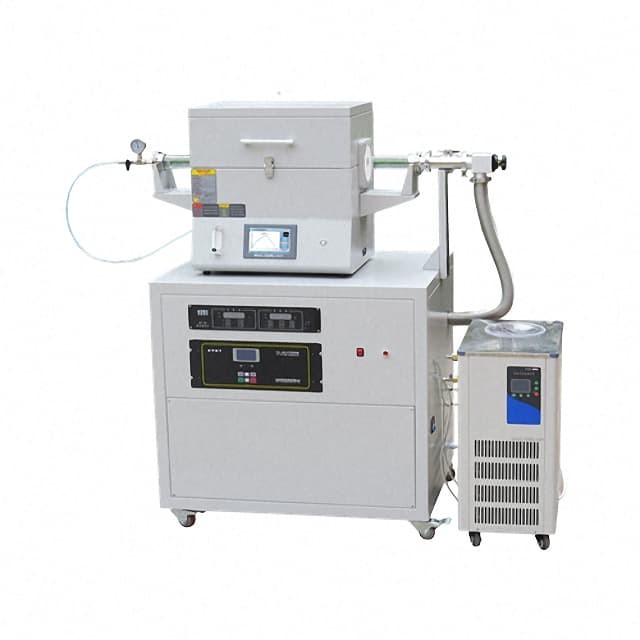
CVD & PECVD Furnace
Split Chamber CVD Tube Furnace with Vacuum Station Chemical Vapor Deposition System Equipment Machine
Item Number : KT-CTF12
Price varies based on specs and customizations
- Max. temperature
- 1200 ℃
- Constant work temperature
- 1100 ℃
- Furnace tube diameter
- 60 mm
- Heating zone length
- 1x450 mm
- Heating rate
- 0-20 ℃/min

Shipping:
Contact us to get shipping details Enjoy On-time Dispatch Guarantee.
Why Choose Us
Easy ordering process, quality products, and dedicated support for your business success.
Introduction
The Split Chamber CVD Tube Furnace With Vacuum Station is a versatile and high-performance laboratory equipment designed for chemical vapor deposition (CVD) applications. It features a split furnace chamber that allows for easy access to reaction samples and rapid cooling. The furnace tube is made of high-temperature quartz and has a diameter of 60 mm. The system includes a 4-channel MFC mass flow meter with source gases of CH4, H2, O2, and N2, providing precise control over gas flow rates. The vacuum station features a 4L/S rotary vane vacuum pump, achieving a maximum vacuum pressure of 10 Pa. With its advanced features and capabilities, the Split Chamber CVD Tube Furnace With Vacuum Station is an ideal choice for various research and development applications in materials science, semiconductor processing, and other fields.
Detail&Parts


Applications
The Split Chamber CVD Tube Furnace With Vacuum Station CVD Machine is a versatile and advanced piece of equipment designed for a variety of applications in the fields of material science, semiconductor manufacturing, and research and development. This machine is particularly useful for processes that require precise control over temperature, gas flow, and vacuum levels, making it an essential tool for high-quality material synthesis and processing.
- Nanomaterial Synthesis: The furnace is ideal for the growth of nanowires, nanofilms, and other nanostructured materials, which are crucial in the development of advanced electronic and optoelectronic devices.
- Vacuum Coating: It is extensively used for the deposition of thin films on various substrates, including metal films, ceramic films, and composite films, which are essential for enhancing the properties of materials in applications such as optics and electronics.
- Battery Material Processing: The furnace is suitable for the drying and sintering of battery materials, which is a critical step in the production of high-performance batteries.
- Material Drying and Sintering: It is used in the high-temperature sintering of ceramics, refractory materials, and specialty materials, ensuring the consolidation and densification of these materials.
- Atmosphere and Vacuum Heat Treatment: The vertical tube furnace configuration allows for quenching, annealing, and tempering of small steel parts, as well as vertical CVD coating, making it a valuable asset in metallurgical processes.
- Research and Development: It is widely used in universities, research institutes, and industrial and mining enterprises for conducting high-temperature experiments, atmosphere sintering, reducing atmosphere, and CVD/CVI experiments, contributing to the advancement of material science and technology.
Features
The Split Chamber CVD Tube Furnace With Vacuum Station CVD Machine is a sophisticated piece of equipment designed for advanced chemical vapor deposition (CVD) processes. This furnace integrates cutting-edge technology to enhance the efficiency and quality of film deposition, making it ideal for research and industrial applications. Here are the key features and their benefits:
- High Film Deposition Rate: Utilizing radio frequency glow technology, this furnace significantly boosts the film deposition rate, reaching up to 10Å/S. This rapid deposition is crucial for high-throughput production and research, saving time and increasing productivity.
- Large Area Uniformity: With advanced multi-point RF feed technology and specialized gas path distribution, the furnace ensures film uniformity of up to 8%. This uniformity is essential for creating consistent and high-quality coatings across large substrates, enhancing the reliability of the materials produced.
- Consistent Deposition: The design incorporates advanced semiconductor industry concepts, resulting in a deviation of less than 2% between substrates. This high level of consistency is vital for applications requiring precise and repeatable results, such as in the production of electronic components.
- Stable Process Control: The equipment's high stability ensures the continuity and consistency of the CVD process. This reliability is critical for maintaining process integrity and reducing the risk of defects or failures during operation.
- Intelligent Control System: Patented by Bonage, the integrated control system includes a high-performance temperature control system that uses a closed-loop negative feedback mechanism. This system, combined with high-quality imported electrical components, enhances the overall performance and reliability of the equipment, making it virtually maintenance-free.
- Versatile Applications: Suitable for depositing various types of films, including metal, ceramic, and composite films, the furnace supports continuous growth processes and can be easily expanded with additional functions like plasma cleaning and etching. This versatility makes it a valuable asset for diverse research and production needs.
Principle
The Split Chamber CVD Tube Furnace With Vacuum Station CVD Machine is a high-temperature vacuum furnace used for chemical vapor deposition (CVD) processes. CVD is a process in which a thin film of material is deposited on a substrate by the chemical reaction of a gas or vapor. The Split Chamber CVD Tube Furnace With Vacuum Station CVD Machine uses a split furnace chamber to allow for easy access to the substrate during the CVD process. The vacuum station is used to create a vacuum in the furnace chamber, which helps to remove impurities and improve the quality of the deposited film.
Advantages
- Intuitive sample observation and rapid cooling: Split furnace chamber allows for direct observation of reaction samples and quick cooling.
- High temperature capability: Max working temperature of up to 1200℃ for versatile applications.
- Precise gas control: 4-channel MFC mass flow meter with CH4, H2, O2, and N2 sources ensures accurate and stable gas supply.
- Vacuum compatibility: Vacuum station with a 4L/S rotary vane vacuum pump achieves a maximum vacuum pressure of up to 10Pa, enabling various vacuum processes.
- High-speed heating and cooling: Furnace chamber sliding system facilitates rapid heating and cooling for efficient sample processing.
- Advanced temperature control: PID programmable temperature control with excellent accuracy, remote control, and centralized control capabilities.
- User-friendly interface: CTF Pro controller with a 7-inch TFT touch screen offers intuitive program setting and data analysis.
- Versatile vacuum setup: Stainless steel vacuum flange with adaptable ports accommodates different vacuum pump stations for customized vacuum environments.
- Energy efficiency: Water cooling system and gas afterflow design minimize energy consumption.
- Wide applicability: Suitable for CVD, diffusion, and other thermo-treatments under vacuum and atmosphere protection.
Safety Advantage
- Kindle Tech tube furnace owns over current protection and over temperature alarming function, furnace will turn off the power automatically
- Furnace build in thermal couple detecting function, furnace will stop heating and alarm will be on once broken or failure detected
- KT-CTF12 Pro support power failure restarting function,furnace will resume the furnace heating program when power is incoming after failure
Technical specifications
| Furnace model | KT-CTF12-60 |
|---|---|
| Max. temperature | 1200℃ |
| Constant work temperature | 1100℃ |
| Furnace tube material | High purity quartz |
| Furnace tube diameter | 60mm |
| Heating zone length | 1x450mm |
| Chamber material | Japan alumina fiber |
| Heating element | Cr2Al2Mo2 wire coil |
| Heating rate | 0-20℃/min |
| Thermal couple | Build in K type |
| Temperature controller | Digital PID controller/Touch screen PID controller |
| Temperature control accuracy | ±1℃ |
| Sliding distance | 600mm |
| Gas precise control unit | |
| Flow meter | MFC mass flow meter |
| Gas channels | 4 channels |
| Flow rate | MFC1: 0-5SCCM O2 MFC2: 0-20SCMCH4 MFC3: 0- 100SCCM H2 MFC4: 0-500 SCCM N2 |
| Linearity | ±0.5% F.S. |
| Repeatability | ±0.2% F.S. |
| Pipe line and valve | Stainless steel |
| Maximum Operating Pressure | 0.45MPa |
| Flow meter controller | Digital Knob controller/Touch screen controller |
| Standard vacuum unit (Optional) | |
| Vacuum pump | Rotary vane vacuum pump |
| Pump flow rate | 4L/S |
| Vacuum suction port | KF25 |
| Vacuum gauge | Pirani/Resistance silicon vacuum gauge |
| Rated vacuum pressure | 10Pa |
| High vacuum unit(Optional) | |
| Vacuum pump | Rotary vane pump+Molecular pump |
| Pump flow rate | 4L/S+110L/S |
| Vacuum suction port | KF25 |
| Vacuum gauge | Compound vacuum gauge |
| Rated vacuum pressure | 6x10⁻⁵Pa |
| Above specifications and setups can be customized | |
Standard Package
| No. | Description | Quantity |
|---|---|---|
| 1 | Furnace | 1 |
| 2 | Quartz tube | 1 |
| 3 | Vacuum flange | 2 |
| 4 | Tube thermal block | 2 |
| 5 | Tube thermal block hook | 1 |
| 6 | Heat resistant glove | 1 |
| 7 | Precise gas control | 1 |
| 8 | Vacuum unit | 1 |
| 9 | Operation manual | 1 |
Optional Setup
- In tube gases detecting and monitoring,like H2, O2 and so on
- Independent furnace temperature monitoring and recording
- RS 485 communication port for PC remote control and data exporting
- Insert gases feeding flow rate control,like mass flowmeter and float flowmeter
- Touch screen temperature controller with versatile operator friendly functions
- High vacuum pump station setups, like vane vacuum pump,molecular pump,diffusion pump
Warnings
Operator safety is the top important issue! Please operate the equipment with cautions. Working with inflammable& explosive or toxic gases is very dangerous, operators must take all necessary precautions before starting the equipment. Working with positive pressure inside the reactors or chambers is dangerous, operator must fellow the safety procedures strictly. Extra caution must also be taken when operating with air-reactive materials, especially under vacuum. A leak can draw air into the apparatus and cause a violent reaction to occur.
Designed for You
KinTek provide deep custom made service and equipment to worldwide customers, our specialized teamwork and rich experienced engineers are capable to undertake the custom tailoring hardware and software equipment requirements, and help our customer to build up the exclusive and personalized equipment and solution!
Would you please drop your ideas to us, our engineers are ready for you now!
Trusted by Industry Leaders
FAQ
What Is CVD Furnace?
Chemical vapor deposition (CVD) is a technology that uses various energy sources such as heating, plasma excitation or light radiation to chemically react gaseous or vapor chemical substances on the gas phase or gas-solid interface to form solid deposits in the reactor by means of chemical reaction.To put it simply, two or more gaseous raw materials are introduced into a reaction chamber, and then they react with each other to form a new material and deposit it on the substrate surface.
CVD furnace is one combined furnace system with high temperature tube furnace unit,gases control unit, and vacuum unit, it is widely used for experiment and production of composite material preparation, microelectronics process, semiconductor optoelectronic, solar energy utilization, optical fiber communication, superconductor technology, protective coating field.
What Is A Tube Furnace?
Laboratory tube furnace is one classic external heating high temperature tube furnace, also named hot wall heating furnace.
According to the different working temperature, furnace tube material usually can be transparent quartz tubes, high purity alumina ceramic tubes and high strength metal alloy tubes.
To meet different thermal researching purposes, tube furnace can be designed with multi heating zones, so as to have a flexible control of temperature gradient in the tube working chamber; furnace tube can work with a controlled atmosphere working environment or a high vacuum working environment.
What Is A Vacuum Furnace Used For?
How Does CVD Furnace Work?
CVD furnace system consists of high temperature tube furnace unit, reacting gas source precise control unit, vacuum pump station and corresponding assembling parts.
Vacuum pump is to remove the air from the reacting tube,and make sure there is no unwanted gases inside the reaction tube, after that the tube furnace will heat the reaction tube to a target temperature, then reacting gas source precise control unit can introduce different gases with a set ratio into the furnace tube for the chemical reaction, the chemical vapor deposition will be formed in the CVD furnace.
How Does A Tube Furnace Work?
Tube furnace heating elements are placed surrounding the cylindrical cavity, furnace can only heat the samples in the cylindrical cavity through indirect thermal radiation, since furnace tube can prevent sample material from contacting with furnace heating elements and insulation materials, so tube furnace creates a clean isolated heat chamber and reduce risks of the sample material contaminating by the furnace.
What Is Mpcvd?
What Is The Process Of A Vacuum Furnace?
Which Gas Is Used In CVD Process?
There are tremendous gas sources can be used in the CVD process, the common chemical reactions of CVD includes Pyrolysis, photolysis, reduction, oxidation, redox,so the gases involved in these chemical reactions can be used in the CVD process.
We take CVD Graphene growth for an example, the gases used in the CVD process will be CH4,H2,O2 and N2.
What Is The Application For Tube Furnace?
Tubular furnace is mainly used in metallurgy, glass, heat treatment, lithium anode and cathode materials, new energy, abrasives and other industries, and is a professional equipment for measuring materials under certain temperature conditions.
Tube furnace features simple structure, easy operation, easy control and continuous production.
Tube furnace is also widely applied in the CVD (chemical vapor deposition) and plasma enhanced CVD systems.
What Is Mpcvd Machine?
What Gas Is Used In A Vacuum Furnace?
What Is The Advantage Of CVD System?
- Wide range of films can be produced, metal film, nonmetal film and multi-component alloy film as required. At the same time, it can prepare high-quality crystals that are difficult to obtain by other methods, such as GaN, BP, etc.
- The film forming speed is fast, usually several microns per minute or even hundreds of microns per minute. It is possible to simultaneously deposit large quantities of coatings with uniform composition, which is incomparable to other film preparation methods, such as liquid phase epitaxy (LPE) and molecular beam epitaxy (MBE).
- The working conditions are carried out under normal pressure or low vacuum conditions, so the coating has good diffraction, and the workpieces with complex shapes can be uniformly coated, which is much superior to PVD.
- Due to the mutual diffusion of reaction gas, reaction product and substrate, a coating with good adhesion strength can be obtained, which is crucial for preparing surface strengthened films such as wear-resistant and anti-corrosion films.
- Some films grow at a temperature far lower than the melting point of the film material. Under the condition of low temperature growth, the reaction gas and reactor wall and impurities contained in them almost do not react, so a film with high purity and good crystallinity can be obtained.
- Chemical vapor deposition can obtain a smooth deposition surface. This is because compared with LPE, chemical vapor deposition (CVD) is carried out under high saturation, with high nucleation rate, high nucleation density, and uniform distribution on the whole plane, resulting in a macroscopic smooth surface. At the same time, in chemical vapor deposition, the average free path of molecules (atoms) is much larger than LPE, so the spatial distribution of molecules is more uniform, which is conducive to the formation of a smooth deposition surface.
- Low radiation damage, which is a necessary condition for manufacturing metal oxide semiconductors (MOS) and other devices
How Many Different Types Tube Furnace?
Tube furnace can work with different mechanical functions smoothly, so there are many different types tube furnace variations for different experiment purposes, typical furnace furnaces are as below:
- Horizontal tube furnace
- Vertical tube furnace
- Split tube furnace
- Rotary tube furnace
- Tilting tube furnace
- Sliding tube furnace
- Fast heating and cooling tube furnace
- Continuous feeding and discharging tube furnace
What Are The Advantages Of Mpcvd?
What Is The Heating Element Used In A Vacuum Furnace?
What Does PECVD Stand For?
PECVD is a technology that uses plasma to activate reaction gas, promote chemical reaction on the surface of substrate or near surface space, and generate solid film. The basic principle of plasma chemical vapor deposition technology is that under the action of RF or DC electric field, the source gas is ionized to form a plasma, the low-temperature plasma is used as the energy source, an appropriate amount of reaction gas is introduced, and the plasma discharge is used to activate the reaction gas and realize chemical vapor deposition.
According to the method of generating plasma, it can be divided into RF plasma, DC plasma and microwave plasma CVD, etc...
What Are The Advantages Of Using A Tube Furnace?
Are CVD Diamonds Real Or Fake?
What Is The Difference Between CVD And PECVD?
The difference between PECVD and traditional CVD technology is that the plasma contains a large number of high-energy electrons, which can provide the activation energy required in the chemical vapor deposition process, thus changing the energy supply mode of the reaction system. Since the electron temperature in the plasma is as high as 10000K, the collision between electrons and gas molecules can promote the chemical bond breaking and recombination of the reaction gas molecules to generate more active chemical groups, while the whole reaction system maintains a lower temperature.
So compared to the CVD process, PECVD can carry out the same chemical vapor deposition process with a lower temperature.
What Safety Precautions Should Be Taken When Using A Tube Furnace?
REQUEST A QUOTE
Our professional team will reply to you within one business day. Please feel free to contact us!
Related Products

Chemical Vapor Deposition CVD Equipment System Chamber Slide PECVD Tube Furnace with Liquid Gasifier PECVD Machine
KT-PE12 Slide PECVD System: Wide power range, programmable temp control, fast heating/cooling with sliding system, MFC mass flow control & vacuum pump.

Customer Made Versatile CVD Tube Furnace Chemical Vapor Deposition Chamber System Equipment
Get your exclusive CVD furnace with KT-CTF16 Customer Made Versatile Furnace. Customizable sliding, rotating, and tilting functions for precise reactions. Order now!

Multi Heating Zones CVD Tube Furnace Machine Chemical Vapor Deposition Chamber System Equipment
KT-CTF14 Multi Heating Zones CVD Furnace - Precise Temperature Control and Gas Flow for Advanced Applications. Max temp up to 1200℃, 4 channels MFC mass flow meter, and 7" TFT touch screen controller.

1200℃ Split Tube Furnace with Quartz Tube Laboratory Tubular Furnace
KT-TF12 split tube furnace: high-purity insulation, embedded heating wire coils, and max. 1200C. Widely used for new materials and chemical vapour deposition.

Vacuum Sealed Continuous Working Rotary Tube Furnace Rotating Tube Furnace
Experience efficient material processing with our vacuum-sealed rotary tube furnace. Perfect for experiments or industrial production, equipped with optional features for controlled feeding and optimized results. Order now.

Rotary Tube Furnace Split Multi Heating Zone Rotating Tube Furnace
Multi zone rotary furnace for high-precision temperature control with 2-8 independent heating zones. Ideal for lithium ion battery electrode materials and high-temperature reactions. Can work under vacuum and controlled atmosphere.

1700℃ Controlled Atmosphere Furnace Nitrogen Inert Atmosphere Furnace
KT-17A Controlled atmosphere furnace: 1700℃ heating, vacuum sealing technology, PID temperature control, and versatile TFT smart touch screen controller for laboratory and industrial use.

Laboratory Vacuum Tilt Rotary Tube Furnace Rotating Tube Furnace
Discover the versatility of Laboratory Rotary Furnace: Ideal for calcination, drying, sintering, and high-temperature reactions. Adjustable rotating and tilting functions for optimal heating. Suitable for vacuum and controlled atmosphere environments. Learn more now!

Laboratory High Pressure Vacuum Tube Furnace
KT-PTF High Pressure Tube Furnace: Compact split tube furnace with strong positive pressure resistance. Working temp up to 1100°C and pressure up to 15Mpa. Also works under controller atmosphere or high vacuum.

Multi-zone Laboratory Tube Furnace
Experience precise, efficient thermal testing with our Multi Zone Tube Furnace. Independent heating zones and temperature sensors allow for controlled high-temperature gradient heating fields. Order now for advanced thermal analysis!

Vertical Laboratory Tube Furnace
Elevate your experiments with our Vertical Tube Furnace. Versatile design allows for operation under various environments and heat treatment applications. Order now for precise results!

Vacuum Heat Treat Furnace with Ceramic Fiber Liner
Vacuum furnace with polycrystalline ceramic fiber insulation liner for excellent heat insulation and uniform temperature field. Choose from 1200℃ or 1700℃ max. working temperature with high vacuum performance and precise temperature control.

Vacuum Heat Treat and Pressure Sintering Furnace for High Temperature Applications
Vacuum pressure sintering furnaces are designed for high temperature hot pressing applications in metal and ceramic sintering. Its advanced features ensure precise temperature control, reliable pressure maintenance, and a robust design for seamless operation.

Vacuum Heat Treat Sintering Brazing Furnace
A vacuum brazing furnace is a type of industrial furnace used for brazing, a metalworking process that joins two pieces of metal using a filler metal that melts at a lower temperature than the base metals. Vacuum brazing furnaces are typically used for high-quality applications where a strong, clean joint is required.

Vacuum Hot Press Furnace Machine Heated Vacuum Press
Discover the advantages of Vacuum Hot Press Furnace! Manufacture dense refractory metals & compounds, ceramics, and composites under high temp and pressure.

Vacuum Arc Induction Melting Furnace
Discover the power of Vacuum Arc Furnace for melting active & refractory metals. High-speed, remarkable degassing effect, and free of contamination. Learn more now!

600T Vacuum Induction Hot Press Furnace for Heat Treat and Sintering
Discover the 600T Vacuum Induction Hot Press Furnace, designed for high-temperature sintering experiments in vacuum or protected atmospheres. Its precise temperature and pressure control, adjustable working pressure, and advanced safety features make it ideal for nonmetal materials, carbon composites, ceramics, and metal powders.

Horizontal High Temperature Graphite Vacuum Graphitization Furnace
Horizontal Graphitization Furnace: This type of furnace is designed with the heating elements placed horizontally, allowing for uniform heating of the sample. It's well-suited for graphitizing large or bulky samples that require precise temperature control and uniformity.

Dental Porcelain Zirconia Sintering Ceramic Vacuum Press Furnace
Get precise dental results with Dental Vacuum Press Furnace. Automatic temperature calibration, low noise tray, and touch screen operation. Order now!

Vacuum Dental Porcelain Sintering Furnace
Get precise and reliable results with KinTek's Vacuum Porcelain Furnace. Suitable for all porcelain powders, it features hyperbolic ceramic furnace function, voice prompt, and automatic temperature calibration.
Related Articles

Advantages of Using CVD Tube Furnace for Coating
CVD coatings have several advantages over other coating methods, such as high purity, density, and uniformity, making them ideal for many applications in various industries.
The Architecture of the Invisible: Mastering the CVD Tube Furnace
Chemical Vapor Deposition (CVD) turns gas into solid with atomic precision. Explore how this complex reactor system works and why it defines modern material science.
A Comprehensive Guide to Split Tube Furnaces: Applications, Features
It is accurate that a split tube furnace is a type of laboratory equipment that consists of a hollow tube or chamber that can be opened to allow for the insertion and removal of samples or materials being heated.
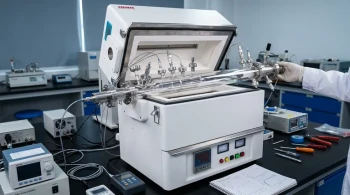
The Geometry of Heat: Why the Split Tube Furnace is an Engineer’s Best Ally
When standard tunnels fail complex geometries, the split tube furnace offers a solution. Discover how hinged designs enable advanced R&D and safer thermal processing.
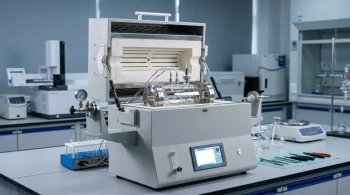
The Unsung Hinge: Why Split Tube Furnaces Are a Quiet Revolution in Lab Workflow
Split tube furnaces are more than a convenience; their hinged design solves a fundamental physical limitation, unlocking new experimental workflows.
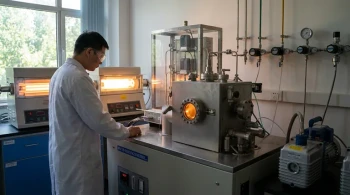
Beyond Heat: The Controlled Chaos of Chemical Vapor Deposition
Explore the intricate world of Chemical Vapor Deposition (CVD) furnaces, where controlled chaos at the atomic level forges the materials of the future.
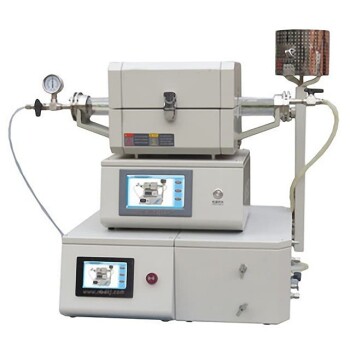
Comparing Chemical Vapor Deposition and Physical Vapor Deposition
Chemical Vapor Deposition (CVD) VS Physical Vapor Deposition (PVD)

Advantages, Limitations, and Process Control of Chemical Vapor Deposition (CVD) Technology
Explores the benefits, constraints, and process management of CVD technology for surface coatings.
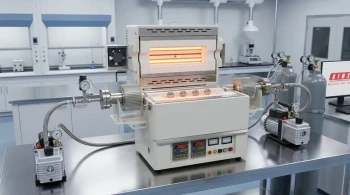
The Engineering of Emptiness: How Vacuum Tube Furnaces Defeat Oxidation
Explore the science behind vacuum tube furnaces. Learn how eliminating oxygen enables high-purity heat treatment and why the "hot wall" design matters.
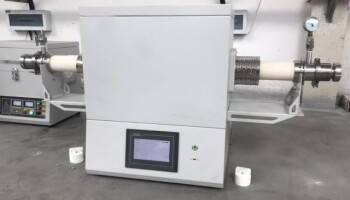
Introducing the Lab Vacuum Tube Furnaces
A vacuum tube furnace is a type of furnace that uses vacuum to isolate the process atmosphere from the external atmosphere.
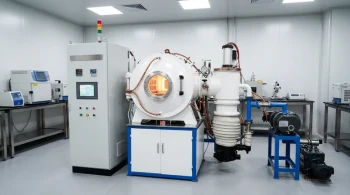
Creating Perfection in a Void: The Physics and Psychology of the Vacuum Furnace
Discover how vacuum tube furnaces create oxygen-free environments to prevent contamination and enable high-purity materials synthesis.
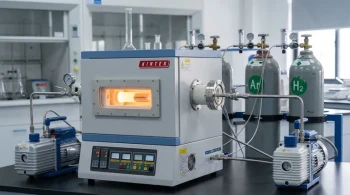
The Unseen Architect: How Atmosphere Control in Tube Furnaces Defines Material Destiny
Learn how precise atmospheric control in vacuum tube furnaces—from high vacuum to reactive gases—is crucial for defining material properties and preventing failure.