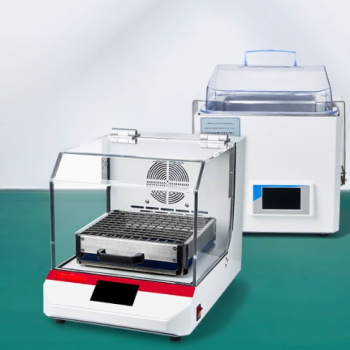
The primary function of a laboratory oven in the pretreatment of cigarette filter waste is to provide a controlled, low-temperature drying environment. Specifically, it operates around 30°C to remove moisture remaining after washing and bleaching, ensuring the cellulose material is dry enough for subsequent processing without suffering thermal damage.
Core Insight: The laboratory oven functions more as a stabilizer than a standard dehydrator in this specific application. Unlike general biomass drying which uses high heat, cigarette filter processing requires a "gentle" 30°C cycle to prevent the degradation of heat-sensitive cellulose acetate, ensuring the material remains structurally sound for chemical modification.
The Role of Controlled Dehydration
Removing Process Moisture
Before entering the oven, cigarette filters undergo rigorous washing and bleaching steps to remove toxins and impurities. The laboratory oven is responsible for evaporating the water introduced during these wet phases.
Enabling Chemical Modification
The ultimate goal of pretreatment is to prepare the material for chemical modification. Excess moisture can interfere with reagents or dilute necessary chemical reactions in later stages. The oven ensures the starting material is in the optimal dry state required for these sensitive chemical interactions.
Temperature Sensitivity and Material Integrity
The 30°C Threshold
While many industrial drying processes operate at high temperatures, cigarette filter pretreatment requires a much lower setting, typically 30°C. This specific temperature point is critical; it is warm enough to encourage evaporation but cool enough to maintain material safety.
Preventing Thermal Degradation
Cellulose acetate, the primary component of cigarette filters, is thermally sensitive. Subjecting this material to standard drying temperatures could break down its polymer chains. The low-temperature oven cycle effectively preserves the structural stability of the cellulose acetate.
Contrast with Standard Biomass
It is important to distinguish this process from general biomass drying. Common agricultural waste (like sesame stalks or bean husks) is typically dried at 105°C to maximize moisture removal. However, applying this standard 105°C protocol to cigarette filters would likely degrade the material, rendering it unsuitable for the intended chemical recycling.
Understanding the Trade-offs
Process Time vs. Material Quality
The primary trade-off in this specific application is speed versus integrity. Using a 30°C oven is a slower process compared to conventional high-heat drying.
The Risk of Acceleration
Attempting to accelerate the drying phase by increasing the temperature poses a high risk of thermal degradation. While higher temperatures (such as those used in convective heating for fuels) increase throughput, they compromise the molecular structure necessary for successful cellulose acetate recycling.
Making the Right Choice for Your Goal
- If your primary focus is Cellulose Acetate Recovery: Adhere strictly to the 30°C limit to preserve the polymer structure for chemical modification.
- If your primary focus is General Biomass Analysis: You may utilize temperatures up to 105°C for robust dehydration, provided the material is not heat-sensitive cellulose acetate.
Precise temperature control in the laboratory oven is the single most critical factor in converting cigarette waste into a valuable chemical resource rather than degraded scrap.
Summary Table:
| Feature | Cigarette Filter Pretreatment | Standard Biomass Drying |
|---|---|---|
| Target Temperature | 30°C | 105°C |
| Primary Goal | Moisture removal with polymer preservation | Maximum dehydration for analysis/fuel |
| Material Risk | Thermal degradation of cellulose acetate | Minimal for robust agricultural waste |
| Key Outcome | Material ready for chemical modification | Dry matter for volume/energy calculations |
| Equipment Role | Stabilizer and gentle dehydrator | High-throughput drying |
Maximize Your Research Precision with KINTEK
Transforming waste into valuable resources requires more than just heat—it requires precise control. KINTEK specializes in high-performance laboratory equipment, including drying ovens, high-temperature furnaces, and crushing systems designed to handle sensitive materials like cellulose acetate with absolute accuracy.
Whether you are scaling up cigarette waste recycling or conducting advanced biomass research, KINTEK provides the specialized tools you need: from muffle and vacuum furnaces to precision cooling solutions and PTFE consumables.
Ready to elevate your lab’s efficiency and material integrity? Contact us today to discuss your specific application and discover how KINTEK can support your journey from raw waste to high-value chemical products.
References
- Vipul Vilas Kusumkar, Martin Daňo. Sorptive Removal of 133Ba from Aqueous Solution Using a Novel Cellulose Hydroxyapatite Composite Derived from Cigarette Waste. DOI: 10.1007/s11270-024-07026-3
This article is also based on technical information from Kintek Solution Knowledge Base .
Related Products
- Laboratory Scientific Electric Heating Blast Drying Oven
- 1200℃ Muffle Furnace Oven for Laboratory
- High Temperature Muffle Oven Furnace for Laboratory Debinding and Pre Sintering
- Benchtop Laboratory Freeze Dryer for Lab Use
- Vertical Laboratory Tube Furnace
People Also Ask
- Why is a laboratory-grade forced air drying oven required for alloy chip moisture analysis? Ensure Data Precision
- How does a controlled drying process ensure the quality of radiochromic films? Achieve Precise Dosimetric Results
- What is the function of a laboratory oven in W18Cr4V steel sample preparation? Expert Microstructural Drying Guide
- What is the role of a laboratory drying oven in catalyst treatment? Ensure Structural Integrity & High Performance
- How does a laboratory constant temperature drying oven contribute to the processing of synthesized Zinc Oxide precipitates?