You’ve done it. Weeks of careful synthesis, culminating in a precious batch of your novel catalyst powder. You load it into the rotary kiln, set the temperature for that critical final calcination step, and wait. But when you open it, your heart sinks. Instead of the free-flowing, high-performance material you expected, you find a fused, glassy, and utterly useless brick. The batch is ruined. The project timeline is shattered.
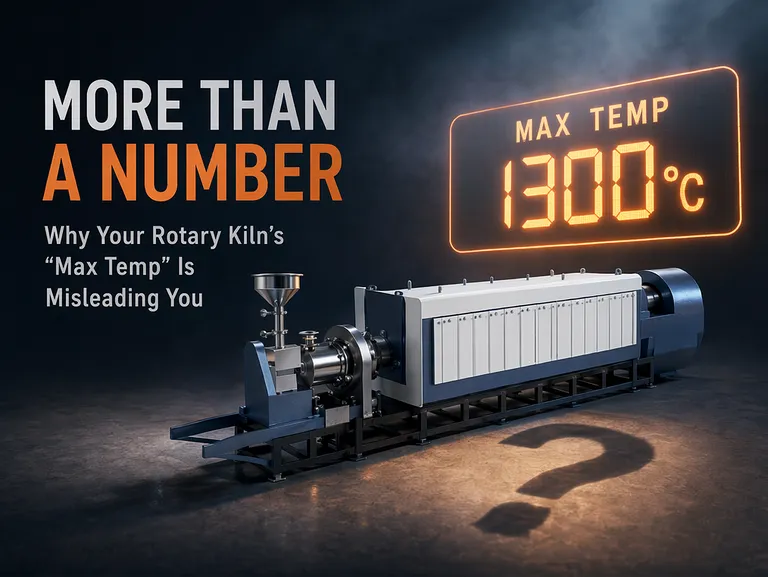
And the most frustrating part? You were operating well within the kiln’s advertised "maximum temperature."
The Vicious Cycle of High-Temperature Guesswork
If this scenario sounds familiar, you're not alone. Across countless labs, researchers and engineers are locked in a frustrating battle with their high-temperature processes. When a batch fails, the typical troubleshooting cycle begins:
- Tweak the temperature: "Maybe 1500°C was too aggressive. Let's try again at 1450°C." The result is often a material that's incompletely processed or, worse, another fused failure.
- Blame the variables: "Was the rotation speed too slow? Was the feed rate too high?" You spend days adjusting parameters, burning through expensive precursor materials with no clear path to success.
- Search for a "better" kiln: The logical conclusion seems to be that your equipment is at fault. You start shopping for a new kiln, filtering your search by one primary metric: the highest possible maximum temperature.
This cycle isn't just frustrating; it has severe business consequences. Each failed experiment represents wasted R&D budget, project delays that can derail product launch schedules, and a growing uncertainty about whether your innovative material can ever be produced reliably at scale. The problem is, these efforts are based on a fundamental misunderstanding.
The Real Culprit: Chasing a Single Number
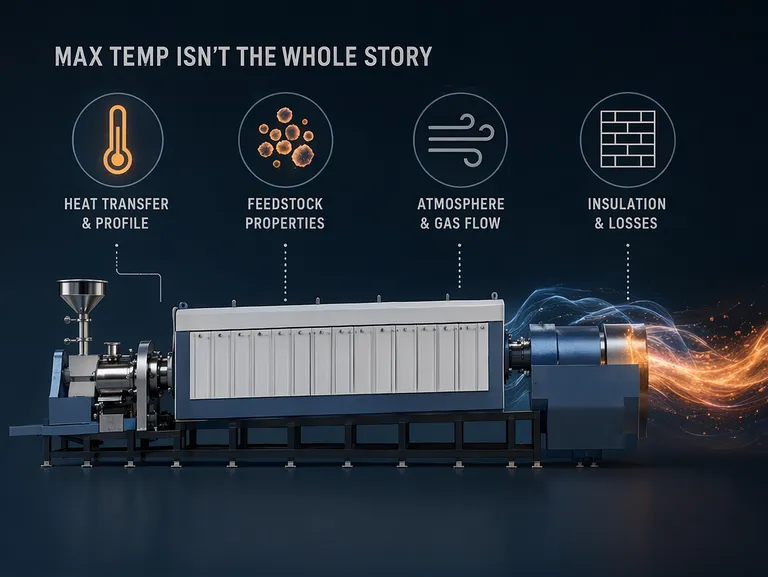
The core issue is that "maximum temperature" is a dangerously incomplete metric. It's a marketing specification, not an engineering guarantee for your specific process. Thinking of a rotary kiln as a simple oven that just "gets hot" is the trap.
A rotary kiln is not a simple box; it's a complex, dynamic system. Its ability to perform reliably at high temperatures is not determined by a single number, but by a delicate balance of several engineered components.
It's a System, Not a Thermostat
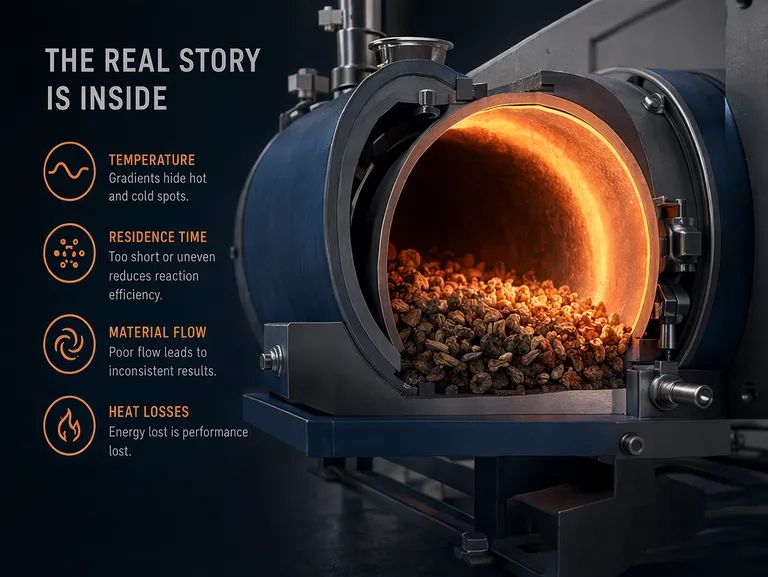
Here’s what’s really going on inside that heated tube:
-
The Refractory Lining is Your First Line of Defense: The material you are processing never touches the kiln's outer steel shell. It tumbles against an inner lining of heat-resistant refractory bricks or ceramics. A standard lining might be fine at 1200°C, but it will degrade, soften, or even react with your material at 1600°C. For extreme temperatures, you need specialized (and more expensive) materials like high-purity alumina or magnesia. Using the wrong one इज a guaranteed failure.
-
The Steel Shell Must Survive: While the refractory lining takes the direct heat, the outer steel shell must maintain its structural integrity. If the temperature gradient is too steep—meaning too much heat transfers from the inside to the outside—the massive steel tube can warp or weaken under its own rotating weight. A kiln isn't just hot; it's a piece of heavy machinery.
-
The Atmosphere Matters: Are you processing in air, an inert gas like nitrogen, or a reactive gas? At high temperatures, an airtight seal is non-negotiable but incredibly difficult to achieve. A small oxygen leak can ruin an entire batch of sensitive material, regardless of how perfectly the temperature is controlled.
This is why your previous "fixes" failed. Lowering the temperature slightly didn't work because the refractory lining was fundamentally incompatible with your material's chemistry at any high temperature. Buying a kiln with a higher "max temp" might not work either, because it could have a high-grade refractory but poor seals, rendering it useless for your atmosphere-controlled process.
You've been trying to solve a complex engineering problem by tweaking a single, misleading variable.
The Right Question: From "How Hot?" to "For What Purpose?"
The solution isn't to find a kiln that can get hotter; it's to use a kiln that is engineered for your specific process. This requires a shift in thinking. The right question isn't "What's the maximum temperature?" It's "What am I trying to achieve, and what conditions are required to do it reliably?"
Answering this question means you need a tool designed with this philosophy in mind. This is where KINTEK's approach to lab equipment makes a critical difference. We don't just sell you a product from a catalog; we provide an engineered solution based on a deep understanding of your goals.
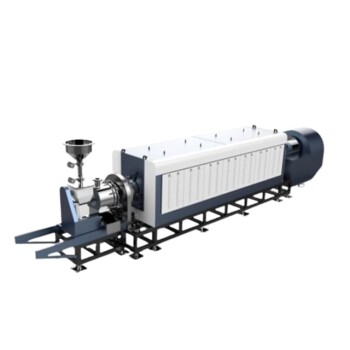
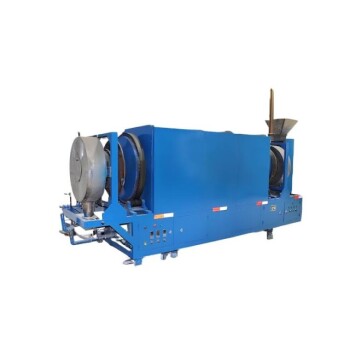
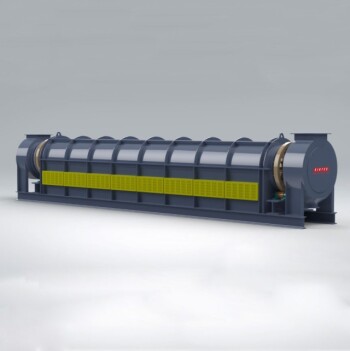
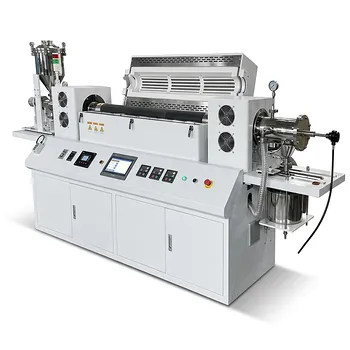
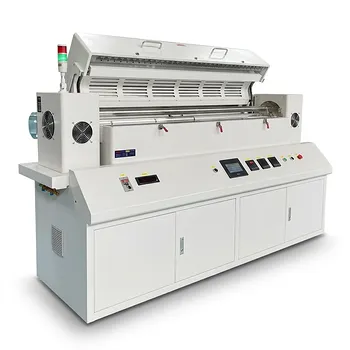
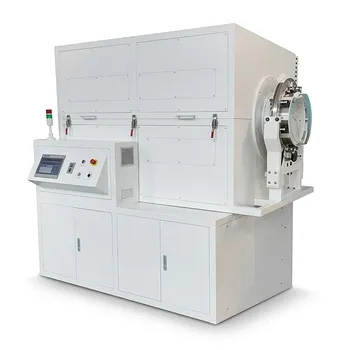
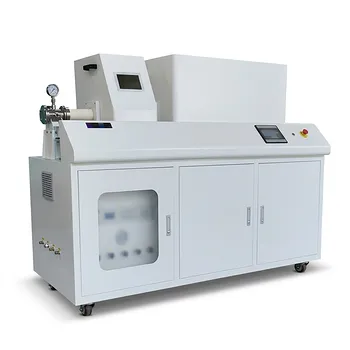
A KINTEK rotary kiln is not an off-the-shelf appliance. It's the result of a consultative process where we ensure the key systems are perfectly matched to your work:
- Purpose-Matched Refractories: We don't default to a "one-size-fits-all" lining. We help you select the precise refractory material that can withstand your target temperature and remain inert to your unique material chemistry.
- Engineered for Durability: Our designs account for the entire thermal system, ensuring the steel shell, riding rings, and drive assembly maintain their integrity for a long and reliable service life.
- Precision Atmosphere Control: For processes requiring specific gas environments, we engineer robust sealing solutions that prevent leaks and give you true control over your material's processing environment.
- Stable, Uniform Heating: With advanced electric heating elements and multi-zone controls, our kilns deliver the stable, uniform temperature profiles necessary for repeatable, high-quality results.
Beyond Troubleshooting: Unlocking New Research Frontiers
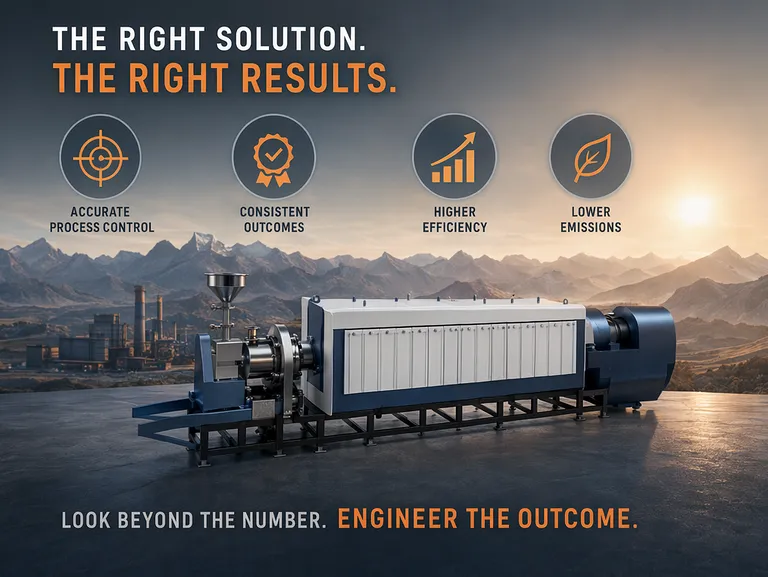
When you stop fighting your equipment and start using a tool that is purpose-built for your science, everything changes. The tedious, costly cycle of trial-and-error ends.
Instead of spending your time troubleshooting, you can now:
- Achieve True Repeatability: Confidently produce consistent, high-quality material batch after batch, accelerating your research and validation timelines.
- Explore with Confidence: Push the boundaries of your material synthesis, knowing your equipment is a stable, reliable variable, not a source of chaos.
- Generate Data You Can Trust: Build a scalable process from day one, creating a clear and reliable path from lab discovery to pilot production.
Your challenge isn't just finding a kiln; it's validating a process, scaling a discovery, and getting reliable materials developed faster. Moving from a generic, ill-fitting tool to one engineered for your specific goal is the most effective way to get there. Let's move the conversation from "spec sheets" to "strategic goals." Contact Our Experts to discuss your unique project and discover how the right equipment can transform your results.
Related Products
- Electric Rotary Kiln Small Rotary Furnace Biomass Pyrolysis Plant
- Electric Rotary Kiln Continuous Working Small Rotary Furnace Heating Pyrolysis Plant
- Electric Rotary Kiln Small Rotary Furnace for Activated Carbon Regeneration
- Electric Rotary Kiln Pyrolysis Furnace Plant Machine Calciner Small Rotary Kiln Rotating Furnace
- Vacuum Sealed Continuous Working Rotary Tube Furnace Rotating Tube Furnace
Related Articles
- Why Your Rotary Kiln Results Are Inconsistent: It’s Not Just the Heat, It’s the System
- The Rotary Kiln Trap: Why This 'Gold Standard' Is Stifling Your Lab's Innovation
- Why Your Rotary Kiln Results Are Inconsistent—And What's Really to Blame
- Why Your Rotary Kiln Keeps Failing (And It’s Not the Parts You're Replacing)
- Your Rotary Kiln Is Leaking Money. The Culprit Is Hiding in Plain Sight.