You’ve run the experiment three times. You've meticulously controlled the temperature profile, maintained a perfect inert atmosphere, and used the highest-grade raw materials. Yet, the final product comes out of your rotary kiln inconsistent, discolored, or contaminated. The analysis report is a mess, your project is stalled, and you’re left asking: what went wrong?
This scenario is frustratingly common in laboratories and pilot plants working on advanced materials. If it sounds familiar, you're not alone.
The Frustrating Loop of "Fixing" What Isn't Broken
When faced with unexpected contamination, the first instinct is to troubleshoot the obvious. Teams dive into a familiar, time-consuming cycle:
- Recalibrating Everything: Temperature sensors, gas flow meters, and rotation speeds are checked and re-checked.
- Blaming the Material: The purity of the input material is questioned, leading to expensive re-ordering or further analysis.
- Intensive Cleaning: The entire kiln is shut down for a deep clean, assuming residual material from a previous run is the culprit.
After weeks of this, the results barely improve. The commercial consequences are severe: R&D timelines stretch, budgets are consumed by failed runs, and the promising new material you're developing can't be scaled reliably. The project's viability comes into question, all because of a problem that seems to have no source.
The issue is that you’re looking in the wrong place. The problem isn’t your process control or your materials—it’s the fundamental design of the tool you’re using.
The Real Culprit: A Mismatch Between Your Goal and Your Kiln's Design
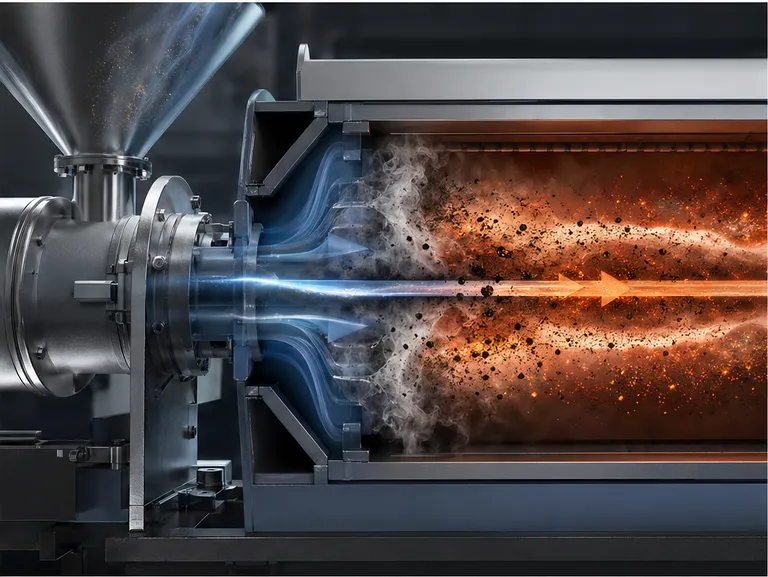
At its core, a rotary kiln is designed to heat material as it moves. But how it delivers that heat is the single most important detail—and it’s the one most often overlooked. There are two fundamentally different approaches: direct firing and indirect firing.
Direct Firing: The Industrial Workhorse
In a direct-fired kiln, the flame and hot combustion gases (from burning natural gas or other fuels) come into direct contact with the material.
Think of it like roasting something over an open campfire. It’s incredibly energy-efficient and perfect for producing massive quantities of robust materials where a little bit of ash or chemical byproducts from the flame don't matter. This is why the cement, lime, and bulk ore processing industries rely on them. They need sheer thermal power, not surgical precision.
Indirect Firing: The Precision Instrument
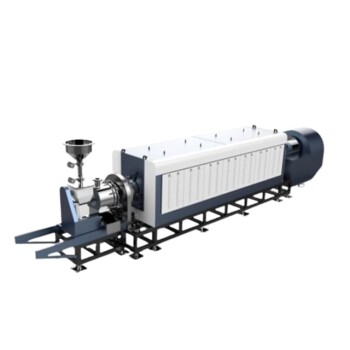
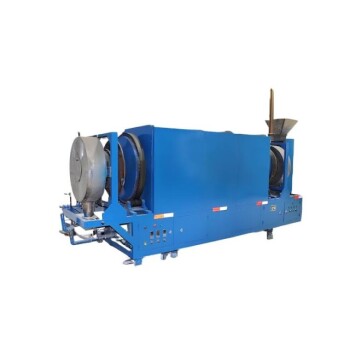
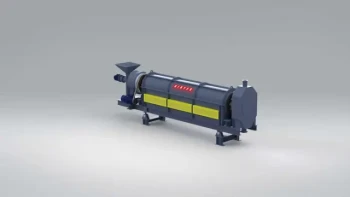
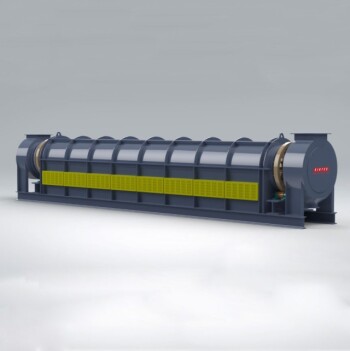
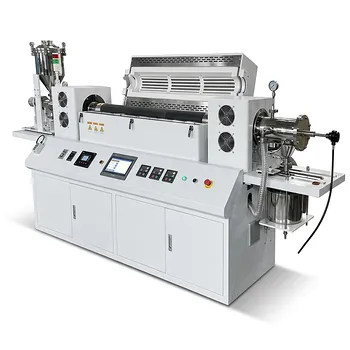
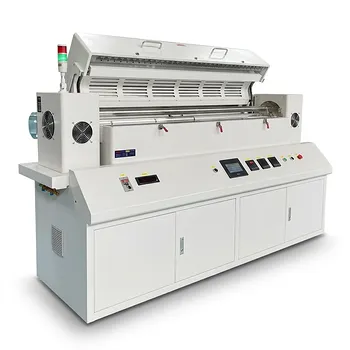
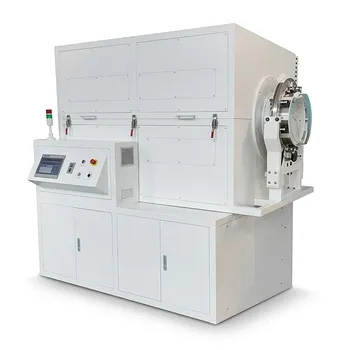
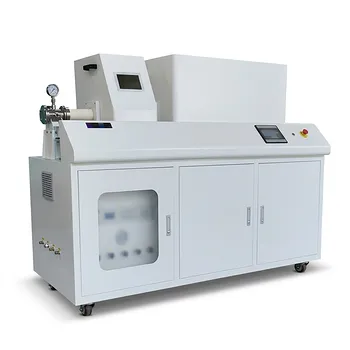
In an indirect-fired kiln (often called a rotary tube furnace), the heat source is kept separate from the material. The rotating tube is heated from the outside, typically with electric elements. The material inside the tube never touches a flame or combustion gas.
This is like baking in a sealed, pristine oven. The heat is clean and precisely controlled. Your material only ever interacts with the tube's inner surface and the controlled atmosphere you introduce.
This is the "Aha!" moment. Your contamination issues aren't coming from your process; they're coming from the kiln itself. If you're using a direct-fired design for a high-purity application, you are unintentionally introducing byproducts from the flame directly into your product. No amount of cleaning or recalibration can fix this fundamental design mismatch.
Engineered for Purity: Choosing the Right Tool for the Job
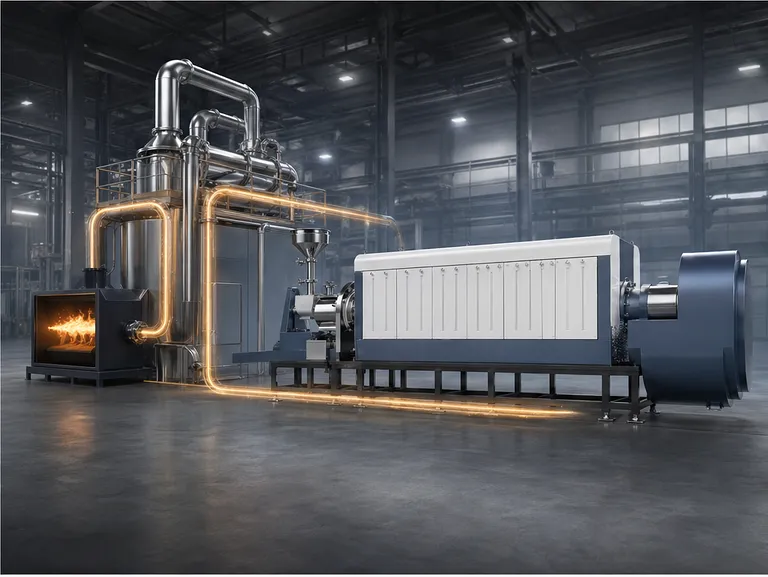
To guarantee purity and repeatability in a laboratory or R&D setting, you don’t need a scaled-down version of an industrial cement kiln. You need a tool specifically designed for the task. You need an indirect-fired rotary tube furnace.
This isn't just another piece of equipment; it's the physical embodiment of the solution to the contamination problem. At KINTEK, our laboratory-scale rotary furnaces are engineered on this principle:
- Absolute Purity: By using external electric heating, we eliminate the primary source of contamination found in direct-fired systems. Your material remains pristine, ensuring the results you get are a true reflection of your process chemistry.
- Unmatched Temperature Precision: Electric heating allows for exceptionally stable and uniform temperature profiles along the entire length of the tube. This precision is critical for sensitive reactions and for developing processes that can be reliably scaled.
- Atmospheric Control: The sealed tube design allows you to maintain a truly inert or reactive atmosphere, without it being corrupted by outside air or combustion gases.
A KINTEK rotary furnace isn't a "lucky find" that happens to work. It is a purpose-built instrument, designed with a deep understanding of the chemical and physical principles that govern high-purity material transformation.
Beyond the Fix: Unlocking Faster Innovation
Once you eliminate contamination as a variable, everything changes. The weeks once spent troubleshooting are now spent on what truly matters: innovation.
With a reliable and precise thermal processing tool, you can now:
- Develop Next-Generation Materials: Confidently create sensitive catalysts, high-purity battery components, and specialty chemicals without fear of unpredictable results.
- Accelerate R&D Cycles: Move from hypothesis to validated result faster, knowing your equipment isn't introducing hidden variables.
- Scale with Confidence: Create a repeatable, well-understood process in the lab that can be smoothly transferred to pilot and full-scale production.
Stop letting the wrong equipment dictate the limits of your research. By understanding the root cause of contamination and choosing the right tool, you can finally move past persistent problems and focus on your next breakthrough.
If you're tired of chasing ghosts in your thermal processing workflow, it's time for a different approach. Let's talk about the specific challenges you're facing in your lab and how the right equipment can accelerate your path from research to results. Contact Our Experts to discuss your project.
Related Products
- Electric Rotary Kiln Small Rotary Furnace Biomass Pyrolysis Plant
- Electric Rotary Kiln Continuous Working Small Rotary Furnace Heating Pyrolysis Plant
- Electric Rotary Kiln Small Rotary Furnace for Activated Carbon Regeneration
- Electric Rotary Kiln Pyrolysis Furnace Plant Machine Calciner Small Rotary Kiln Rotating Furnace
- Vacuum Sealed Continuous Working Rotary Tube Furnace Rotating Tube Furnace
Related Articles
- Why Your Rotary Kiln Is Unstable—And How to Fix It for Good
- Your Rotary Kiln Isn't an Oven: The Secret to Consistent Thermal Processing
- Your Lab Process Fails to Scale? The Rotary Kiln Sizing Mistake You're Probably Making
- Hotter Isn't Better: The Hidden Costs of Your Rotary Kiln's Temperature Setting
- Why Your Rotary Kiln Results Are Unpredictable—And How to Finally Fix Them