You’ve cranked up the fuel feed to your rotary kiln again. The control room display shows a roaring flame, and your energy bills are climbing. Yet, the final product remains stubbornly inconsistent. Some of it is perfectly processed, some is under-cooked, and some is scorched beyond saving. You’re spending a fortune on energy, but your throughput is low and your quality is a constant battle. Sound familiar?
If this scenario feels like your daily reality, you’re not alone. And you’re likely trapped in a cycle of treating the wrong problem.
The Vicious Cycle of Ineffective Tweaks
When faced with inconsistent results, the instinctive reaction is to adjust the most obvious variable: heat. Plant operators and lab technicians often find themselves in a loop of troubleshooting that looks something like this:
- Increase the fuel: The product isn't getting hot enough, so we need a bigger flame.
- Adjust the gas flow: Maybe the heat isn't reaching the end of the kiln.
- Tweak the burner angle: Perhaps the flame isn't aimed correctly.
While these adjustments might cause temporary changes, they rarely lead to stable, predictable results. This is because they all focus on generating more heat. They fail to address the far more critical question: where is all that heat actually going?
The business consequences are severe and direct. Skyrocketing energy costs eat into your margins. Inconsistent product quality leads to costly rework, customer complaints, or scrapped material. Low throughput creates a bottleneck that stifles your entire operation's growth. You're working harder and spending more, just to stay in the same place.
The Real Culprit: Your Kiln is a Heat Exchanger, Not a Furnace
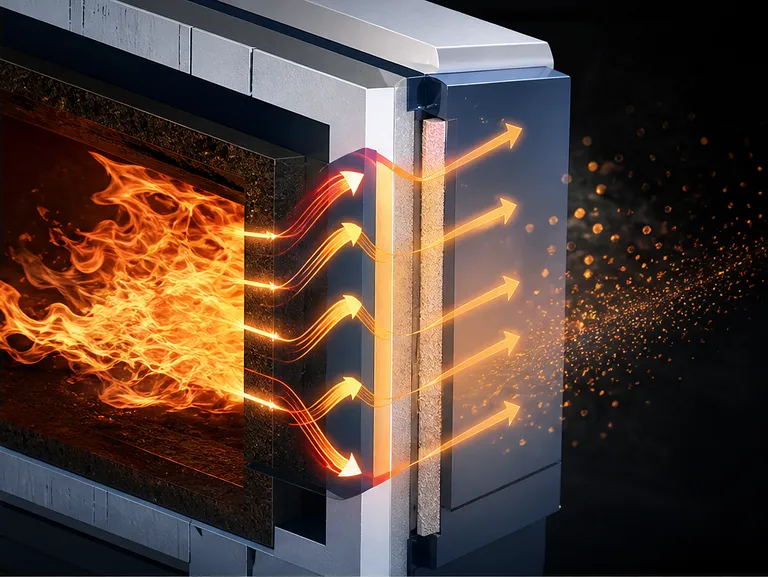
Here is the fundamental truth that changes everything: A rotary kiln is not simply a furnace designed to get hot. It is a dynamic heat exchanger designed to transfer that heat into a moving bed of material with maximum efficiency.
Simply pouring more heat into the system without improving the transfer process is like trying to fill a leaky bucket by opening the faucet wider. Most of your expensive energy is simply flowing out the exhaust stack, never touching the material it was meant to process.
The real work happens through three distinct, simultaneous transfer mechanisms:
1. Radiation: The Silent Workhorse
This is the heat that radiates from the flame, the hot gases, and—most importantly—the refractory lining of the kiln wall. As the kiln rotates, the refractory bricks soak up intense heat as they pass through the open space and then radiate it directly down onto the material bed. If your refractory isn't optimized, you're losing your primary mode of heat transfer.
2. Convection: The Hot "Wind"
This is the heat transferred as the hot gases flow over the surface of your material. Without features to disrupt this flow and mix the material, only the very top layer gets heated. The rest of the bed remains insulated and under-processed.
3. Conduction: The Direct Touch
This is heat transferred where the material physically touches the hot refractory wall or where particles touch each other. While a smaller component, it's vital for uniform heating throughout the depth of the material bed.
The common "solutions" of adding more fuel fail because they only boost the potential heat. They do nothing to improve radiation from the walls, increase the material's exposure to convective gases, or enhance conduction. You're shouting louder, but the message still isn't getting through.
From Brute Force to Finesse: The Tools for Thermal Efficiency
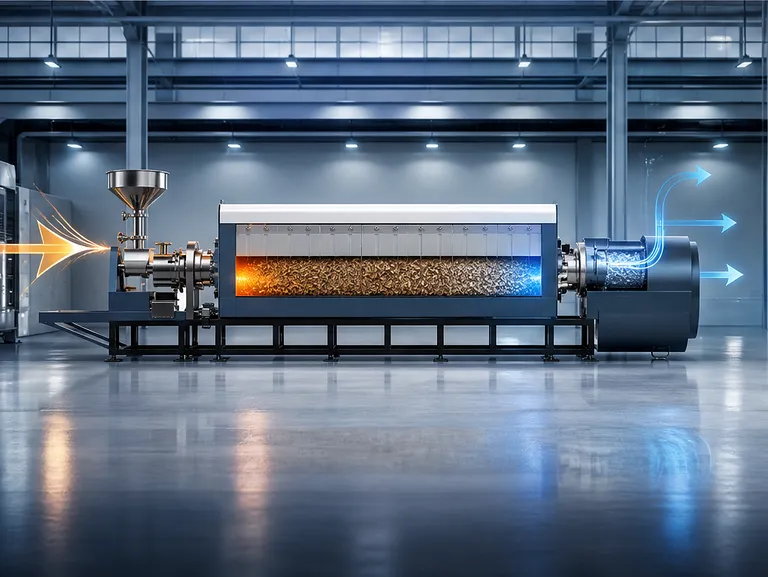
To truly solve the problem, you must shift your focus from heat generation to heat transfer. You need to stop using brute force and start applying scientific finesse. The goal is to make every single unit of energy work for you.
This requires answering critical questions about your specific process:
- How can we maximize the material's exposure to the hot gas stream?
- Is our refractory lining acting as an efficient thermal reservoir or a heat sink?
- How can we tumble the material to ensure every particle gets its share of heat?
Answering these questions on a full-scale production kiln is prohibitively expensive and slow. The solution is to model, test, and perfect your process in a controlled, lab-scale environment.
This is where KINTEK's laboratory equipment and high-performance consumables become indispensable. Our precision lab-scale kilns and analytical tools are not just smaller versions of your production equipment; they are designed to give you the data needed to master thermal efficiency. They allow you to test variables quickly and affordably—simulating the effect of different internal lifters, evaluating chain curtains, or analyzing the thermal properties of your raw materials—before committing to costly changes on the plant floor. Our products are engineered based on a deep understanding of these heat transfer principles, providing you with the tools to implement the correct, science-based approach.
Beyond Firefighting: Unlocking New Potential
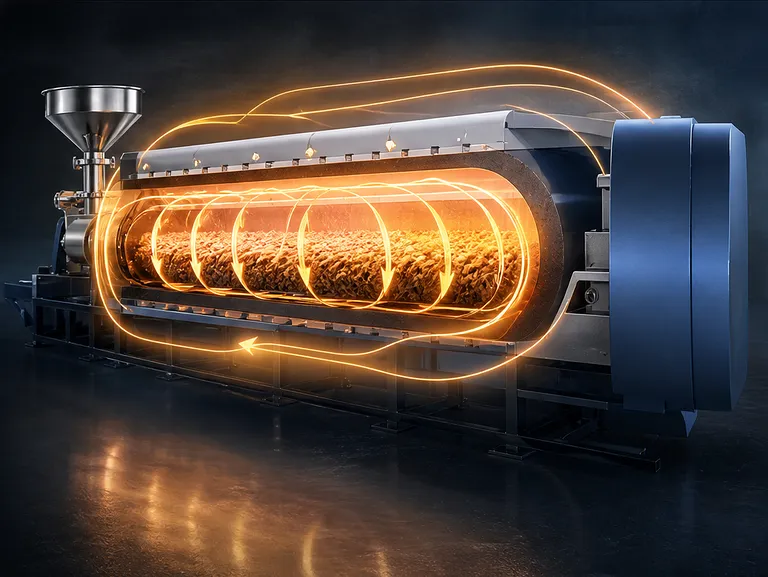
When you finally solve the riddle of heat transfer, the benefits extend far beyond just fixing a persistent headache. You move from constantly firefighting operational problems to strategically improving your business.
- Slash Energy Costs: Imagine achieving your target temperature and product quality while using 15-20% less fuel. By optimizing transfer, you make every degree count, turning a major expense into a significant saving.
- Achieve Unwavering Consistency: Product quality becomes predictable and repeatable. This reduces waste, increases customer satisfaction, and builds a reputation for reliability.
- Boost Throughput: With heat working efficiently, your residence times can often be reduced, allowing you to process more material per hour without expanding your physical footprint.
- Innovate with Confidence: With precise thermal control, you can begin processing more challenging or heat-sensitive materials, opening doors to new products and markets you previously couldn't serve.
Fixing your kiln's efficiency is more than a technical win; it's a strategic business advantage. Our team of experts can help you analyze your specific process and identify the key leverage points for improvement, from lab-scale testing to full-scale production. Let's discuss how to turn your biggest energy expense into a competitive edge. Contact Our Experts.
Related Products
- Electric Rotary Kiln Small Rotary Furnace Biomass Pyrolysis Plant
- Electric Rotary Kiln Continuous Working Small Rotary Furnace Heating Pyrolysis Plant
- Electric Rotary Kiln Small Rotary Furnace for Activated Carbon Regeneration
- Electric Rotary Kiln Pyrolysis Furnace Plant Machine Calciner Small Rotary Kiln Rotating Furnace
- Vacuum Sealed Continuous Working Rotary Tube Furnace Rotating Tube Furnace
Related Articles
- Mastering Rotary Kilns: A Comprehensive Guide to Operation, Applications, and Maintenance
- Your Rotary Kiln Process is Failing. The Problem Isn't Temperature—It's Purity.
- Your Rotary Kiln Isn't an Oven: The Secret to Consistent Thermal Processing
- Optimizing Industrial Processes: Rotary Kiln and Laboratory Furnace Solutions
- Stop Asking 'What Temperature?': The Real Key to Successful Rotary Kiln Processing