Your energy bills are climbing. Your product output is inconsistent. And now, the kiln is down again for an emergency relining, derailing your entire production schedule and budget. Does this sound painfully familiar?
For many plant managers and process engineers, the rotary kiln is a source of constant frustration. You invest in a powerful piece of equipment, design a sound process, and yet the results are unpredictable at best and catastrophically expensive at worst.
The Cycle of Frustration: Chasing Symptoms, Not Solutions
When faced with kiln inefficiency or failure, the troubleshooting checklist is often predictable. We tweak the operational parameters:
- "Let's adjust the feed rate."
- "Maybe we need to change the rotation speed."
- "Let's increase the burner temperature."
- "Perhaps the raw material composition is off this time."
While these adjustments can cause small, temporary shifts, they rarely solve the underlying problem. This endless cycle of trial and error isn't just frustrating; it has severe business consequences:
- Skyrocketing Costs: Each "fix" that involves cranking up the heat burns through more fuel, while every premature failure means expensive emergency repairs and replacement materials.
- Crippling Downtime: Unplanned shutdowns for relining can halt production for days or weeks, leading to missed deadlines and contractual penalties.
- Inconsistent Quality: When the thermal environment inside the kiln is unstable, the quality of your end-product suffers. This results in failed batches, wasted resources, and potential damage to your reputation.
You are stuck treating the symptoms because the real disease is invisible, silently undermining your entire operation from the inside out.
The Hidden Culprit: Why Your Refractory Is More Than Just a Lining
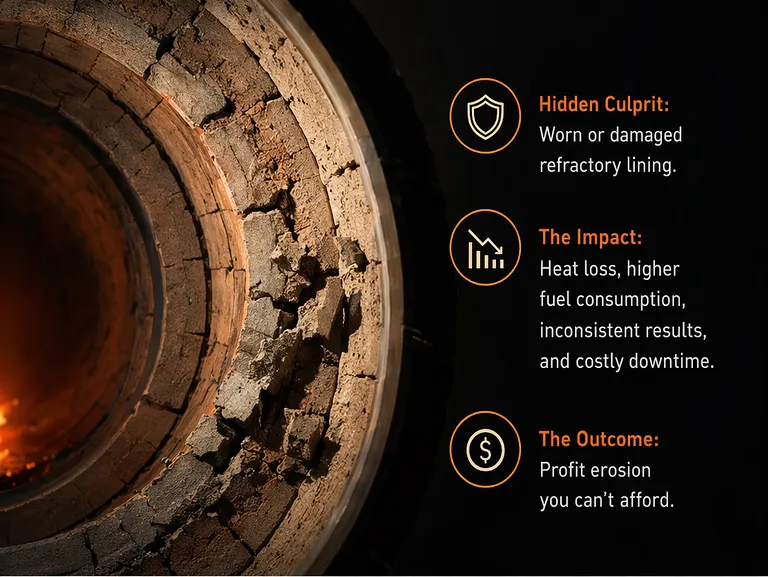
The turn of the wrench and the tweak of the dial feel productive, but they ignore the fundamental truth: the performance and lifespan of your kiln are dictated by its refractory lining.
Most operators view the refractory as a simple, passive layer of bricks—a necessary shield to protect the steel shell. This is a critical misunderstanding. The refractory is an active, engineered component of your thermal system, and a mismatch between the lining and your process is the root cause of chronic failure.
From Passive Shield to Active Participant
Think of it this way: you wouldn't wear a simple cotton t-shirt to climb Mount Everest. It offers basic coverage, but it's completely unsuited for the extreme environment and would lead to disastrous failure.
Similarly, a generic or poorly chosen refractory lining in your kiln is a recipe for failure. It must perform two highly specific jobs simultaneously:
- Protect the Shell: It must act as a thermal barrier to keep the steel shell from warping or melting under extreme heat (often exceeding 1,450°C).
- Insulate the Process: It must keep the heat inside the kiln, focusing energy on your material to drive chemical reactions efficiently and reduce fuel consumption.
Why Your "Quick Fixes" Make Things Worse
When you have the wrong "suit" on your kiln, your operational adjustments often accelerate the failure.
- You increased the temperature? If the refractory wasn't rated for that heat, you just sped up its degradation.
- Processing a new, abrasive material? If your lining was chosen for thermal resistance but not mechanical strength, it's now being ground away like sandpaper on soft wood.
- Working with highly alkaline compounds (like in cement)? If your refractory is not chemically compatible (e.g., using an acidic alumina brick instead of a basic magnesite brick), it's being actively corroded from the inside, regardless of how perfectly you control the temperature.
You've been trying to win a battle by polishing your armor, when the real problem is that you brought the wrong type of armor to the fight entirely.
Matching the Shield to the Battle: A Strategic Approach to Refractory Selection
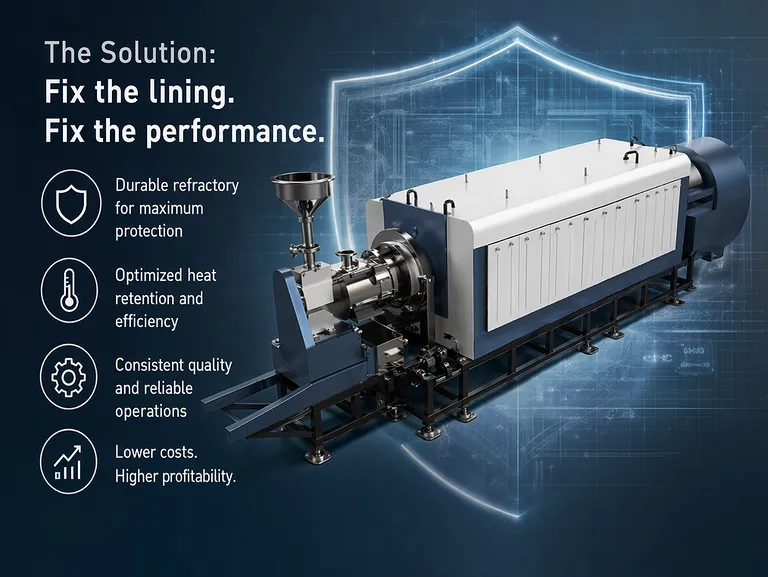
To break this cycle of failure, you must stop thinking of refractory as a commodity and start treating it as a strategic choice. The solution is not to find a "better" refractory, but the correct one, engineered specifically for the unique demands of your process.
This requires a holistic analysis based on four key pillars:
- Thermal Stress: What is your peak operating temperature and how long are your cycles? The refractory's rating must comfortably exceed your process demands to ensure a long service life.
- Chemical Attack: What is the chemical makeup of the material you're processing? The refractory's composition must be chosen to resist corrosion from your specific feed.
- Mechanical Abrasion: How abrasive is your material as it tumbles inside the kiln? The lining must possess the required hardness and mechanical strength to withstand this constant wear.
- Kiln Stability: Is your kiln shell perfectly aligned and free of vibration? Mechanical stresses from a distorted shell are a primary cause of cracked and failed bricks.
Choosing a lining is a careful balancing act of these factors. This is where expertise becomes invaluable, especially at the lab and pilot scale where new processes are developed and perfected. Getting it right in the lab prevents catastrophic—and expensive—failures at production scale.
Beyond Damage Control: Unlocking Your Kiln's True Potential
When your refractory lining is no longer a source of weakness but a pillar of strength, your entire operation transforms. You move from a reactive state of damage control to a proactive state of innovation and optimization.
With the right refractory system, you can now:
- Run Longer, More Stable Campaigns: Gather reliable data over extended periods without the constant threat of shutdown.
- Achieve Predictable Results: Ensure batch-to-batch consistency and dramatically improve your product yield and quality.
- Push Process Boundaries: Confidently explore higher temperatures or more reactive materials to develop new, innovative products.
- Accurately Forecast Maintenance and Costs: Turn unpredictable emergency repairs into planned, budgeted maintenance events.
Ultimately, a properly engineered refractory lining doesn't just save you money on fuel and repairs; it unlocks the full performance potential of your investment and accelerates your path from R&D to profitable production.
Solving your refractory problem is the first critical step. The real goal is to optimize your entire thermal process for reliability, efficiency, and innovation. At KINTEK, we provide the specialized lab-scale equipment and deep process knowledge to help you get it right from the very beginning. Our experts are ready to discuss the unique challenges of your project, from material selection to process scale-up. Don't let a hidden weakness dictate your success; let's build your process on a foundation of strength. Contact Our Experts.
Related Products
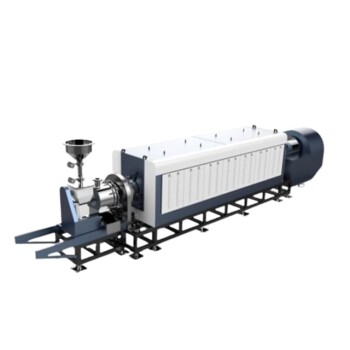
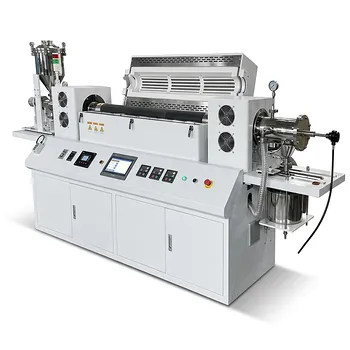
- Electric Rotary Kiln Small Rotary Furnace Biomass Pyrolysis Plant
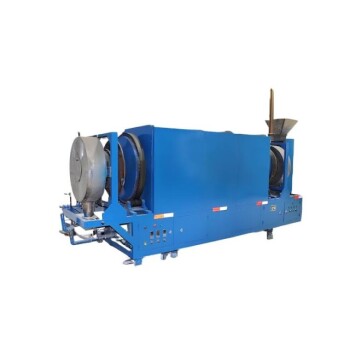
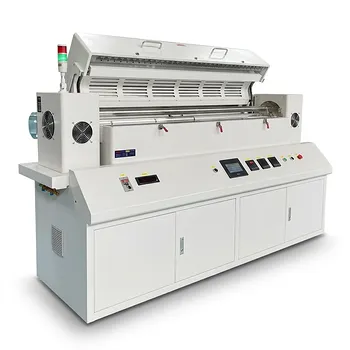
- Electric Rotary Kiln Continuous Working Small Rotary Furnace Heating Pyrolysis Plant
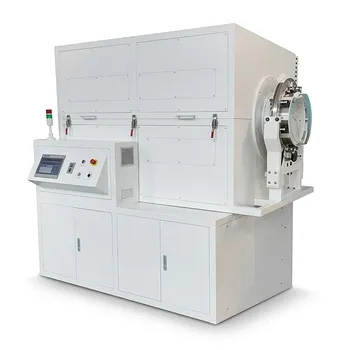
- Electric Rotary Kiln Small Rotary Furnace for Activated Carbon Regeneration
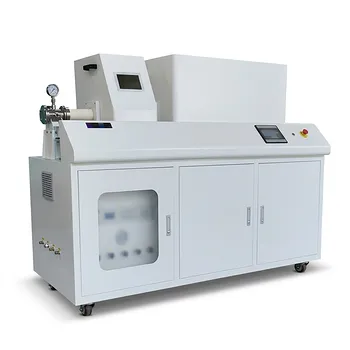
- Electric Rotary Kiln Pyrolysis Furnace Plant Machine Calciner Small Rotary Kiln Rotating Furnace
- Vacuum Sealed Continuous Working Rotary Tube Furnace Rotating Tube Furnace
Related Articles
- Your Rotary Kiln is Wasting Energy and Money. The Reason is Hiding in Plain Sight.
- Why Your Rotary Kiln Keeps Failing (And It’s Not the Parts You're Replacing)
- Why Your Lab's Rotary Kiln Fails: It’s Not Your Process, It’s the Parts
- Why More Fuel Isn't Fixing Your Rotary Kiln—And What Will
- Mastering Rotary Kilns: A Comprehensive Guide to Operation, Applications, and Maintenance