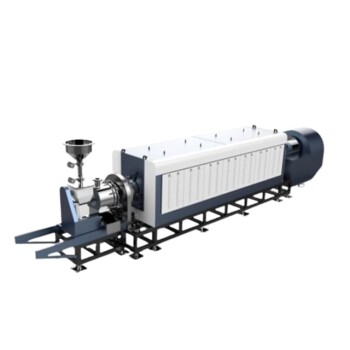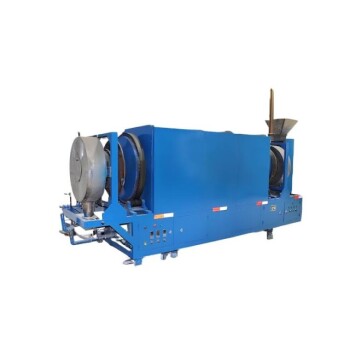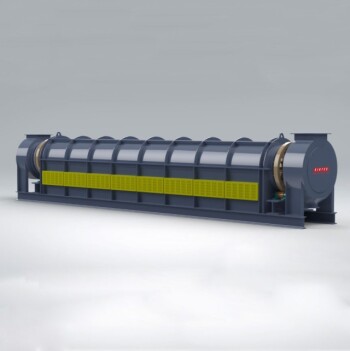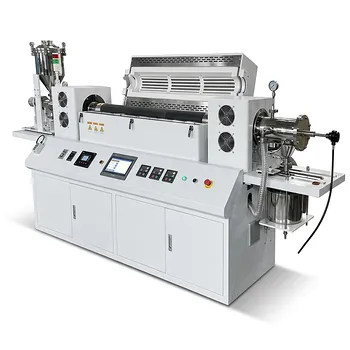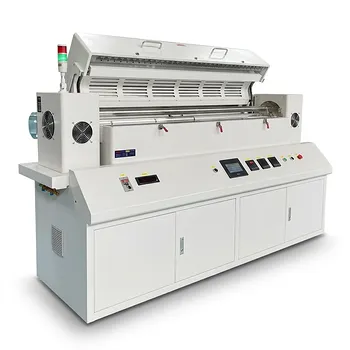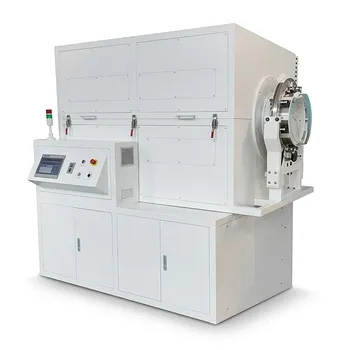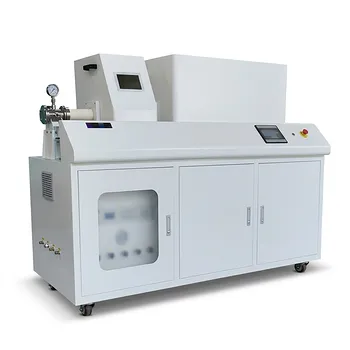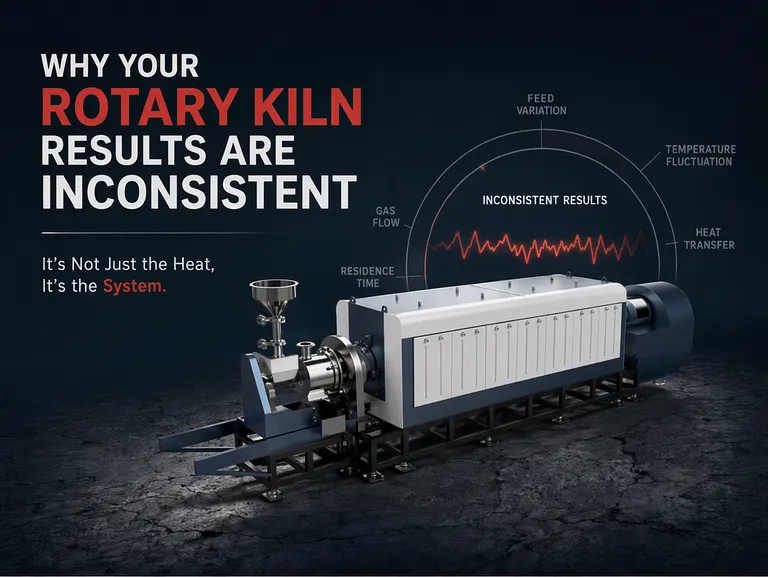
Does your rotary kiln sometimes feel more like a game of chance than a precision instrument? You meticulously set the temperature, control the rotation speed, and manage the feed rate. Yet, the final product is a frustrating mix: one batch is perfect, the next is under-processed, and the one after that is burnt. You're stuck in a loop of troubleshooting a machine that should be a reliable workhorse.
If this sounds familiar, you are not alone.
The Endless Cycle of "Trial and Error"
When faced with inconsistent results, the typical response is to start tweaking isolated variables. This is the common struggle many labs and production facilities face:
- "The material is under-processed. Let's crank up the heat." This often leads to overheating, damaging the product, or even degrading the kiln’s internal refractory lining over time.
- "The heating is uneven. Let's slow the rotation." This can cause material to clump and bake on one side, while the core remains untouched, making the problem even worse.
- "Maybe the feed rate is off." Adjusting the material input without changing other parameters can disrupt the entire thermal balance you've worked so hard to achieve.
Each "fix" feels like a shot in the dark, creating a new problem in the process. The business consequences are concrete and costly: valuable raw materials are wasted, project timelines are delayed by weeks or months, and the unreliable data makes it impossible to confidently scale up from R&D to pilot production. You're burning time and budget trying to solve a puzzle without seeing the full picture.
The Breakthrough: Shifting from Components to an Integrated System
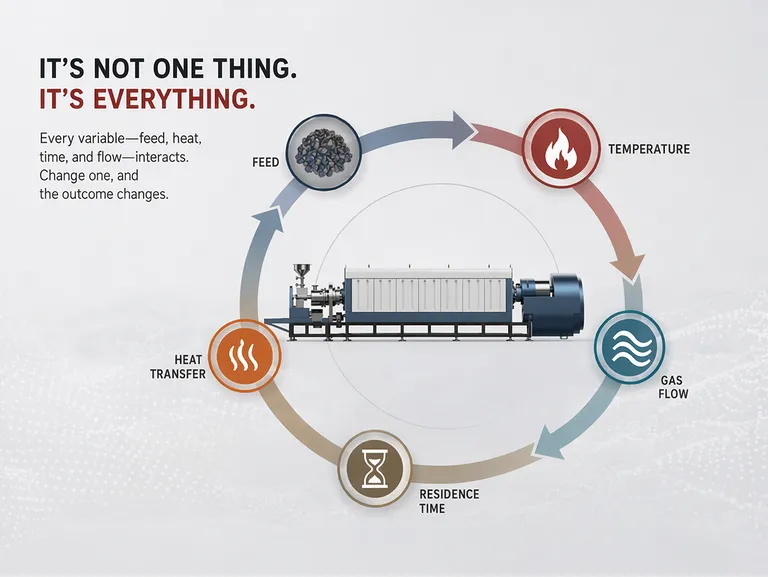
The reason these isolated adjustments fail is simple: a rotary kiln is not a collection of independent parts. It is a single, dynamic, integrated system.
Thinking of your kiln as just a "hot, rotating tube" is the core of the problem. True process control comes from understanding how its three core systems work in concert:
-
The Mechanical System: This is more than just the main cylinder (
shell). It includes therefractory liningthat holds in heat, thesupport tyres and rollersthat ensure smooth rotation, and—critically—thesealsat both ends that prevent heat from escaping and cold air from rushing in. A leaky seal can make it impossible to reach or maintain your target temperature, no matter how hard your burner works. -
The Material Handling System: This governs how your material enters (
feeding device), moves through, and exits (discharge system) the kiln. The kiln's angle, rotation speed, and any internal lifters orheat exchangersall dictate the "residence time"—how long your material is exposed to the heat. -
The Thermal System: This is the
burnerorheating elementsthat generate the heat, and thecontrol unitthat measures and regulates it.
These systems are deeply interconnected. Imagine trying to cook rice perfectly. You need the right amount of heat (Thermal System), the right amount of water and rice (Material Handling System), and a pot with a well-fitting lid (Mechanical System). If the lid is loose and steam escapes, your rice will be dry and uncooked, no matter how high you turn the stove.
The "trial-and-error" fixes fail because they address only one part of this interconnected system—like turning up the stove for the leaky pot—while ignoring the true root cause of the failure.
The Right Tool for a Systems Problem: Engineering for Consistency
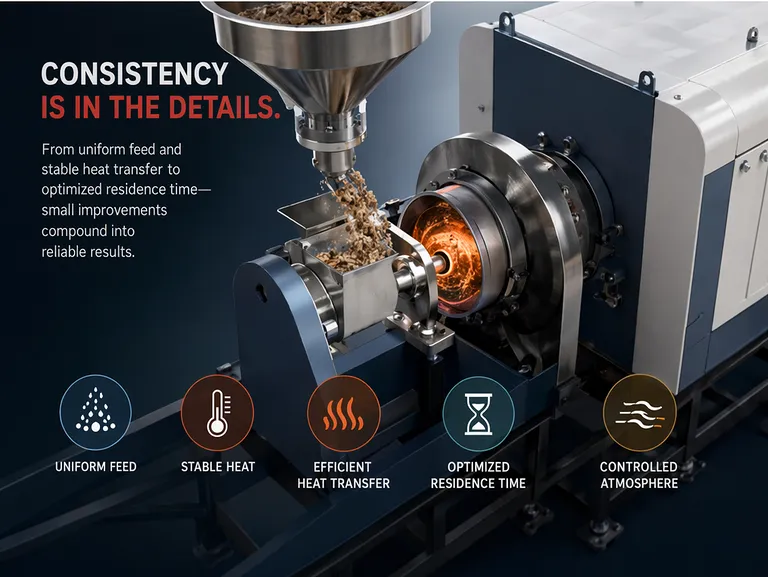
To escape the cycle of guesswork, you need to stop thinking about buying a "component" and start thinking about implementing a "system." You need a tool that is designed from the ground up with a holistic understanding of thermal processing.
This is precisely where KINTEK's approach makes a difference. We don't just sell lab equipment; we engineer integrated thermal solutions. Our rotary kilns are designed to solve the systems problem, not just the heating problem.
-
System Integrity by Design: We recognize that high-quality
seals, durablerefractory linings, and precisiondrive assembliesare not optional upgrades; they are fundamental to creating a stable thermal environment. Our kilns are built to prevent the "leaky pot" problem, ensuring the heat you generate is used effectively on your material. -
Intelligent, Integrated Control: Our advanced control units don't just set a temperature. They allow you to create and save complete process recipes, orchestrating rotation speed, temperature profiles, and feed rates in unison. This transforms your kiln from a black box into a predictable, repeatable processing tool.
-
Application-Specific Customization: A kiln for drying sensitive organics has vastly different system requirements than one for high-temperature calcination. We work with you to understand your material and goals, then specify the right combination of heating mechanisms (direct vs. indirect), internal heat exchangers, and materials of construction to build the optimal system for your specific application.
Beyond Troubleshooting: What's Possible with a Predictable Process?
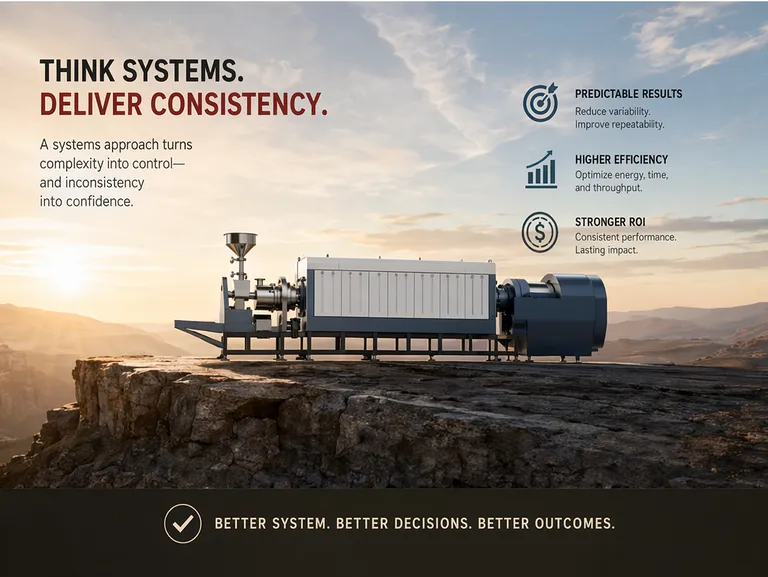
When your rotary kiln transforms from an unpredictable variable into a reliable constant, you unlock entirely new possibilities. The time you once spent troubleshooting is now invested in innovation.
- Accelerate R&D: Confidently test new material formulations and complex heating profiles, knowing your results are due to your chemistry, not equipment error.
- Ensure Quality at Scale: Produce consistently high-quality material, batch after batch, creating a seamless and predictable path from the lab to pilot production.
- Generate Defensible Data: Make critical business decisions, publish groundbreaking research, and file patents based on process data you can unequivocally trust.
Your unique material and thermal goals require more than an off-the-shelf furnace; they demand a system-level approach. If you're ready to move beyond frustrating guesswork and build a reliable, predictable thermal process, our experts are here to help design the right system for you. Contact Our Experts to discuss your project.
Related Products
- Electric Rotary Kiln Small Rotary Furnace Biomass Pyrolysis Plant
- Electric Rotary Kiln Continuous Working Small Rotary Furnace Heating Pyrolysis Plant
- Electric Rotary Kiln Small Rotary Furnace for Activated Carbon Regeneration
- Electric Rotary Kiln Pyrolysis Furnace Plant Machine Calciner Small Rotary Kiln Rotating Furnace
- Vacuum Sealed Continuous Working Rotary Tube Furnace Rotating Tube Furnace
Related Articles
- Your Rotary Kiln Isn't an Oven: The Secret to Consistent Thermal Processing
- Your Rotary Kiln Is Leaking Money. The Culprit Is Hiding in Plain Sight.
- Your Rotary Kiln is Wasting Energy and Money. The Reason is Hiding in Plain Sight.
- Why Your Lab's Rotary Kiln Fails: It’s Not Your Process, It’s the Parts
- Your Rotary Kiln Process is Failing. The Problem Isn't Temperature—It's Purity.