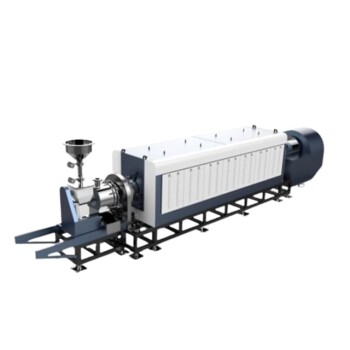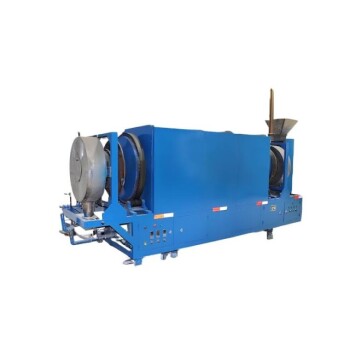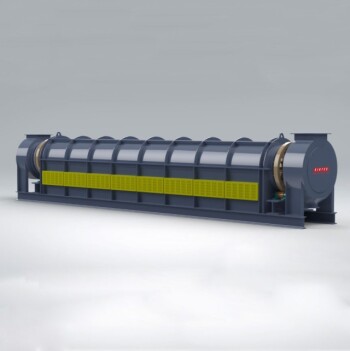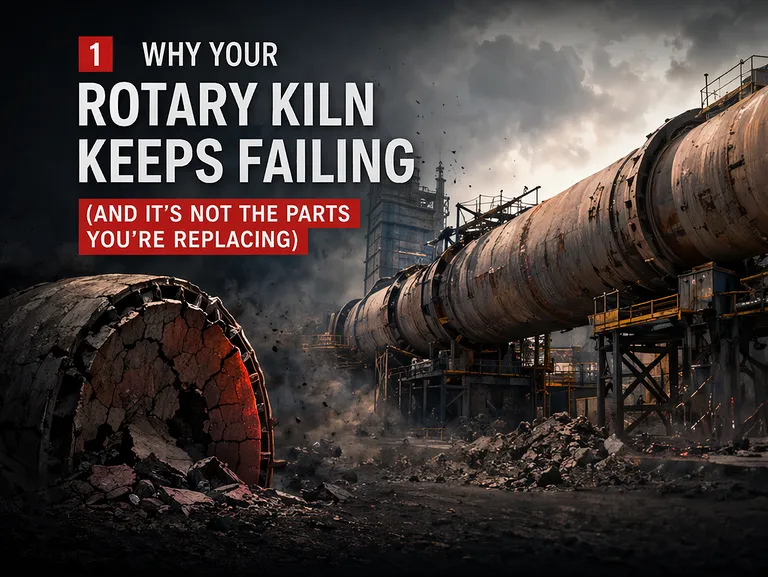
It’s a scenario many plant managers know by heart. The phone rings in the middle of the night—it’s the shift supervisor. The rotary kiln is down again. You hear the familiar report of unusual grinding noises, a sudden drop in product quality, or a seal that has catastrophically failed. The result is always the same: another costly, unscheduled shutdown and a sinking feeling that you'll be fighting this same fire again next quarter.
The Endless Cycle of "Fix and Fail"
When a kiln breaks down, the immediate response is logical: identify the broken part and replace it. A warped discharge seal gets swapped out. A failing burner nozzle is replaced. A support roller showing excessive wear is exchanged for a new one. The maintenance team works heroically, the kiln is back online, and the crisis seems averted.
But a few months later, a different component fails. Or worse, the same one. This is the costly game of "whack-a-mole" that many operations are forced to play.
This cycle isn't just frustrating; it has severe business consequences:
- Lost Revenue: Every hour of unplanned downtime is an hour of lost production. Missed quotas and delayed shipments can damage customer relationships and your bottom line.
- Spiraling Costs: The expense of emergency repairs, overnight shipping for replacement parts, and overtime for maintenance crews quickly balloons. What's more, producing off-spec material during periods of instability leads to wasted resources and costly scrap.
- Drained Resources: Your most skilled engineers and technicians are pulled away from valuable process optimization and preventative work to fight the latest fire, trapping your operation in a reactive state.
You find yourself asking, "We use good quality replacement parts. Why do they keep failing?" The answer is that you're treating the symptom, not the disease.
The Hidden Culprit: Why Your Kiln Is Tearing Itself Apart
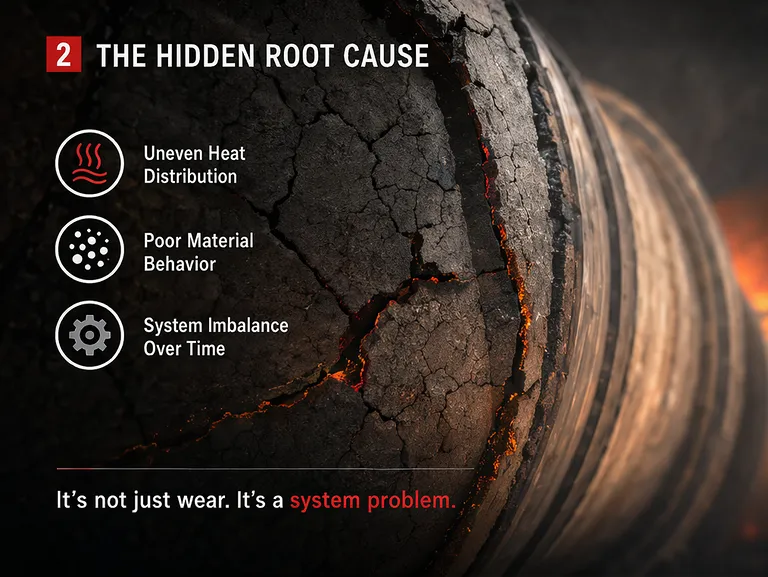
A rotary kiln is not just a collection of individual parts. It is a single, dynamic system where everything must work in harmony. The recurring failures of seals, rollers, and burners are rarely the root of the problem. They are the symptoms of a much deeper, more destructive issue: foundational misalignment.
Think of it like the wheel alignment on your car. A slight misalignment doesn't just cause one tire to wear out prematurely; it puts continuous, abnormal stress on the entire suspension system, the axles, and the wheel bearings. You can replace the worn-out tire, but the underlying misalignment will immediately start destroying the new one—and everything connected to it.
A rotary kiln operates on the exact same principle, but on a massive scale. When the kiln drum, support rollers, and tires are not perfectly aligned—a common result of a rushed or inexpert initial installation—immense and destructive forces are generated with every rotation.
This is why the "fix and fail" cycle is so common. You replace a worn-out roller (the symptom), but the immense, persistent stress from the system-wide misalignment (the root cause) immediately begins to overload and destroy the new component. You're not solving the problem; you're just resetting the timer on the next failure.
From Firefighting to Foundational Stability: The Right Strategy and Tools
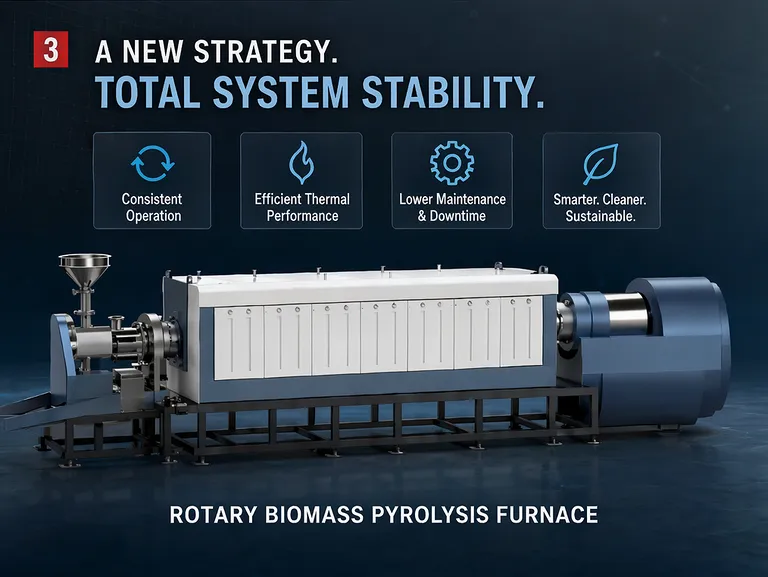
To break this cycle, you must shift your focus from reactively replacing broken parts to proactively ensuring the integrity of the entire system. This doesn't mean you need a new kiln; it means you need a new strategy, one built on precision.
1. It Starts with Precision Components: A perfectly aligned system can only be maintained if its components are manufactured to exact tolerances. A roller that is dimensionally inaccurate or a seal made from substandard material will introduce instability, no matter how well it's installed. The foundation of a reliable kiln is built with parts you can trust to perform to spec without deviation.
2. It's Sustained by Proactive Monitoring: Instead of waiting for a loud noise or a component failure, a proactive strategy involves regular, precise measurements of alignment, temperature stability, and component wear. This allows you to detect the subtle signs of developing stress long before they escalate into a catastrophic, production-stopping event.
This is where KINTEK becomes a critical partner. We understand that a rotary kiln is more than the sum of its parts. Our role is to provide the two essential elements for achieving foundational stability:
- High-Integrity Consumables and Components: We supply a comprehensive range of lab- and industrial-grade equipment, from high-tolerance support rollers to durable seals and precise monitoring instruments. Our focus is on providing components that serve as a reliable foundation for your entire system, eliminating the variable of part-to-part inconsistency.
- Expert Support for a Proactive Strategy: Our team helps you move beyond reactive maintenance. We assist in selecting the right components and developing monitoring protocols that allow you to maintain system alignment and address minor deviations before they cascade into major failures.
By partnering with us, you're not just buying a replacement part; you're investing in a strategy designed to eliminate the root cause of your kiln's chronic failures.
Beyond Reliability: Turning Your Kiln into a Competitive Advantage
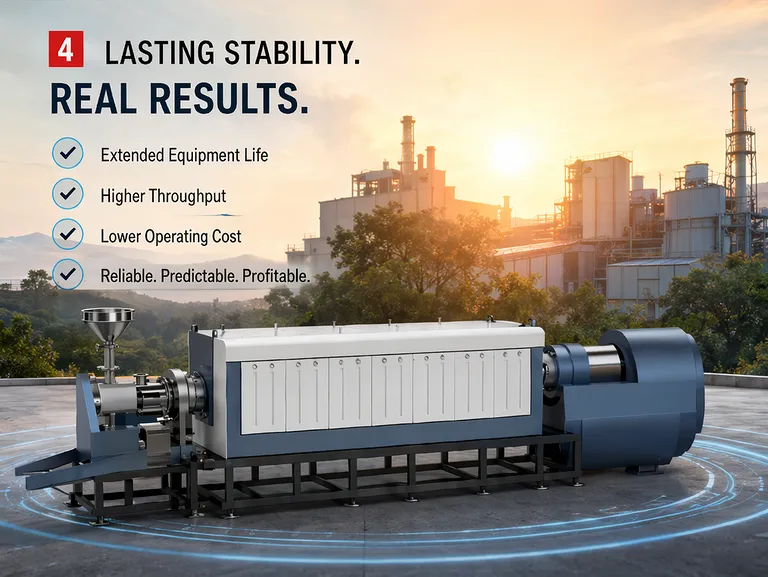
What happens when your rotary kiln transforms from an unpredictable liability into the most reliable asset in your production line? The entire dynamic of your operation changes.
With a stable and predictable kiln, you can:
- Run longer, more ambitious production campaigns with the confidence that your equipment won't fail you.
- Guarantee consistent product quality by maintaining precise control over temperature, residence time, and material flow, batch after batch.
- Shift your maintenance budget from a reactive expense to a predictable investment, freeing up capital and empowering your engineering team to focus on innovation and process optimization.
The cycle of reactive maintenance is exhausting and expensive. It traps your team in a loop of solving yesterday's problems instead of building tomorrow's success. Our team at KINTEK understands that reliable operations are built on a foundation of precision—from the smallest consumable to the most critical component. Let's move the conversation from "what broke?" to "how can we build lasting reliability?". Contact Our Experts to discuss your unique operational challenges and goals.
Related Products
- Electric Rotary Kiln Small Rotary Furnace Biomass Pyrolysis Plant
- Electric Rotary Kiln Continuous Working Small Rotary Furnace Heating Pyrolysis Plant
- Electric Rotary Kiln Small Rotary Furnace for Activated Carbon Regeneration
- Electric Rotary Kiln Pyrolysis Furnace Plant Machine Calciner Small Rotary Kiln Rotating Furnace
- Vacuum Sealed Continuous Working Rotary Tube Furnace Rotating Tube Furnace
Related Articles
- Your Rotary Kiln Process is Failing. The Problem Isn't Temperature—It's Purity.
- Your Rotary Kiln Isn't an Oven: The Secret to Consistent Thermal Processing
- Why Your Lab's Rotary Kiln Fails: It’s Not Your Process, It’s the Parts
- Your Rotary Kiln is Wasting Energy and Money. The Reason is Hiding in Plain Sight.
- Why More Fuel Isn't Fixing Your Rotary Kiln—And What Will