Your team has done it. After countless hours, you’ve perfected a new material in the lab furnace—a groundbreaking catalyst, a high-performance ceramic, or a specialized metal powder. The results are promising, and now management is asking the inevitable question: "How do we make more of this for pilot testing and validation?"
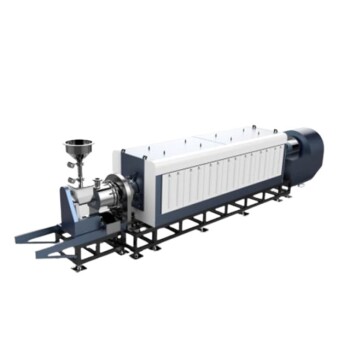
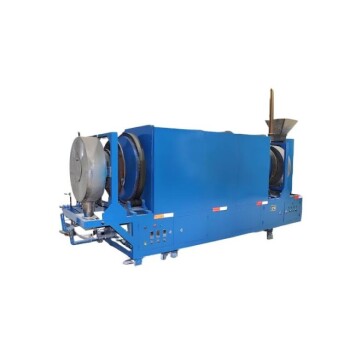
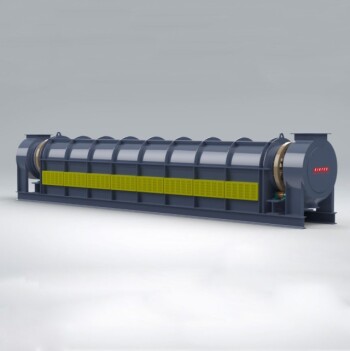
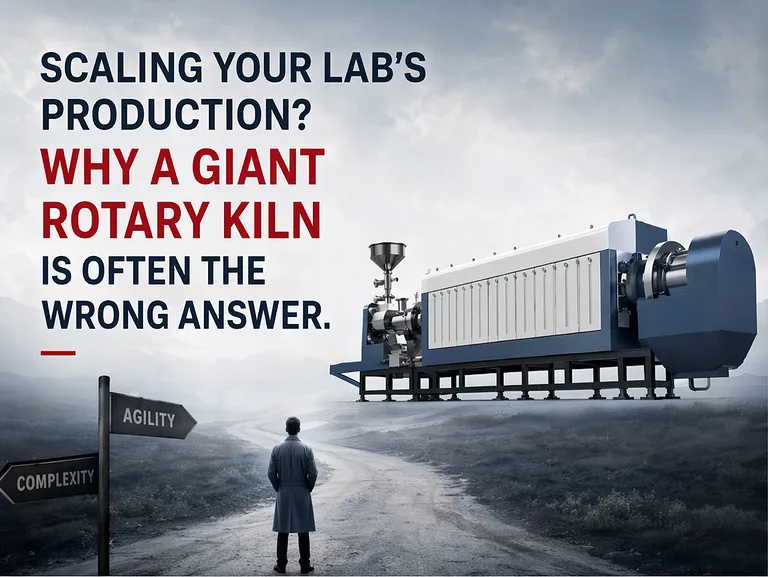
Immediately, the image of a massive, roaring rotary kiln comes to mind. It’s the symbol of industrial power, the textbook answer for high-temperature, continuous processing. It seems like the logical next step. But as you start to investigate, a sense of unease creeps in. The sheer scale, the astronomical cost, and the complexity feel… overwhelming. You're not running a cement plant; you're trying to scale a scientific breakthrough. Is this powerful tool truly the right one for the job?
The Dream of Scale vs. The Reality of the "Kiln Trap"
For many R&D and pilot-scale facilities, the pursuit of a rotary kiln quickly turns into a nightmare of hidden costs and operational burdens. This journey is so common it has become a predictable trap.
First comes the financial shock. The initial quote for the kiln itself is staggering, often running into the hundreds of thousands or even millions of dollars. But that's just the entry fee. Then you discover the facility upgrades required to house and power it, the specialized installation that takes weeks, and the eye-watering energy bills needed to maintain temperatures of 1000°C or more. Your project budget, once focused on innovation, is now consumed by a single piece of hardware.
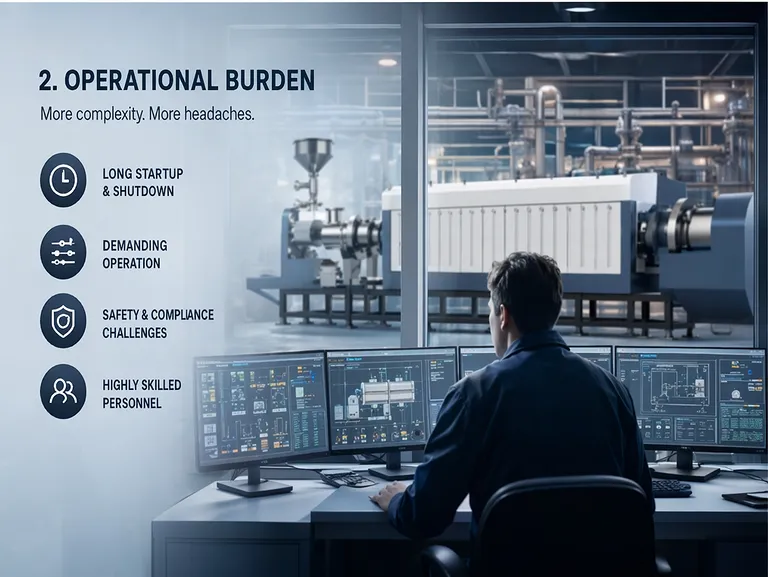
Then, the operational struggles begin. You realize this isn't a machine you can simply "turn on." It requires a dedicated team of highly skilled operators who understand its complex thermodynamics. Your best engineers, who should be developing new materials, are now tasked with managing kiln rotation speeds and monitoring refractory linings. Safety becomes a constant, high-stakes concern. As the source material notes, strict lockout/tagout procedures are mandatory, and any maintenance on moving parts is forbidden—a single mistake could be catastrophic, halting operations and jeopardizing your team's safety.
The business consequences are severe:
- Project Delays: The enormous capital expenditure gets stuck in endless budget approval cycles.
- Resource Drain: Your most valuable asset—your scientific talent—is diverted from R&D to machine operation and maintenance.
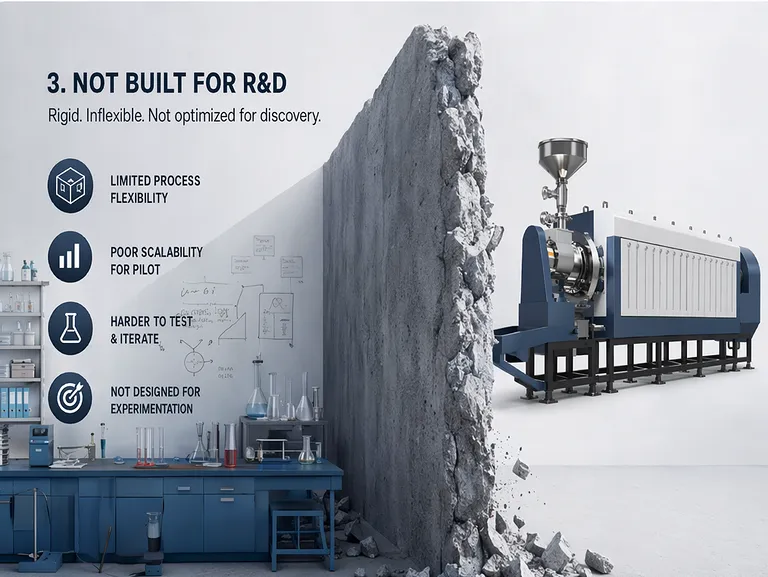
- Inflexibility: You've invested everything in a single, massive system designed for one process, killing your ability to experiment with new materials or parameters.
You're left with a machine that is too expensive to run continuously, too complex to operate flexibly, and too dangerous to manage without a dedicated infrastructure. You bought a sledgehammer when you needed a surgical tool.
The Real Problem: A Fundamental Mismatch of Scale

Here is the critical insight that changes everything: the disadvantages of a rotary kiln aren't design flaws. They are features. A traditional rotary kiln was never designed for a laboratory or R&D environment.
It was engineered for the world of massive, 24/7 industrial production—making cement, processing minerals, and reducing ores by the ton. In that context, its high cost, energy consumption, and need for specialized staff are justified by immense, continuous output.
For a laboratory or pilot facility, this industrial DNA is a fatal flaw. Your needs are the exact opposite:
- You need flexibility to test different materials and temperatures.
- You need quick changeovers between batches.
- You need precise control, not just brute force.
- You need an operational cost that allows for intermittent use and experimentation.
The common "solutions"—like running the kiln for shorter periods or trying to automate it—fail because they don't address this fundamental mismatch. You're trying to force an industrial tool to perform a laboratory task. It will always be inefficient, costly, and frustrating.
The Solution: A Tool Designed for Your World
To escape this trap, you don't need a "better" industrial kiln. You need a completely different class of equipment, one designed from the ground up for the specific demands of research, development, and pilot-scale work.
This is where a right-sized, lab-scale tube furnace becomes the clear solution. To truly solve the problem, you need a tool that can provide:
- Precise, Controllable Atmospheres: The ability to introduce specific gases and maintain a controlled environment, crucial for sensitive materials.
- Flexible Temperature Programming: The capacity to execute complex heating and cooling profiles with high accuracy.
- Operational Simplicity and Safety: A system that a lab technician can safely operate without months of specialized training.
- Affordable Ownership: A capital cost and operational expense that fits within an R&D budget, enabling experimentation rather than hindering it.
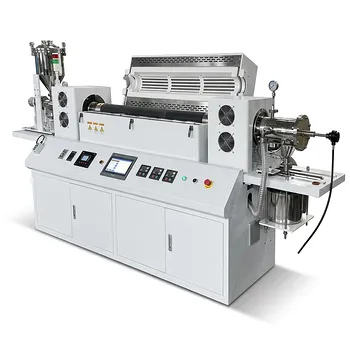
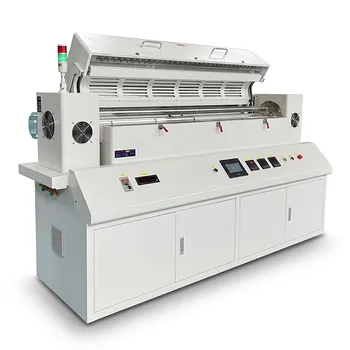
At KINTEK, our range of laboratory tube furnaces—from compact split-tube models for rapid testing to small-scale rotary tube furnaces for pilot batches—are the embodiment of this philosophy. They are not scaled-down industrial machines; they are precision instruments built for scientists and engineers. They deliver the precise high-temperature processing you need without the crippling overhead of an industrial kiln. They are designed for your world of discovery and innovation.
Beyond Firefighting: Unlocking Your Lab's True Potential
When you stop wrestling with the wrong tool, you unlock resources and potential that were previously unimaginable. Instead of spending months justifying a budget for one giant, inflexible machine, your team can run dozens of different experiments in a single quarter.
Imagine a future where:
- Your R&D cycles accelerate dramatically. You can test a new hypothesis in the morning and have results by the afternoon.
- Innovation flourishes. With lower costs per experiment, your team is free to explore more ambitious and creative ideas.
- Your resources are focused on science, not logistics. Your brightest minds are formulating the next breakthrough, not troubleshooting a refractory lining.
- Scaling becomes a smooth, predictable process. You can confidently validate your materials at a pilot scale, generating the data needed to justify larger, commercial-grade equipment if and when the time is right.
You move from a state of "Can we afford to do this?" to "What should we test next?" This is the freedom that comes from choosing the right tool for the job.
Choosing the right equipment is not just a technical decision; it's a strategic one that determines the pace of your innovation and the efficiency of your operations. Our team doesn't just sell hardware; we provide the expertise to help you navigate these critical choices and ensure your investment accelerates your goals. To discuss your unique project and find a solution that fits your scale, budget, and scientific needs, we invite you to reach out. Contact Our Experts.
Related Products
- Electric Rotary Kiln Small Rotary Furnace Biomass Pyrolysis Plant
- Electric Rotary Kiln Continuous Working Small Rotary Furnace Heating Pyrolysis Plant
- Electric Rotary Kiln Small Rotary Furnace for Activated Carbon Regeneration
- Electric Rotary Kiln Pyrolysis Furnace Plant Machine Calciner Small Rotary Kiln Rotating Furnace
- Vacuum Sealed Continuous Working Rotary Tube Furnace Rotating Tube Furnace
Related Articles
- Mastering Rotary Kilns: A Comprehensive Guide to Operation, Applications, and Maintenance
- Your Rotary Kiln Process is Failing. The Problem Isn't Temperature—It's Purity.
- Your Rotary Kiln is Wasting Energy and Money. The Reason is Hiding in Plain Sight.
- Why More Fuel Isn't Fixing Your Rotary Kiln—And What Will
- Your Rotary Kiln Isn't an Oven: The Secret to Consistent Thermal Processing