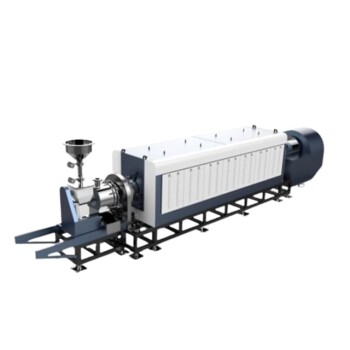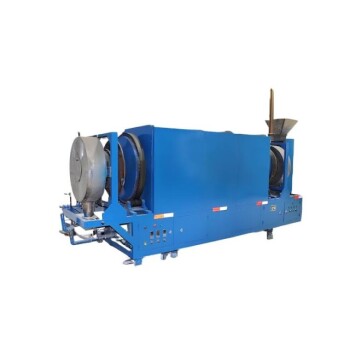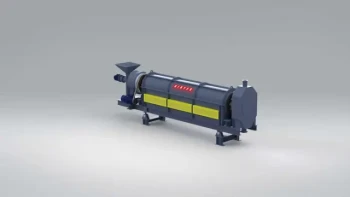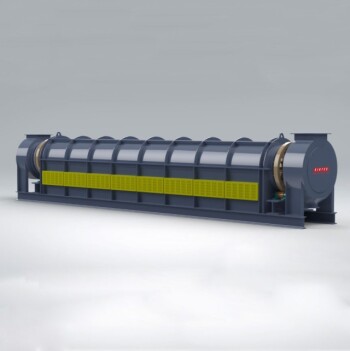
Does this sound familiar? You've spent weeks trying to perfect a thermal process. One batch from your laboratory rotary kiln is perfect—the calcination is complete, the powder has the ideal properties. The next batch, using the supposedly same settings, is under-processed. The third is over-cooked and useless. You're caught in a frustrating cycle of trial-and-error, wasting valuable materials, energy, and time, with no clear path to consistent results.
You are not alone. This is one of the most common and costly challenges in process development and material science labs.
‘Let’s Just Turn Up the Heat’: Why Common Fixes Almost Always Fail
When faced with inconsistent output, the instinct is to start tweaking the most obvious settings. This usually looks something like this:
- The "More Heat" Gambit: The material isn't reacting fully, so the logical step is to crank up the temperature. The result? You might scorch the material, cause unwanted side-reactions, or simply waste a tremendous amount of energy as the material passes through too quickly to absorb the extra heat.
- The "Faster Throughput" Push: To increase output, you speed up the kiln's rotation. The result? The material’s residence time—the critical period it spends inside the hot zone—is cut short. It exits the kiln half-baked, rendering the entire batch useless.
- The "Overload" Mistake: You try to process more material by increasing the feed rate. The result? The kiln becomes overloaded. The mass of material is too large for the system to heat evenly, leading to a product that is inconsistent from particle to particle.
These reactive adjustments don't just fail to solve the problem; they create new ones. They drive up operational costs, cause project delays, and worst of all, they produce unreliable data. You can't confidently scale up a process when your pilot-scale results are a game of chance. This uncertainty can stall innovation and kill a promising project before it ever reaches production.
The Hidden Truth: Your Kiln Isn't an Oven, It's a System
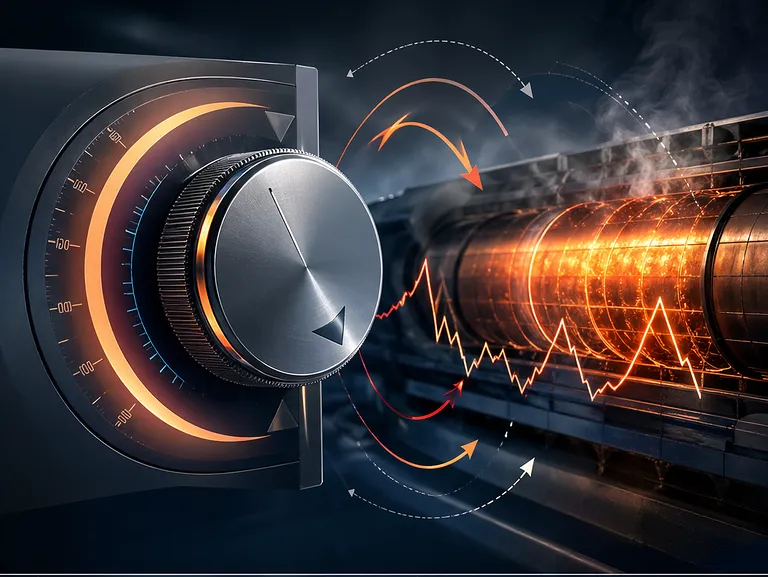
Here is the turning point: The reason these isolated tweaks fail is because a rotary kiln is not a simple oven.
It is a dynamic system where multiple forces must be in perfect balance. Think of it like trying to sail a boat. You can't just point the rudder and expect to go in a straight line. You must constantly adjust the sails to account for the changing wind speed and direction. The rudder and the sails work together.
In a rotary kiln, the key variables are all interconnected:
- Heat Transfer: How effectively energy moves from the heaters to the material.
- Residence Time: How long the material stays in the kiln, determined by rotation speed and inclination angle.
- Material Flow: How evenly the material tumbles and moves through the kiln, affected by the feed rate.
- System Integrity: How well the system contains heat and maintains a stable atmosphere, which depends on the quality of its seals and insulation.
Changing one variable without considering the others throws the entire system out of balance. Turning up the heat is useless if the residence time is too short. Speeding up rotation is counterproductive if the system can't transfer heat fast enough. This is why "symptom-chasing" fails. You are not addressing the root cause: a fundamental system imbalance.
From Imbalance to Control: The Engineering Behind Predictable Results
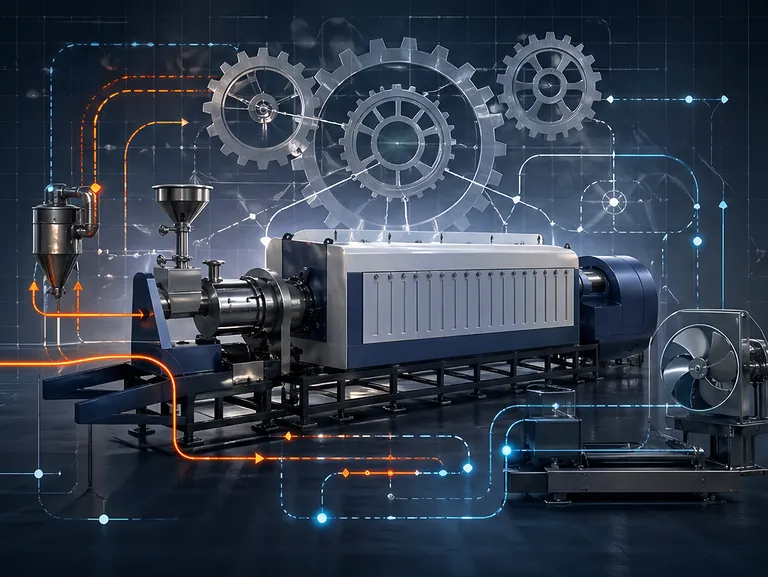
To achieve consistent, repeatable results, you don't need to guess—you need to control the entire system. This requires a tool that is engineered from the ground up not just for heat, but for holistic control.
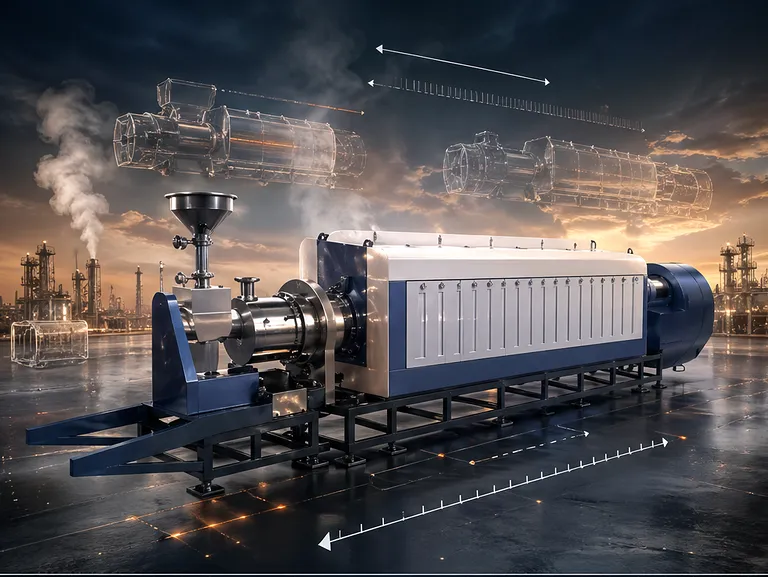
This is the principle behind KINTEK's laboratory and pilot-scale rotary kilns. They are designed not as simple heaters, but as integrated process control systems. Here’s how this design philosophy directly solves the root problem of imbalance:
- To Master Heat Transfer: Our kilns utilize superior refractory linings and 360° heater placement. This doesn't just contain heat; it ensures uniform, efficient energy delivery to your material bed, eliminating the hot spots and cold zones that cause inconsistent reactions.
- To Command Residence Time: We provide precise, digital control over both rotation speed and inclination angle. This allows you to deliberately and repeatably dial in the exact residence time your specific material requires, moving from guesswork to precise engineering.
- To Stabilize the System: High-performance seals at the feed and discharge ends are not an afterthought; they are critical components. They prevent uncontrolled air from leaking in and heat from escaping, ensuring a stable internal atmosphere and maximizing energy efficiency.
A KINTEK kiln isn't just a piece of hardware. It's an instrument designed to give you the command over the entire system, allowing you to finally achieve a stable, predictable, and optimized process.
Beyond Troubleshooting: What Becomes Possible with a Stable Process?
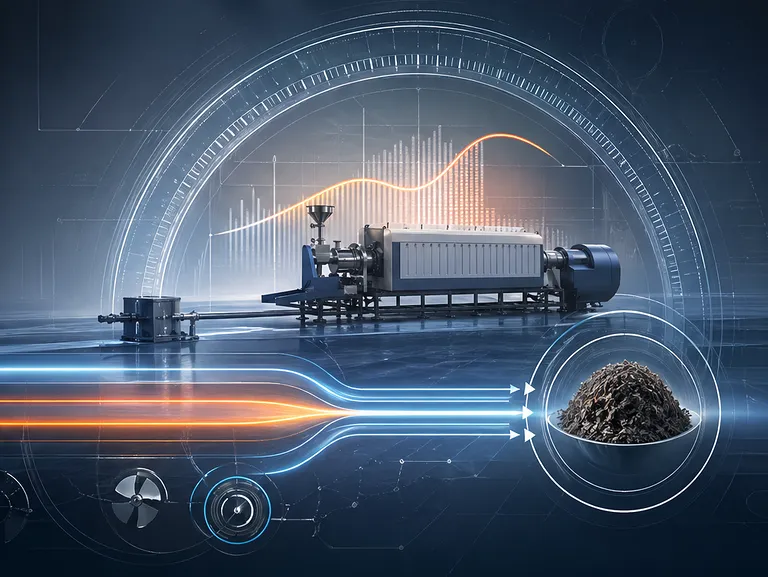
When you are no longer constantly fighting your equipment, your focus shifts from troubleshooting to innovation. A stable, repeatable thermal process unlocks new potential for your lab and your business.
- Accelerate R&D: Confidently test new formulations and concepts, knowing that your results are due to your material science, not equipment variability.
- Generate Data You Can Trust: Produce reliable, scalable data that gives your team the confidence to move from pilot testing to full-scale production.
- Explore Demanding Processes: Tackle sensitive materials that require extremely narrow and precise processing windows—a feat impossible with an unstable system.
- Guarantee Quality: Deliver consistently high-quality material, batch after batch, strengthening your product's performance and your company's reputation.
By moving from a state of reactive guessing to one of proactive control, you transform a bottleneck into a competitive advantage.
Your lab's success shouldn't be a matter of luck. If you're ready to stop chasing symptoms and start mastering your thermal process, our team can help you configure a system that delivers the consistency and control your projects demand. Let's discuss the specific challenges you're facing and explore how a systems-based approach can drive your innovation forward. Contact Our Experts
Related Products
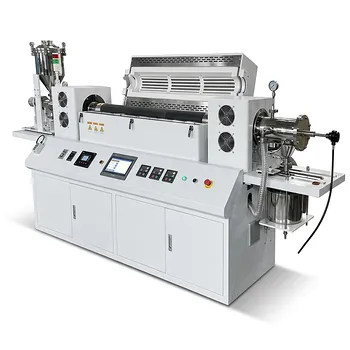
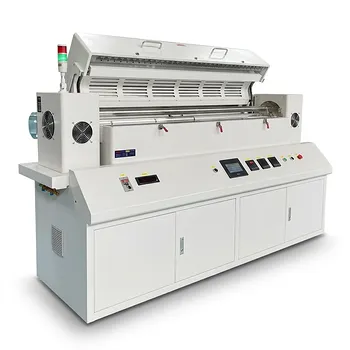
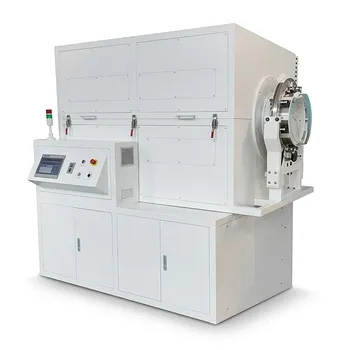
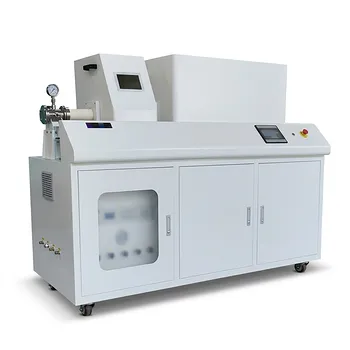
- Electric Rotary Kiln Small Rotary Furnace Biomass Pyrolysis Plant
- Electric Rotary Kiln Continuous Working Small Rotary Furnace Heating Pyrolysis Plant
- Electric Rotary Kiln Small Rotary Furnace for Activated Carbon Regeneration
- Electric Rotary Kiln Pyrolysis Furnace Plant Machine Calciner Small Rotary Kiln Rotating Furnace
- Vacuum Sealed Continuous Working Rotary Tube Furnace Rotating Tube Furnace
Related Articles
- Why Your Lab's Rotary Kiln Fails: It’s Not Your Process, It’s the Parts
- Your Rotary Kiln Isn't an Oven: The Secret to Consistent Thermal Processing
- Why More Fuel Isn't Fixing Your Rotary Kiln—And What Will
- Mastering Rotary Kilns: A Comprehensive Guide to Operation, Applications, and Maintenance
- Your Rotary Kiln Process is Failing. The Problem Isn't Temperature—It's Purity.