Blog The Architecture of Invisible Containment: Why Material Choice Defines Electrochemical Precision
The Architecture of Invisible Containment: Why Material Choice Defines Electrochemical Precision

The Architecture of Invisible Containment: Why Material Choice Defines Electrochemical Precision

4 hours ago

Chemistry is often a battle between the reaction you want to create and the vessel you are trying to contain it in.

In electrochemistry, this tension is amplified. You are driving non-spontaneous reactions, forcing electrons to move where they usually wouldn't, often creating harsh environments involving corrosive electrolytes and fluctuating temperatures.

The scientist faces a paradox:

  1. You need to see the reaction (requiring transparency).
  2. You need to contain the aggression (requiring inertness).

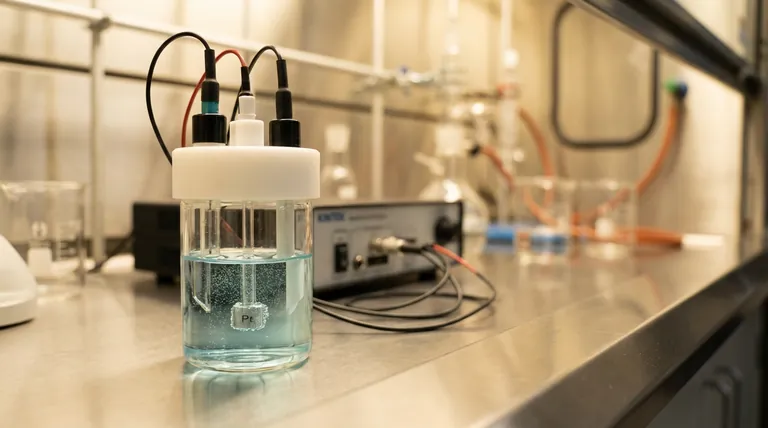
This is why the design of a standard multifunctional electrolytic cell is not random. It is a specific engineering response to the physical demands of the laboratory.

The Glass Paradox

We humans are visual creatures. We trust what we can see.

In a "black box" experiment, uncertainty breeds. Is the electrode bubbling? Has the solution changed color? Is there precipitation?

This is why the cell body is constructed from High Borosilicate Glass.

It is not merely about aesthetics; it is about data verification. Borosilicate glass offers a specific set of defenses that allow the scientist to remain an observer, not a participant in the reaction:

  • Chemical Stability: It refuses to interact with the vast majority of electrolytes. It does not leach impurities that could skew sensitive voltammetry readings.
  • Thermal Shock Resistance: Reactions generate heat. Standard glass shatters under rapid temperature shifts; borosilicate expands and contracts with a stoicism that keeps the containment breach-proof.

The glass body is the window into the chaos. It provides the psychological assurance that the experiment is proceeding as planned.

The Stoic Ceiling

While the body must be transparent, the lid must be functional.

The lid is the control center. It must hold the "Holy Trinity" of electrochemistry—the Working, Counter, and Reference electrodes—in perfect alignment, millimeter-perfect, without degrading over time.

For this, we turn to Polytetrafluoroethylene (PTFE), often known as Teflon.

PTFE is the engineer's answer to corrosion. It is famously chemically inert. Vapors rising from a heated acidic electrolyte might attack a metal lid or degrade a rubber seal, but they slide off PTFE.

Beyond resistance, PTFE offers machinability.

To create a precise three-electrode system, the lid requires tight tolerances. PTFE is soft enough to be machined into complex geometries for airtight sealing but rigid enough to hold heavy electrodes in place. It bridges the gap between the chaotic internal environment and the ordered external laboratory.

The Trade-Offs of Survival

There are no perfect materials, only perfect compromises.

The standard Borosilicate/PTFE combination covers 90% of use cases. But engineering requires acknowledging the edge cases.

If your research involves Hydrofluoric Acid (HF), the rules change. HF eats glass. In this scenario, the transparency of borosilicate becomes a liability rather than an asset.

The solution is an All-PTFE Cell Body.

You gain total survival. You lose visibility.

It is a trade-off that must be made consciously. You are trading the ability to see the reaction for the ability to contain it.

The Ritual of Reset

A high-performance electrolytic cell is not a disposable consumable; it is a precision instrument.

Like a surgeon cleaning their tools, the care taken after the experiment defines the success of the next experiment.

  • Drain immediately: Never store electrolytes in the cell long-term.
  • Isolate: Store the solution in a separate sealed container.
  • Purify: Wash and dry the cell thoroughly to prevent "ghost" readings from previous runs.

Summary of Material Logic

The choice between materials is a choice between priorities.

Component Material Primary Psychological & Physical Function
Cell Body High Borosilicate Glass Visibility & Stability. Allows visual monitoring while resisting thermal shock.
Lid PTFE Control & Inertness. Provides a corrosion-proof platform for precise electrode mounting.
Special Body Full PTFE Survival. Essential for glass-etching acids (HF), sacrificing visibility for durability.

Designing Your Experiment

At KINTEK, we understand that equipment should be the least of your worries. Your focus belongs on the data, not on whether your vessel can withstand the chemistry.

We design our electrolytic cells to be the silent partner in your research—chemically invisible and structurally sound. Whether you need the standard transparency of borosilicate or the ruggedness of a custom PTFE setup, we have the architecture to contain your science.

Let us help you achieve precise results. Contact Our Experts to discuss your specific chemical environment and find the ideal cell configuration for your laboratory.

Visual Guide

The Architecture of Invisible Containment: Why Material Choice Defines Electrochemical Precision Visual Guide

Related Products

Related Articles

Related Products

Super Sealed Electrolytic Electrochemical Cell

Super Sealed Electrolytic Electrochemical Cell

Super-sealed electrolytic cell offers enhanced sealing capabilities, making it ideal for experiments that require high airtightness.

PTFE Electrolytic Cell Electrochemical Cell Corrosion-Resistant Sealed and Non-Sealed

PTFE Electrolytic Cell Electrochemical Cell Corrosion-Resistant Sealed and Non-Sealed

Choose our PTFE Electrolytic Cell for reliable, corrosion-resistant performance. Customize specifications with optional sealing. Explore now.

Electrolytic Electrochemical Cell for Coating Evaluation

Electrolytic Electrochemical Cell for Coating Evaluation

Looking for corrosion-resistant coating evaluation electrolytic cells for electrochemical experiments? Our cells boast complete specifications, good sealing, high-quality materials, safety, and durability. Plus, they're easily customizable to meet your needs.

Electrolytic Electrochemical Cell with Five-Port

Electrolytic Electrochemical Cell with Five-Port

Streamline your laboratory consumables with Kintek's Electrolytic Cell with five-port design. Choose from sealed and non-sealed options with customizable electrodes. Order now.

Electrolytic Electrochemical Cell Gas Diffusion Liquid Flow Reaction Cell

Electrolytic Electrochemical Cell Gas Diffusion Liquid Flow Reaction Cell

Looking for a high-quality gas diffusion electrolysis cell? Our liquid flow reaction cell boasts exceptional corrosion resistance and complete specifications, with customizable options available to suit your needs. Contact us today!

Double-Layer Water Bath Electrolytic Electrochemical Cell

Double-Layer Water Bath Electrolytic Electrochemical Cell

Discover the temperature-controllable electrolytic cell with a double-layer water bath, corrosion resistance, and customization options. Complete specifications included.

Side Window Optical Electrolytic Electrochemical Cell

Side Window Optical Electrolytic Electrochemical Cell

Experience reliable and efficient electrochemical experiments with a side window optical electrolytic cell. Boasting corrosion resistance and complete specifications, this cell is customizable and built to last.

H-Type Double-Layer Optical Electrolytic Electrochemical Cell with Water Bath

H-Type Double-Layer Optical Electrolytic Electrochemical Cell with Water Bath

Double-layer H-type optical water bath electrolytic cells, with excellent corrosion resistance and a wide range of specifications available. Customization options are also available.

H Type Electrolytic Cell Triple Electrochemical Cell

H Type Electrolytic Cell Triple Electrochemical Cell

Experience versatile electrochemical performance with our H-type Electrolytic Cell. Choose from membrane or non-membrane sealing, 2-3 hybrid configurations. Learn more now.

Quartz Electrolytic Electrochemical Cell for Electrochemical Experiments

Quartz Electrolytic Electrochemical Cell for Electrochemical Experiments

Looking for a reliable quartz electrochemical cell? Our product boasts excellent corrosion resistance and complete specifications. With high-quality materials and good sealing, it's both safe and durable. Customize to meet your needs.

Optical Water Bath Electrolytic Electrochemical Cell

Optical Water Bath Electrolytic Electrochemical Cell

Upgrade your electrolytic experiments with our Optical Water Bath. With controllable temperature and excellent corrosion resistance, it's customizable for your specific needs. Discover our complete specifications today.

Double Layer Five-Port Water Bath Electrolytic Electrochemical Cell

Double Layer Five-Port Water Bath Electrolytic Electrochemical Cell

Experience optimal performance with our Water Bath Electrolytic Cell. Our double-layer, five-port design boasts corrosion resistance and longevity. Customizable to fit your specific needs. View specs now.

Thin-Layer Spectral Electrolysis Electrochemical Cell

Thin-Layer Spectral Electrolysis Electrochemical Cell

Discover the benefits of our thin-layer spectral electrolysis cell. Corrosion-resistant, complete specifications, and customizable for your needs.

Customizable PEM Electrolysis Cells for Diverse Research Applications

Customizable PEM Electrolysis Cells for Diverse Research Applications

Custom PEM test cell for electrochemical research. Durable, versatile, for fuel cells & CO2 reduction. Fully customizable. Get a quote!

Customizable CO2 Reduction Flow Cell for NRR ORR and CO2RR Research

Customizable CO2 Reduction Flow Cell for NRR ORR and CO2RR Research

The cell is meticulously crafted from high-quality materials to ensure chemical stability and experimental accuracy.

Flat Corrosion Electrolytic Electrochemical Cell

Flat Corrosion Electrolytic Electrochemical Cell

Discover our flat corrosion electrolytic cell for electrochemical experiments. With exceptional corrosion resistance and complete specifications, our cell guarantees optimal performance. Our high-quality materials and good sealing ensure a safe and durable product, and customization options are available.

FS Electrochemical Hydrogen Fuel Cells for Diverse Applications

FS Electrochemical Hydrogen Fuel Cells for Diverse Applications

KINTEK's FS Electrochemical Cell: Modular PEM fuel cell stack for R&D and training. Acid-resistant, scalable, and customizable for reliable performance.

Custom PTFE Teflon Parts Manufacturer for Non-Standard Insulator Customization

Custom PTFE Teflon Parts Manufacturer for Non-Standard Insulator Customization

PTFE insulator PTFE has excellent electrical insulation properties in a wide temperature and frequency range.

Customizable Swagelok Type Test Cells for Advanced Battery Research Electrochemical Analysis

Customizable Swagelok Type Test Cells for Advanced Battery Research Electrochemical Analysis

The KINTEK Swagelok-type test cell is a modular, T-shaped device constructed from high-quality, chemically inert materials.

Custom PTFE Teflon Parts Manufacturer for Acid and Alkali Resistant Chemical Powder Material Scoops

Custom PTFE Teflon Parts Manufacturer for Acid and Alkali Resistant Chemical Powder Material Scoops

Known for its excellent thermal stability, chemical resistance and electrical insulating properties, PTFE is a versatile thermoplastic material.


Leave Your Message