Blog The Architecture of Control: Mastering the Super-Sealed Electrolytic Cell
The Architecture of Control: Mastering the Super-Sealed Electrolytic Cell

The Architecture of Control: Mastering the Super-Sealed Electrolytic Cell

1 week ago

The Illusion of the Black Box

In laboratory science, we often treat equipment as passive vessels. We pour, we mix, we measure.

But in electrochemistry, the vessel is not passive. It is an active participant in the data.

This is especially true for the super-sealed electrolytic cell. It represents a closed system—a "black box" where the variables are strictly defined by what you put in and how you seal it.

The difference between a breakthrough and a failed experiment often comes down to a bubble the size of a pinhead, or a connection that is 1% loose.

Success isn't found in the complexity of your hypothesis. It is found in the discipline of your setup.

Here is the engineering philosophy behind mastering the sealed cell.

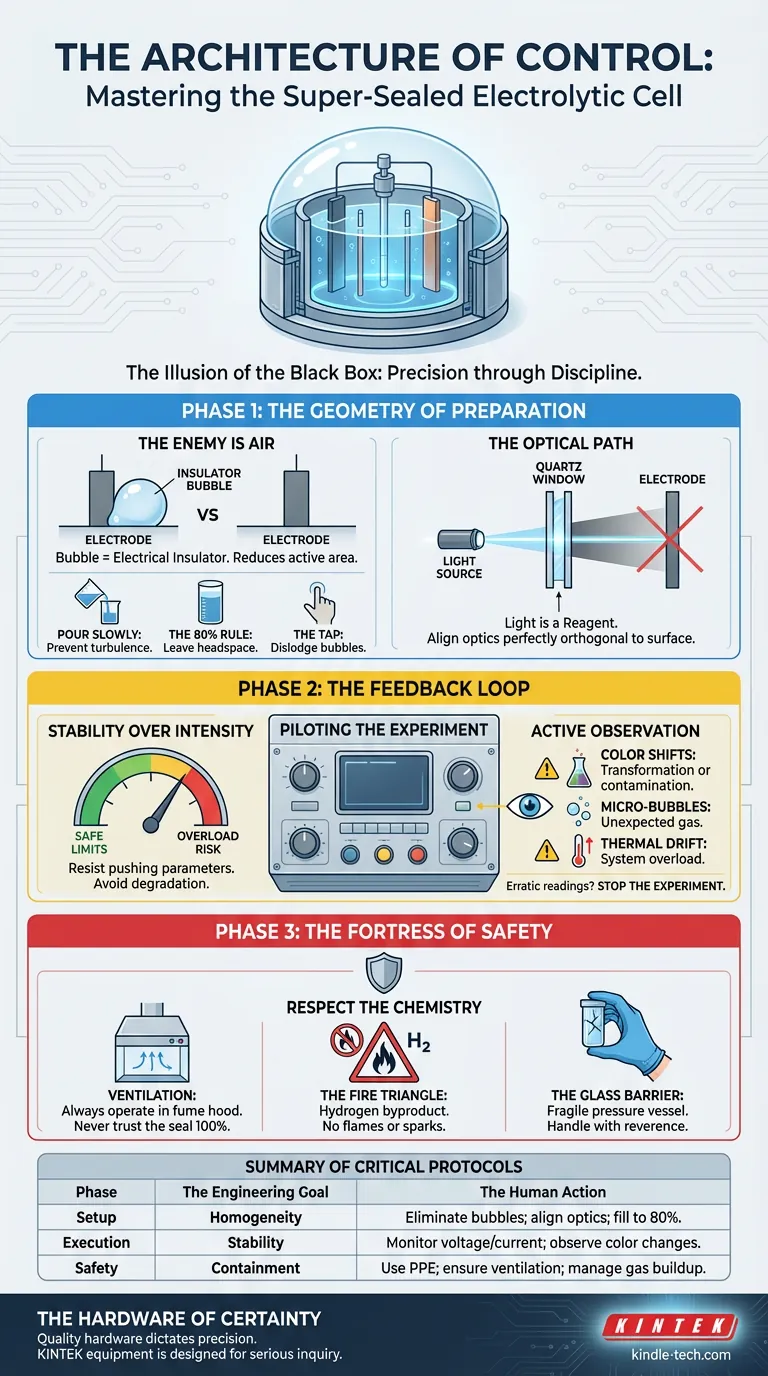
Phase 1: The Geometry of Preparation

You cannot fix a poor setup with good data analysis. The error is baked into the physical reality of the experiment before you even turn on the power.

The preparation phase is about geometry and fluid dynamics.

The Enemy is Air When filling the cell, your primary adversary is the air bubble. A bubble on an electrode surface is not just an annoyance; it is an electrical insulator. It effectively reduces the active surface area, skewing your current density calculations.

  • Pour slowly: Introduce the electrolyte gently to prevent turbulence.
  • The 80% Rule: Never fill the cell to the brim. Leave a headspace (fill to ~80%) to accommodate gas evolution and prevent splashing.
  • The Tap: If bubbles adhere to the walls or electrodes, a gentle mechanical tap is usually sufficient to dislodge them.

The Optical Path For photoelectrochemical experiments, light is a reagent. Its delivery must be precise.

If your light source is misaligned with the quartz window, you create a gradient of intensity across the electrode. You are measuring the shadow, not the reaction. Ensure the optical path is perfectly orthogonal to the electrode surface.

Phase 2: The Feedback Loop

Once the experiment begins, you are no longer a builder; you are a pilot.

You are managing energy inputs (voltage/current) and monitoring outputs.

Stability Over Intensity There is a temptation to push parameters to their limits to see "what happens." Resist this.

Set your voltage and current within the known safe operating limits of the cell. Prolonged overload doesn't just risk the data; it degrades the electrode material, permanently altering the baseline for future experiments.

Active Observation Data loggers tell you what happened mathematically. Your eyes tell you what is happening physically.

Watch for the subtle signals:

  • Color Shifts: A change in electrolyte hue indicates chemical transformation—or contamination.
  • Micro-Bubbles: Unexpected gas generation on the counter electrode.
  • Thermal Drift: Is the cell getting warm?

If the instrument readings become erratic, do not hope they will stabilize. Stop the experiment. An erratic reading is the system screaming that the feedback loop is broken.

Phase 3: The Fortress of Safety

A super-sealed cell is a pressure vessel in disguise.

It is designed to contain reactions that produce hazardous gases like hydrogen or chlorine. The seal protects the lab from the reaction, but it also traps the energy inside.

Respect the Chemistry

  • Ventilation: Even with a sealed cell, never trust the seal 100%. Always operate in a well-ventilated fume hood.
  • The Fire Triangle: Hydrogen is a common byproduct of electrolysis. Remove all open flames and potential spark sources from the vicinity.
  • The Glass Barrier: The cell is likely glass. It is chemically resistant but mechanically fragile. Handle it with the reverence due to a fragile containment unit.

Summary of Critical Protocols

Phase The Engineering Goal The Human Action
Setup Homogeneity Eliminate bubbles; align optics; fill to 80%.
Execution Stability Monitor voltage/current; observe color changes.
Safety Containment Use PPE; ensure ventilation; manage gas buildup.

The Hardware of Certainty

Atul Gawande famously noted that failure usually comes from two sources: ignorance (not knowing enough) or ineptitude (not applying what we know).

In electrochemistry, we remove the risk of ineptitude by establishing rigid protocols. But we remove the risk of variability by choosing the right hardware.

The quality of your electrolytic cell dictates the ceiling of your experimental precision. A poorly machined seal or an optically imperfect window introduces noise that no amount of procedure can fix.

KINTEK understands this engineer's romance with precision. We specialize in high-quality lab equipment and consumables designed to disappear into the background, letting your data stand out.

Whether you need perfectly sealed electrolytic cells or the safety gear to run them, our equipment is built for the rigors of serious inquiry.

Contact Our Experts

Visual Guide

The Architecture of Control: Mastering the Super-Sealed Electrolytic Cell Visual Guide

Related Products

Related Articles

Related Products

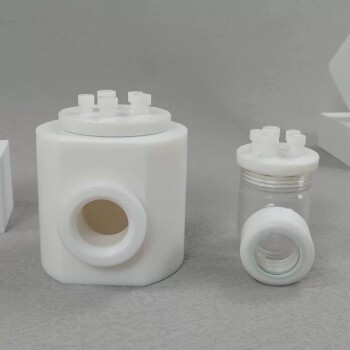
Super Sealed Electrolytic Electrochemical Cell

Super Sealed Electrolytic Electrochemical Cell

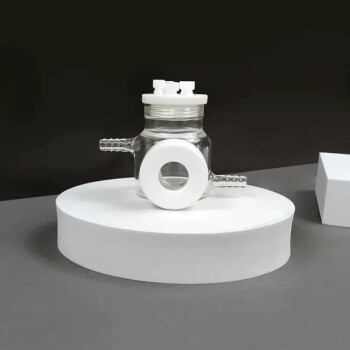
Super-sealed electrolytic cell offers enhanced sealing capabilities, making it ideal for experiments that require high airtightness.

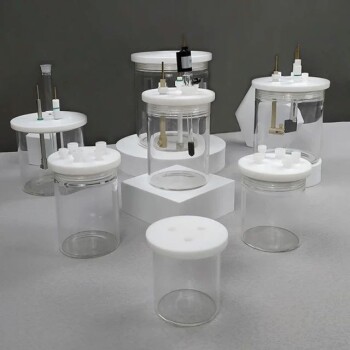
Electrolytic Electrochemical Cell with Five-Port

Electrolytic Electrochemical Cell with Five-Port

Streamline your laboratory consumables with Kintek's Electrolytic Cell with five-port design. Choose from sealed and non-sealed options with customizable electrodes. Order now.

Electrolytic Electrochemical Cell for Coating Evaluation

Electrolytic Electrochemical Cell for Coating Evaluation

Looking for corrosion-resistant coating evaluation electrolytic cells for electrochemical experiments? Our cells boast complete specifications, good sealing, high-quality materials, safety, and durability. Plus, they're easily customizable to meet your needs.

Double-Layer Water Bath Electrolytic Electrochemical Cell

Double-Layer Water Bath Electrolytic Electrochemical Cell

Discover the temperature-controllable electrolytic cell with a double-layer water bath, corrosion resistance, and customization options. Complete specifications included.

PTFE Electrolytic Cell Electrochemical Cell Corrosion-Resistant Sealed and Non-Sealed

PTFE Electrolytic Cell Electrochemical Cell Corrosion-Resistant Sealed and Non-Sealed

Choose our PTFE Electrolytic Cell for reliable, corrosion-resistant performance. Customize specifications with optional sealing. Explore now.

Quartz Electrolytic Electrochemical Cell for Electrochemical Experiments

Quartz Electrolytic Electrochemical Cell for Electrochemical Experiments

Looking for a reliable quartz electrochemical cell? Our product boasts excellent corrosion resistance and complete specifications. With high-quality materials and good sealing, it's both safe and durable. Customize to meet your needs.

Double Layer Five-Port Water Bath Electrolytic Electrochemical Cell

Double Layer Five-Port Water Bath Electrolytic Electrochemical Cell

Experience optimal performance with our Water Bath Electrolytic Cell. Our double-layer, five-port design boasts corrosion resistance and longevity. Customizable to fit your specific needs. View specs now.

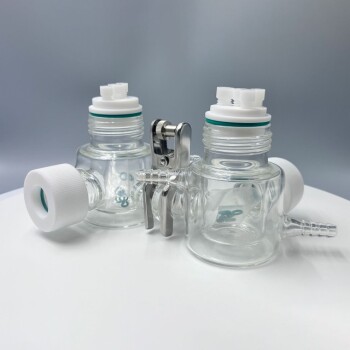
Optical Water Bath Electrolytic Electrochemical Cell

Optical Water Bath Electrolytic Electrochemical Cell

Upgrade your electrolytic experiments with our Optical Water Bath. With controllable temperature and excellent corrosion resistance, it's customizable for your specific needs. Discover our complete specifications today.

H Type Electrolytic Cell Triple Electrochemical Cell

H Type Electrolytic Cell Triple Electrochemical Cell

Experience versatile electrochemical performance with our H-type Electrolytic Cell. Choose from membrane or non-membrane sealing, 2-3 hybrid configurations. Learn more now.

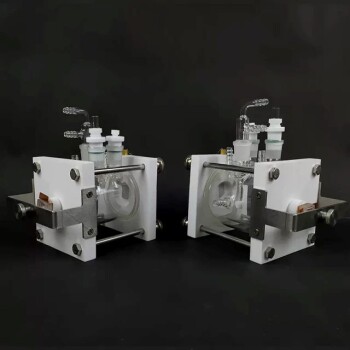
H-Type Double-Layer Optical Electrolytic Electrochemical Cell with Water Bath

H-Type Double-Layer Optical Electrolytic Electrochemical Cell with Water Bath

Double-layer H-type optical water bath electrolytic cells, with excellent corrosion resistance and a wide range of specifications available. Customization options are also available.

Side Window Optical Electrolytic Electrochemical Cell

Side Window Optical Electrolytic Electrochemical Cell

Experience reliable and efficient electrochemical experiments with a side window optical electrolytic cell. Boasting corrosion resistance and complete specifications, this cell is customizable and built to last.

Customizable PEM Electrolysis Cells for Diverse Research Applications

Customizable PEM Electrolysis Cells for Diverse Research Applications

Custom PEM test cell for electrochemical research. Durable, versatile, for fuel cells & CO2 reduction. Fully customizable. Get a quote!

Customizable Swagelok Type Test Cells for Advanced Battery Research Electrochemical Analysis

Customizable Swagelok Type Test Cells for Advanced Battery Research Electrochemical Analysis

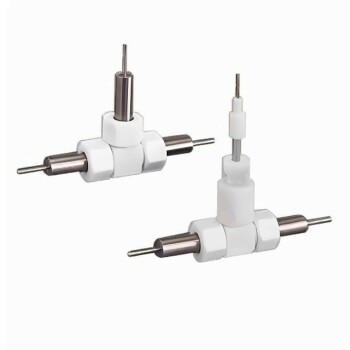
The KINTEK Swagelok-type test cell is a modular, T-shaped device constructed from high-quality, chemically inert materials.

Flat Corrosion Electrolytic Electrochemical Cell

Flat Corrosion Electrolytic Electrochemical Cell

Discover our flat corrosion electrolytic cell for electrochemical experiments. With exceptional corrosion resistance and complete specifications, our cell guarantees optimal performance. Our high-quality materials and good sealing ensure a safe and durable product, and customization options are available.

Thin-Layer Spectral Electrolysis Electrochemical Cell

Thin-Layer Spectral Electrolysis Electrochemical Cell

Discover the benefits of our thin-layer spectral electrolysis cell. Corrosion-resistant, complete specifications, and customizable for your needs.

Electrolytic Electrochemical Cell Gas Diffusion Liquid Flow Reaction Cell

Electrolytic Electrochemical Cell Gas Diffusion Liquid Flow Reaction Cell

Looking for a high-quality gas diffusion electrolysis cell? Our liquid flow reaction cell boasts exceptional corrosion resistance and complete specifications, with customizable options available to suit your needs. Contact us today!

FS Electrochemical Hydrogen Fuel Cells for Diverse Applications

FS Electrochemical Hydrogen Fuel Cells for Diverse Applications

KINTEK's FS Electrochemical Cell: Modular PEM fuel cell stack for R&D and training. Acid-resistant, scalable, and customizable for reliable performance.

Customizable CO2 Reduction Flow Cell for NRR ORR and CO2RR Research

Customizable CO2 Reduction Flow Cell for NRR ORR and CO2RR Research

The cell is meticulously crafted from high-quality materials to ensure chemical stability and experimental accuracy.

Button Battery Disassembly and Sealing Mold for Lab Use

Button Battery Disassembly and Sealing Mold for Lab Use

The simple sealing and disassembly mold can be directly used on ordinary tablet presses, which can save costs, is convenient and fast, and can be used to encapsulate and disassemble button batteries. Other specifications can be customized.

Gold Electrochemical Sheet Electrode Gold Electrode

Gold Electrochemical Sheet Electrode Gold Electrode

Discover high-quality gold sheet electrodes for safe and durable electrochemical experiments. Choose from complete models or customize to meet your specific needs.


Leave Your Message