An electrolytic cell is a contradiction in design.
It is a vessel built to contain volatile energy and corrosive chemistry, yet it is often crafted from materials defined by their brittleness—glass or quartz.
To the novice, it is just a beaker with electrodes. To the experienced engineer, it is a precision instrument where the margin for error is measured in microns and degrees.
The safety of your lab and the integrity of your data do not depend on luck. They depend on a specific discipline: respecting the physics of the material and the chemistry of the reaction.
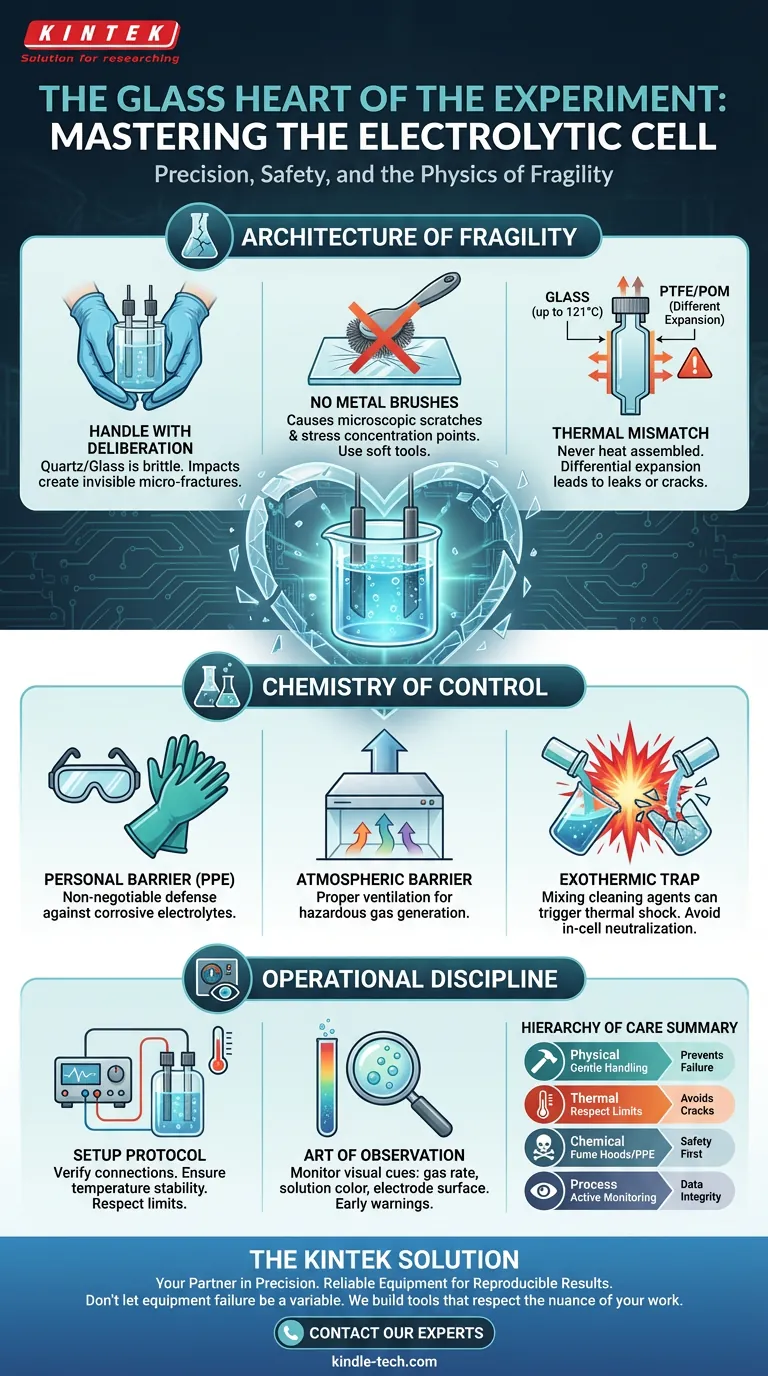
The Architecture of Fragility
The most immediate risk to an electrolytic cell is not the reaction inside, but the hands holding it.
The body of the cell is typically quartz or glass. It offers excellent optical transparency and chemical resistance, but zero structural forgiveness.
Handle with deliberation. A single collision with a hard surface does not just risk a shatter; it introduces micro-fractures that may fail under thermal stress later.
The Myth of the Metal Brush
There is a temptation to use metal brushes for cleaning. They feel robust. They scrub effectively.
Do not use them.
A metal brush against a glass interior is a microscopic catastrophe. It leaves scratches that compromise the cell's transparency and create stress concentration points. These scratches become the fault lines for future breakage.
The Thermal Mismatch
A common engineering oversight is treating the assembly as a single material.
The glass body may withstand sterilization temperatures of 121°C. However, the fittings—often made of PTFE (Teflon) or POM (Polyoxymethylene)—have different thermal expansion coefficients.
- PTFE can expand permanently, ruining seals.
- POM can crack under high heat.
Never heat the assembled cell unless you are certain of every component's limit. Physics does not negotiate with impatience.
The Chemistry of Control
Once physical integrity is secured, the focus shifts to the environment you create.
Electrolysis often involves corrosive electrolytes. The danger here is twofold: injury to the operator and destruction of the equipment.
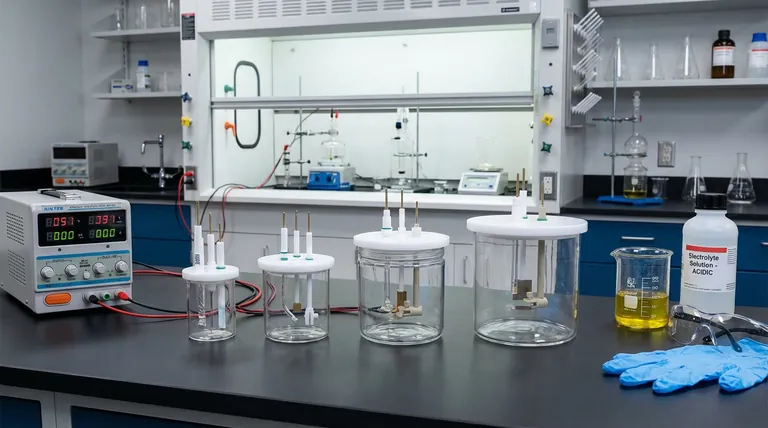
The Personal Barrier PPE is not bureaucratic compliance; it is the final line of defense. When handling acidic or alkaline solutions, gloves and safety glasses are non-negotiable.
The Atmospheric Barrier Electrochemical reactions breathe. They generate gases that can be toxic or corrosive. The fume hood is your lung protection. Ensure proper ventilation to prevent the accumulation of hazardous vapors.
The Exothermic Trap Cleaning is often where focus drifts. Mixing nitric acid and sodium hydroxide inside the cell to "neutralize" it can trigger a violent exothermic reaction. The sudden heat spike leads to thermal shock, shattering the glass from the inside out.
Operational Discipline
The experiment itself is a symphony of variables. Precision here protects both the hardware and the data.
The Setup Protocol
Before the current flows, verify the architecture:
- Connections: Ensure the cell is correctly linked to the power supply and detection instruments.
- Temperature: If using a water bath, stability is key. Temperature fluctuations alter conductivity and reaction rates, rendering data useless.
- Limits: Excessive heat doesn't just skew results; it creates safety hazards like burns or pressure buildups.
The Art of Observation
Automation makes us complacent.
Good science requires a watchful eye. Monitor the electrode surface. Watch for unexpected gas generation. Note shifts in solution color.
These are not just visual effects; they are the language of the reaction. A sudden, unexpected change is an early warning system. Ignoring it leads to failure.
Summary of Precautions
The following table outlines the hierarchy of care required for successful operation:
| Domain | The Action | The "Why" (The Risk) |
|---|---|---|
| Physical | Avoid metal brushes; handle gently. | Micro-scratches lead to structural failure. |
| Thermal | Respect component limits (PTFE/POM). | Differential expansion causes leaks or cracks. |
| Chemical | Use fume hoods; avoid mixing cleaning agents. | Toxic inhalation and exothermic shattering. |
| Process | Monitor connections and visual cues. | Data integrity and preventing runaway reactions. |
The KINTEK Solution
Science is a partnership between the researcher and the instrument. The researcher provides the hypothesis; the instrument provides the proof.
If the instrument fails, the proof is lost.
At KINTEK, we understand the "engineer's romance" with high-quality equipment. We build lab equipment and consumables that respect the nuance of your work—materials that last, designs that perform, and precision you can trust.
Do not let equipment failure be the variable that ruins your experiment.
Contact Our Experts to discuss your specific electrochemical needs and secure the right tools for your laboratory.
Visual Guide
Related Products
- PTFE Electrolytic Cell Electrochemical Cell Corrosion-Resistant Sealed and Non-Sealed
- Super Sealed Electrolytic Electrochemical Cell
- Electrolytic Electrochemical Cell with Five-Port
- H Type Electrolytic Cell Triple Electrochemical Cell
- Electrolytic Electrochemical Cell Gas Diffusion Liquid Flow Reaction Cell
Related Articles
- Electrolytic Batteries A Solution to the Growing Energy Demands
- The Art of Resistance: Why Your Electrolytic Cell Needs Breathing Room
- The Architecture of Invisibility: Deconstructing the "All-Quartz" Cell
- The Architecture of Certainty: Mastering Control in Multifunctional Electrolytic Cells
- The Silent Partner: Why Material Choice in Electrochemistry is a Matter of Trust