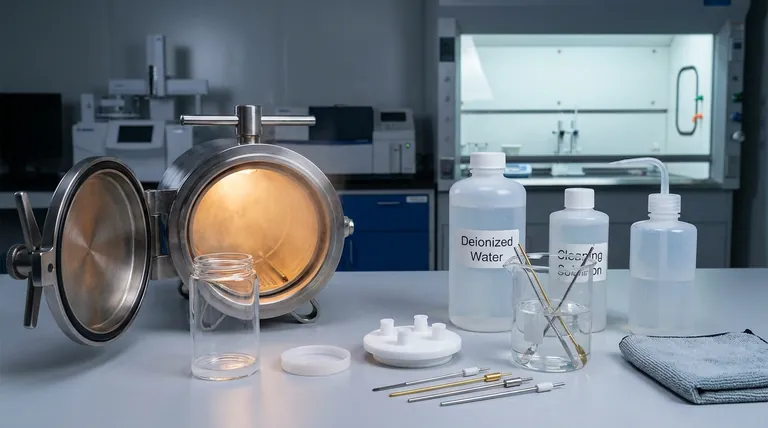
The allure of the autoclave is strong. It promises a "reset button" for the laboratory—a single, high-heat cycle that returns your equipment to a state of absolute purity.
But in electrochemistry, the desire for uniform solutions often leads to catastrophic failure.
The central challenge of maintaining an electrolytic cell is not the sterilization itself. It is the fact that the cell is an assembly of contradictions. You are dealing with materials that react to the world in fundamentally different ways.
The Architecture of Tolerance
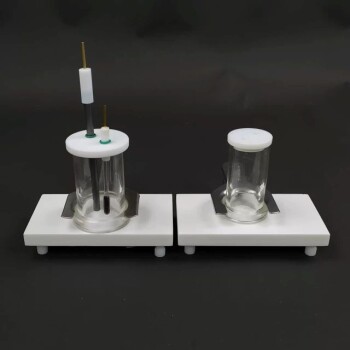
An electrolytic cell is not a monolith. It is a system composed of high borosilicate glass and Polytetrafluoroethylene (PTFE) components.
These materials live in peace at room temperature. But introduce heat, and their relationship falls apart.
The Glass: Built for Stress
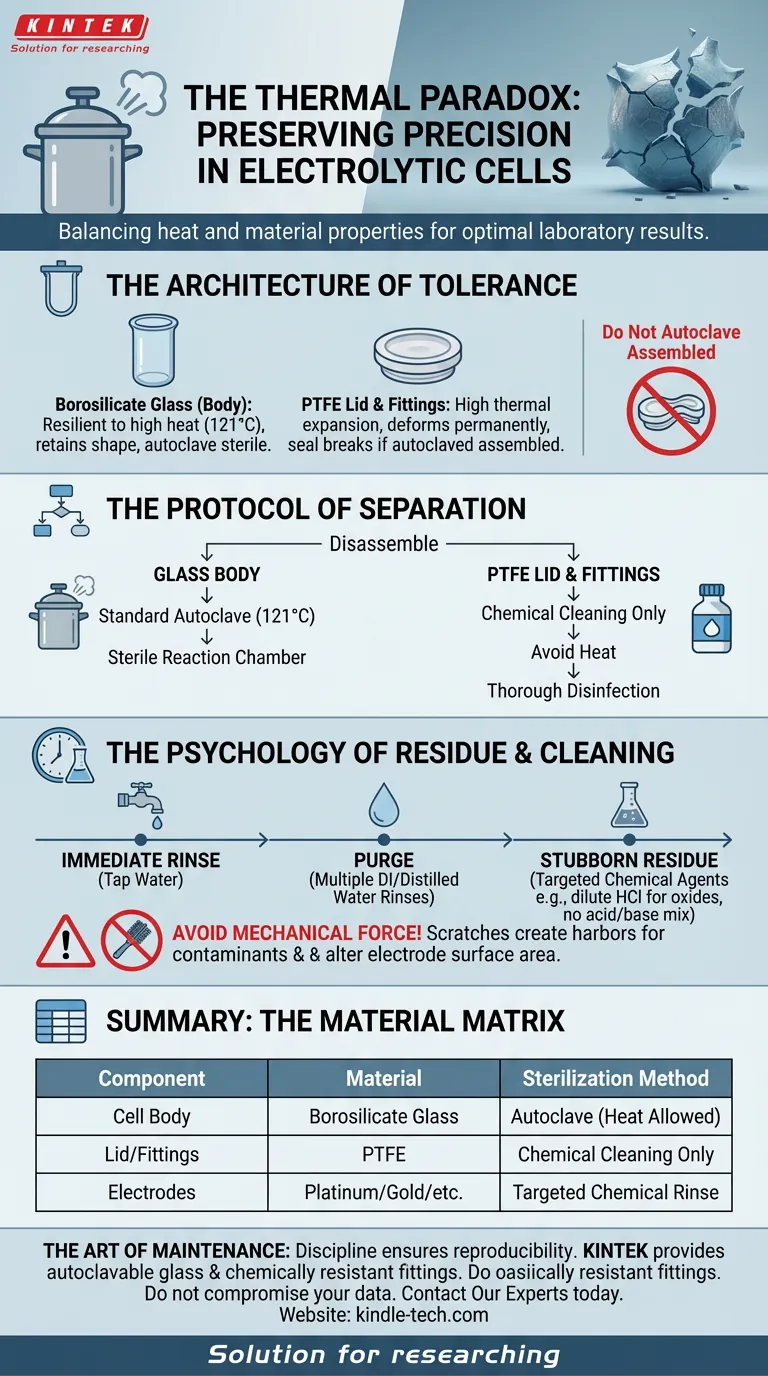
The body of the cell—typically high borosilicate glass—is engineered for resilience. It craves the autoclave. At 121°C under high pressure, the glass becomes truly sterile. It holds its shape. It maintains its structural integrity.
The Lid: The Weak Link
The PTFE lid is different. It has a high coefficient of thermal expansion.
When you subject a PTFE lid to the heat of an autoclave, it expands. Unlike the glass, it possesses a "thermal memory" that is unforgiving. It will deform permanently.
If you autoclave the assembled unit, the lid expands against the rigid glass. When it cools, it never quite fits the same way again. The seal is broken. The cell is useless.
The Protocol of Separation
To sterilize effectively, you must first disassemble.
There is no shortcut here. The correct approach requires treating each component according to its specific material tolerance.
1. The Glass Body
Method: Standard Autoclave. Details: Isolate the glass vessel. Run it through a standard cycle (121°C). This is the only way to ensure the reaction chamber is sterile for sensitive bio-electrochemical work.
2. The PTFE Lid and Fittings
Method: Chemical Cleaning. Details: Never heat these parts. Sterilization must be achieved through rigorous chemical disinfection after cleaning.
The Psychology of Residue
Sterilization is impossible on a dirty surface. The most dangerous enemy of an electrolytic cell is procrastination.
When an experiment ends, the clock starts. Electrolytes and reaction products begin to settle. If left to dry, they harden into deposits that mask the electrode surface and alter the geometry of the cell.
The Rinse Cycle
- Immediate Action: Rinse with tap water immediately to remove bulk electrolytes.
- The Purge: Follow with multiple rinses of deionized or distilled water. This removes the ions that tap water introduces.
- The Check: If the water sheets off the glass cleanly, you are making progress. If it beads around deposits, you have work to do.
Dealing with "Stubborn" History
Sometimes, simple rinsing fails. Metal oxides (like rust) or organic films require intervention.
- Chemical Agents: Use dilute hydrochloric acid for iron oxides.
- The Constraint: You must balance potency with safety. The cleaning agent must dissolve the residue without corroding the electrode or etching the glass.
- The Safety Rule: Never mix acids and bases (e.g., nitric acid and sodium hydroxide). The resulting exothermic reaction is a physical hazard to both the operator and the equipment.
The Danger of Mechanical Force
There is a temptation, when faced with a stubborn stain, to use force.
We reach for a metal brush or an abrasive pad. This is a mistake.
Scratches on the glass or electrode surface create microscopic valleys. These valleys become safe harbors for bacteria and chemical residue, making future sterilization nearly impossible. They also alter the active surface area of your electrodes, drifting your data over time.
Summary: The Material Matrix
A quick guide to treating the components of your system:
| Component | Material | The "Enemy" | Sterilization Method |
|---|---|---|---|
| Cell Body | Borosilicate Glass | Physical Impact | Autoclave (Heat allowed) |
| Lid/Fittings | PTFE | Heat | Chemical Cleaning Only |
| Electrodes | Platinum/Gold/etc. | Abrasion/Corrosion | Targeted Chemical Rinse |
The Art of Maintenance
Great science is rarely about the big discovery alone. It is about the discipline of the process.
If your focus is routine electrochemistry, a strict rinse-and-dry protocol ensures reproducibility. If you are working in bio-electrochemistry, the disassembly and autoclave method is non-negotiable.
Your equipment is the foundation of your data. At KINTEK, we understand that an electrolytic cell is a precision instrument, not just a glass jar. We provide high-quality, autoclavable glass bodies and chemically resistant fittings designed to withstand the rigors of serious laboratory work.
Do not let a deformed lid or a contaminated surface compromise your results. Contact Our Experts today to discuss the right equipment and maintenance protocols for your specific application.
Visual Guide
Related Products
- PTFE Electrolytic Cell Electrochemical Cell Corrosion-Resistant Sealed and Non-Sealed
- Super Sealed Electrolytic Electrochemical Cell
- Electrolytic Electrochemical Cell with Five-Port
- H Type Electrolytic Cell Triple Electrochemical Cell
- Electrolytic Electrochemical Cell Gas Diffusion Liquid Flow Reaction Cell
Related Articles
- Electrolytic Batteries A Solution to the Growing Energy Demands
- The Art of Resistance: Why Your Electrolytic Cell Needs Breathing Room
- The Architecture of Invisibility: Deconstructing the "All-Quartz" Cell
- The Architecture of Certainty: Mastering Control in Multifunctional Electrolytic Cells
- The Silent Partner: Why Material Choice in Electrochemistry is a Matter of Trust