It's a frustratingly common scenario. Your new thermal processing project is underway. You've invested in a pilot-scale rotary kiln, your material feed is calibrated, and your temperature profile is set. Yet, the results are all over the map. One batch is contaminated with strange impurities. The next shows incomplete chemical conversion. You're burning through time, budget, and precious sample material, stuck in a loop of endless adjustments that lead nowhere. You've checked everything—or so you think.
The Vicious Cycle: Chasing Symptoms Instead of Causes
If this sounds familiar, you're not alone. Many labs and process development teams fall into the same trap. Faced with inconsistent outcomes, they begin a frustrating process of trial and error:
- "Let's just tweak the temperature." They adjust the setpoints up and down, hoping to find a magic number that fixes the chemistry.
- "We'll adjust the residence time." They change the kiln's rotation speed or angle, trying to give the material more or less time in the heat.
- "We'll just purify the end product." They accept the poor-quality output and plan for costly, complex downstream purification steps, defeating the purpose of an efficient process.
These "solutions" rarely work because they ignore the most overlooked variable in the entire system. The commercial consequences are significant. Promising R&D projects fail to scale. Misleading pilot data leads to disastrously flawed designs for full-scale plants. Timelines stretch from months to years, and budgets evaporate with nothing to show for it but a pile of unusable material.
The problem isn't your temperature controller or your rotation speed. The problem is that you're treating your fuel choice as a simple utility expense, when in reality, it's a critical chemical ingredient in your reaction.
The Real Culprit: Fuel Isn't Just Heat—It's Chemistry
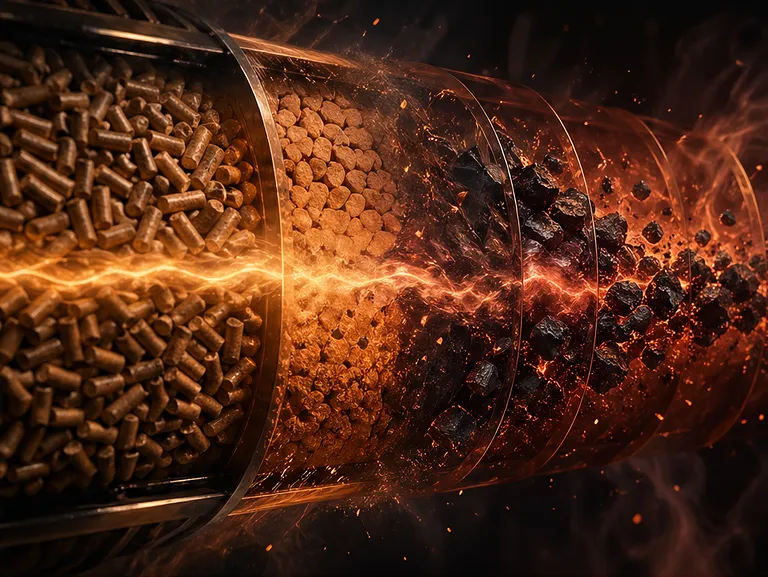
Here is the fundamental truth that changes everything: A direct-fired rotary kiln is not a convection oven; it's a gas grill.
In a kitchen oven, the heating elements are separate, and only clean, hot air touches your food. In a rotary kiln (like on a gas grill), the flame and its combustion byproducts—exhaust gases, ash, and trace chemical compounds—come into direct contact with your material.
This means the fuel's chemical makeup becomes part of your process chemistry.
- Using pulverized coal? The sulfur in the coal can react with your material, creating unwanted sulfates and ruining product purity. The ash it produces can physically contaminate your batch.
- Using heavy fuel oil? Vanadium and other trace metals in the oil can poison sensitive catalysts or discolor your final product.
- Using natural gas? While clean, its combustion properties create a specific atmospheric environment (e.g., moisture levels) that may or may not be ideal for your specific chemical reaction.
This is why the common "fixes" fail. Adjusting temperature or residence time when your fuel is actively contaminating the batch is like trying to cook a perfect steak on a grill caked with old grease. You're trying to solve a chemistry problem with a physics solution, and it will never work.
The Solution Embodied: A Flexible Processing Platform
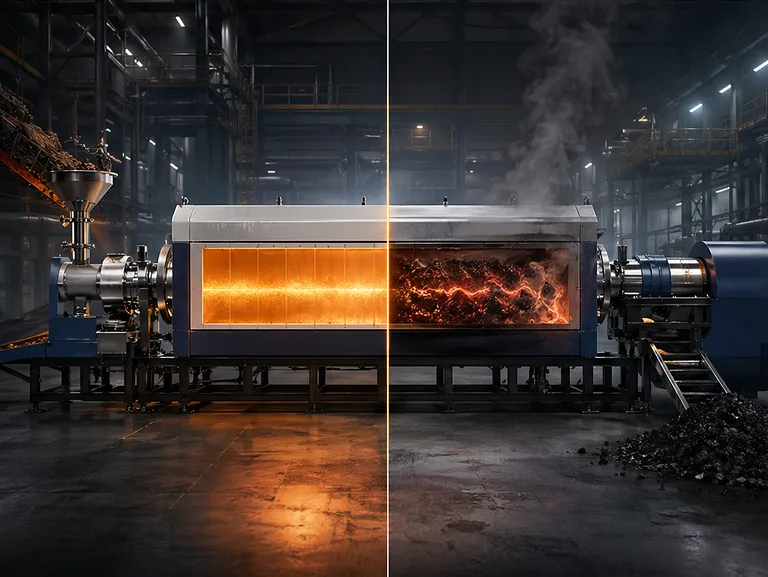
To solve this problem at its root, you need to stop thinking about which fuel is cheapest and start determining which fuel chemistry gives you the desired result. This requires a tool designed for that exact purpose.
You don't just need a kiln; you need a flexible thermal processing platform—a system designed for experimentation, control, and data-driven decisions.
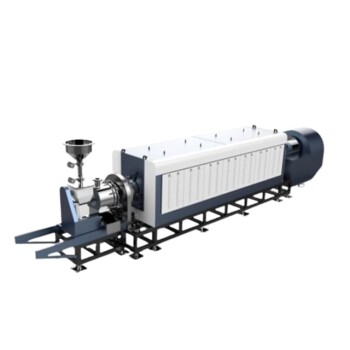
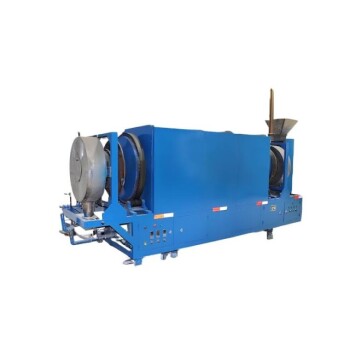
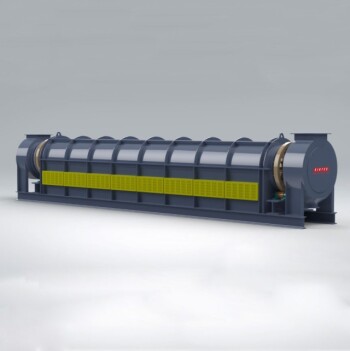
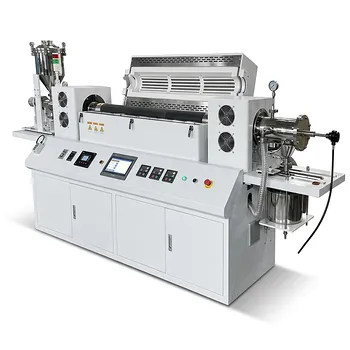
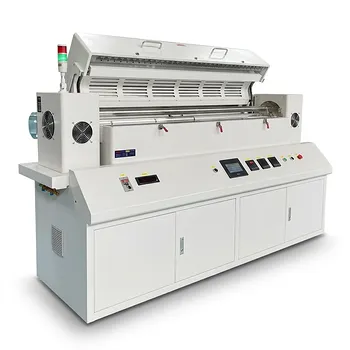
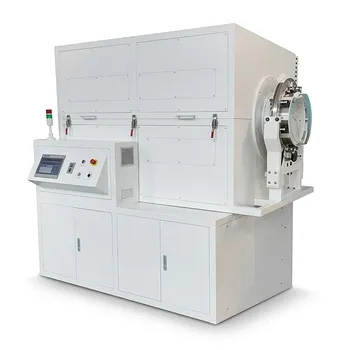
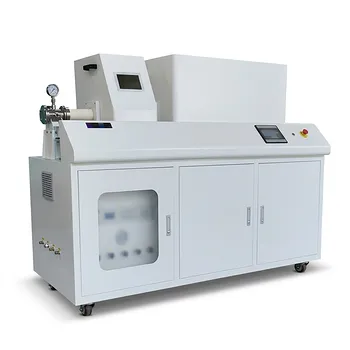
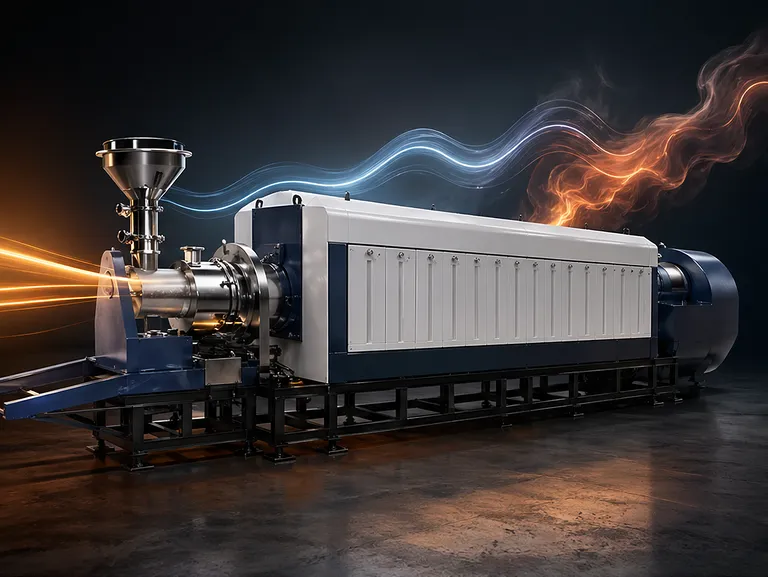
This is the principle behind KINTEK's lab- and pilot-scale rotary kilns. They are not single-fuel "black boxes." They are modular systems engineered to give you control over the entire process equation. With interchangeable burner systems for solid (pulverized coal), liquid (fuel oil), and gaseous (natural gas, propane) fuels, our platforms allow you to directly test the impact of fuel chemistry on your material at a manageable scale.
- Instead of guessing if coal will work, you can run a controlled test. Compare the results of a batch run with low-cost coal against one run with clean-burning natural gas. You get empirical data, not a theoretical estimate.
- Instead of discovering contamination at full-scale, you can identify it in the lab. Our systems allow you to analyze the precise interaction between fuel byproducts and your material, de-risking multi-million dollar scale-up investments.
- Instead of being locked into one fuel, you can design for flexibility. You can determine the exact trade-offs between fuel cost and product purity, finding the optimal economic and chemical balance for your specific application before you build.
Beyond the Fix: From Troubleshooting to True Innovation
Once you stop fighting your fuel and start controlling it, a new world of possibilities opens up. The conversation shifts from "Why is this failing?" to "What can we create?"
By mastering the interplay between fuel, atmosphere, and material, you can:
- Accelerate R&D Cycles: Go from concept to validated process in weeks, not months, by quickly testing multiple process pathways.
- De-Risk Scale-Up: Move to full-scale production with confidence, armed with precise data on how fuel choice will impact your final product quality and operating costs.
- Unlock New Material Properties: Discover how specific fuel atmospheres can be used to intentionally create unique characteristics in your materials, turning a potential "contaminant" into a valuable feature.
- Optimize for Total Cost of Ownership: Make data-driven decisions that balance capital investment, fuel costs, and product value, ensuring your project is not just technically sound, but commercially viable.
The right fuel choice isn't just a technical detail; it's a strategic decision that dictates your project's profitability, timeline, and ultimate success. Instead of guessing, it's time to build a process based on data. Our team can help you design a lab- or pilot-scale testing protocol to find the optimal balance for your unique application. To discuss your project's specific challenges and goals, Contact Our Experts.
Related Products
- Electric Rotary Kiln Small Rotary Furnace Biomass Pyrolysis Plant
- Electric Rotary Kiln Continuous Working Small Rotary Furnace Heating Pyrolysis Plant
- Electric Rotary Kiln Small Rotary Furnace for Activated Carbon Regeneration
- Electric Rotary Kiln Pyrolysis Furnace Plant Machine Calciner Small Rotary Kiln Rotating Furnace
- Vacuum Sealed Continuous Working Rotary Tube Furnace Rotating Tube Furnace
Related Articles
- Mastering Rotary Kilns: A Comprehensive Guide to Operation, Applications, and Maintenance
- Your Lab Process Fails to Scale? The Rotary Kiln Sizing Mistake You're Probably Making
- Your Rotary Kiln is Wasting Energy and Money. The Reason is Hiding in Plain Sight.
- Why Your Rotary Kiln Results Are Inconsistent—And What's Really to Blame
- Why Your Rotary Kiln Keeps Failing (And It’s Not the Parts You're Replacing)