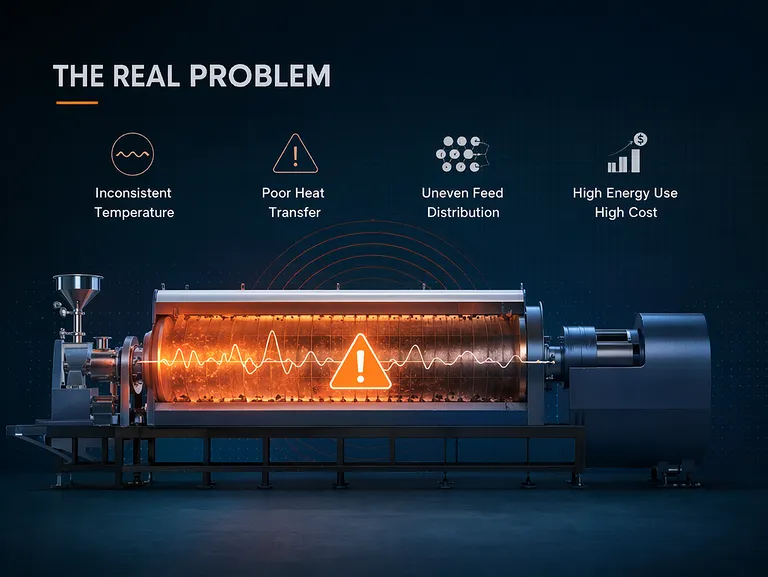
Does this scene feel familiar? You’re staring at another lab report showing your product is off-spec. The clinker quality is inconsistent, the lime isn't reactive enough, or the mineral properties have drifted—again. You've spent weeks in a frustrating cycle of adjustments: tweaking the burner, changing the rotation speed, altering the feed rate. Yet, stability remains just out of reach. Every fix seems to create a new problem elsewhere. It feels like an unwinnable battle.
You are not alone. This is one of the most common and costly challenges in thermal processing industries.
‘Just Tweak It’: Why Common Fixes Make Things Worse
When faced with an unstable kiln, the instinct is to act. Teams often jump to a few "standard" solutions:
- "Let's just crank up the burner." This brute-force approach often leads to overheating in one section, damaging the expensive refractory lining and potentially creating hard-to-remove rings, all while failing to solve the underlying issue.
- "Slow down the kiln's rotation." This is done to increase residence time, but it can disrupt the material flow, causing bottlenecks and uneven processing that ripple through the entire system.
- "It must be the raw feed." Teams spend days or weeks re-calibrating the raw mix, only to find the problem persists because the issue was never with the ingredients, but with the "cooking" process itself.
These reactive adjustments fail because they treat the kiln as a single black box. The commercial consequences are severe: skyrocketing fuel consumption, valuable product being downgraded or discarded, and worst of all, unscheduled downtime for emergency repairs that can halt production for days.
The Breakthrough: Your Kiln Is a Four-Stage Process, Not a Single Furnace
Here is the fundamental truth that changes everything: A rotary kiln is not one giant furnace. It is a precisely sequenced, four-stage thermal journey.
Imagine a 4x100m relay race. If the second runner stumbles, it doesn't matter how fast the final runner is—the race is already compromised. Your kiln works the same way. A failure in an early zone guarantees a poor result at the end, no matter how much you adjust the final stage.
The "aha!" moment for operators is realizing they must stop managing the "kiln" and start managing its individual zones. As material travels down the kiln, it passes through four distinct stages:
- Drying & Preheating Zone: Its only job is to efficiently remove moisture and get the material up to temperature. A failure here—like incomplete drying—sends wet, cold material into the next zone, demanding extra energy and disrupting the chemistry.
- Calcination Zone: Here, the first major chemical reaction occurs (e.g., CaCO₃ → CaO + CO₂). This zone requires a specific temperature and time. If the hand-off from the preheating zone was poor, this reaction will be incomplete.
- Sintering (or Burning) Zone: This is the hottest section, where the final product properties are forged. It's incredibly sensitive. If it receives improperly calcined material, no amount of heat can fully salvage the final product. This is why "just turning up the burner" often fails; you're trying to fix a Stage 3 problem that was actually caused in Stage 1 or 2.
- Cooling Zone: Rapid cooling locks in the desired material structure. Inefficient cooling can lead to a degraded or unstable final product.
The reason your old fixes failed is that they were aimed at the wrong target. You were trying to coach the final runner when the second runner was the one who needed help.
From Guesswork to Diagnosis: The Tools for Zonal Control
So, how do you stop guessing and start knowing? How do you find out which runner is stumbling?
You need visibility. You need to diagnose the health of each zone.
This is where your laboratory transforms from a simple quality checkpoint at the end of the line into the nerve center of your entire process optimization strategy. To truly control your kiln, you must analyze samples that represent each stage of the thermal journey. This requires tools that can give you precise, reliable data on the material's transformation.
This is precisely why KINTEK's laboratory equipment and consumables exist. They are not just for final product verification; they are the diagnostic tools designed to give you zonal control.
- Is calcination incomplete? Our sample preparation equipment for X-ray fluorescence (XRF) and X-ray diffraction (XRD) allows you to perform rapid, precise chemical analysis to see exactly what’s happening chemically in the calcination zone.
- Are you losing energy? Our laboratory furnaces and thermal analysis instruments help you simulate zone conditions and understand the material's thermal properties, pinpointing where energy is being wasted.
- Is the final structure correct? Our high-quality consumables ensure your analytical instruments deliver the accurate, repeatable data needed to correlate final properties back to specific zonal conditions.
KINTEK provides the means to turn your lab's data into actionable intelligence, allowing you to make small, targeted adjustments to the right zone, at the right time.
Beyond Stability: Unlocking New Performance and Profitability
When you shift from reactive firefighting to proactive, data-driven diagnosis, the entire dynamic of your operation changes. "Stability" is no longer the goal; it's the starting point.
With a deep understanding of each zone, you can now:
- Optimize Fuel Costs: Make small, precise changes that have a predictable impact, dramatically reducing energy waste.
- Maximize Throughput: Confidently push your kiln closer to its design limits without risking product quality.
- Innovate with Confidence: Test alternative fuels or raw materials by accurately measuring their impact on each individual zone.
- Implement Predictive Maintenance: By analyzing trends, you can predict refractory wear and schedule maintenance before a catastrophic failure occurs, turning costly downtime into planned, efficient upkeep.
Mastering your rotary kiln isn't about bigger adjustments; it's about smarter insights. The journey from an unpredictable process to a stable, highly profitable operation begins in the lab. If you're ready to stop guessing and start diagnosing, our team of experts can help you identify the right analytical tools for your specific process—from cement to lime to specialized minerals. Let's discuss how precise data can solve your most persistent production challenges. Contact Our Experts
Related Products
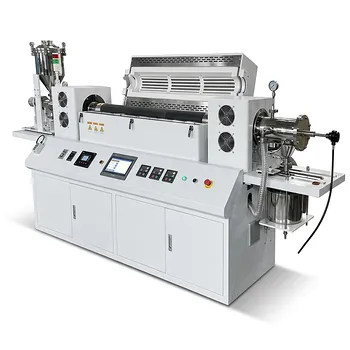
- Electric Rotary Kiln Small Rotary Furnace Biomass Pyrolysis Plant
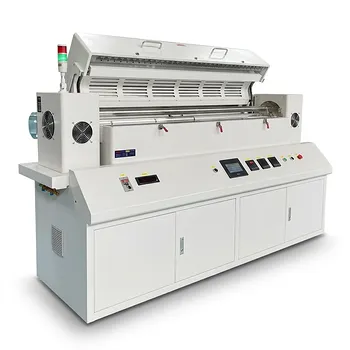
- Electric Rotary Kiln Continuous Working Small Rotary Furnace Heating Pyrolysis Plant
- Electric Rotary Kiln Small Rotary Furnace for Activated Carbon Regeneration
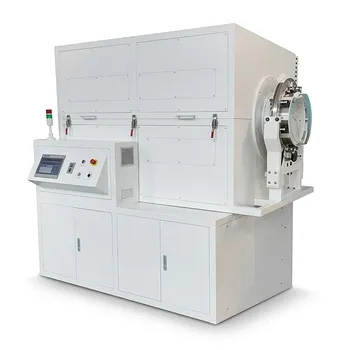
- Electric Rotary Kiln Pyrolysis Furnace Plant Machine Calciner Small Rotary Kiln Rotating Furnace
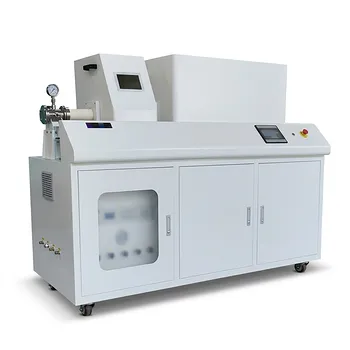
- Vacuum Sealed Continuous Working Rotary Tube Furnace Rotating Tube Furnace
Related Articles
- Why Your Rotary Kiln Fuel Choice Is Sabotaging Your Results—And How to Fix It
- Your Rotary Kiln Isn't an Oven: The Secret to Consistent Thermal Processing
- Your Lab Process Fails to Scale? The Rotary Kiln Sizing Mistake You're Probably Making
- Hotter Isn't Better: The Hidden Costs of Your Rotary Kiln's Temperature Setting
- Your Rotary Kiln is Wasting Energy and Money. The Reason is Hiding in Plain Sight.