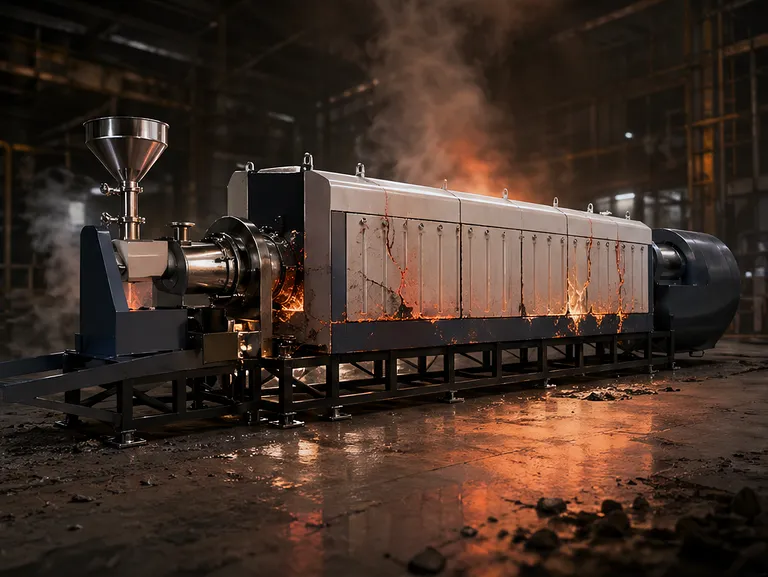
It’s a scenario no plant manager wants to face. Production is running smoothly, and then, the alert comes: the rotary kiln is down. Again. The maintenance team scrambles, production halts, and you’re left calculating the mounting costs of another unexpected shutdown. Your kiln, the workhorse of your operation, has become your most unpredictable liability. You ask yourself the same question every time: why does this keep happening?
The Expensive Cycle of 'Quick Fixes'
If you're like most, you're caught in a frustrating and costly cycle. A failure occurs, and the immediate priority is to get the kiln back online as fast as possible. This often leads to a series of "quick fixes":
- Patching it up: Applying a temporary patch to the damaged lining.
- Rushing the reline: Choosing the fastest-to-install material to minimize the current downtime.
- Sticking with what's familiar: Using the same type of refractory material as last time, even if it failed prematurely.
While these actions feel productive in the moment, they are merely treating a symptom. The true cost of this approach is staggering. Each hour of unplanned downtime translates directly into lost revenue and production delays. Emergency repairs inflate labor costs and part-sourcing fees. Most critically, this reactive loop never actually solves the underlying problem, all but guaranteeing that you'll be facing the same crisis again in a few months.
The Hidden Culprit: It's Not Your Kiln, It's Your Lining Strategy
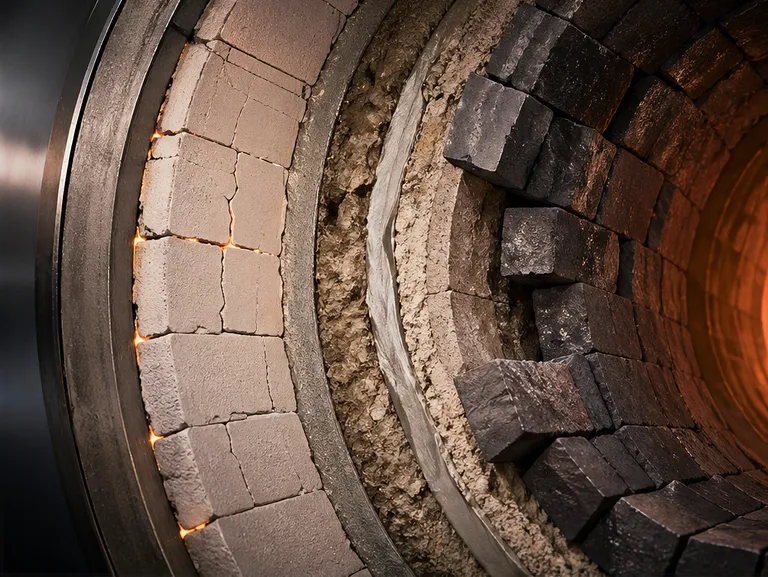
The reason your kiln keeps failing isn't because the equipment is faulty or the materials are "bad." The problem is a fundamental mismatch between your refractory lining and the specific demands of your process.
To understand this, let’s look at the brilliant, two-layer design of a rotary kiln.
The Two Lines of Defense
A kiln is essentially a system of two components working together:
- The Outer Steel Shell: This is the backbone. It provides the structural strength to rotate and support the massive load inside. But steel, for all its strength, cannot withstand the intense conditions of your process.
- The Inner Refractory Lining: This is the shield. This internal layer is what protects the steel shell from the true enemies within your kiln: extreme heat (often exceeding 1400°C) and constant physical abrasion from the tumbling material.
The "quick fix" cycle fails because it ignores that these two threats—heat and abrasion—require different types of defense. The choice of refractory material isn't just a choice; it's a critical strategic decision.
Heat vs. Abrasion: The Battle Inside Your Kiln
There are two primary types of refractory linings, each with a distinct advantage:
- Castable Refractory: This material is like a specialized, high-performance concrete. It can be poured or sprayed into place, forming a solid, seamless lining. Its main benefit is speed of installation, which drastically reduces repair downtime.
- Brick Refractory: These are dense, pre-fired blocks installed individually by skilled masons. The process is more labor-intensive and time-consuming. However, brick offers superior durability and resistance to wear, making it ideal for highly abrasive environments.
Herein lies the root of the problem. If your process involves highly abrasive materials (like cement clinker or certain ores), and you repeatedly choose a castable lining to get back online faster, you are sacrificing durability for speed. The lining will inevitably wear out prematurely. You haven't solved the problem; you've just scheduled the next failure.
Choosing the Right Shield: A Strategic Approach to Material Selection
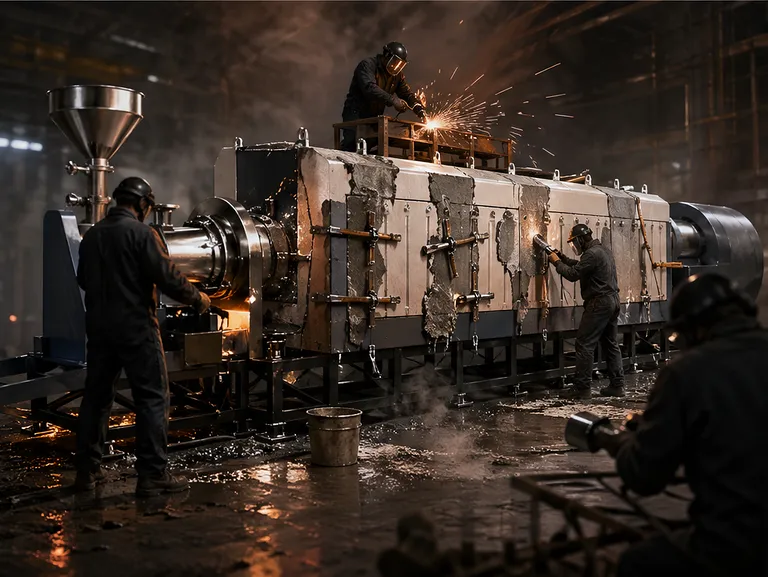
To break this expensive cycle, you need to move beyond simply replacing parts. You need a strategy that correctly diagnoses the primary stressor in your kiln—is it extreme thermal load or intense physical abrasion?—and selects a shield designed to withstand it.
This is where expertise becomes more valuable than any single product. The ideal solution is not a matter of "castable vs. brick," but a holistic analysis that asks:
- What is the specific nature of your process material? How abrasive is it?
- What are your operational priorities? Is minimizing short-term downtime more critical than maximizing the long-term service life between shutdowns?
- What is the total cost of ownership? A longer-lasting brick lining, while taking more time to install, may result in far lower costs over a five-year period by eliminating multiple shutdowns.
A true solution provider doesn't just sell you a pallet of refractory. They act as an expert partner, helping you analyze your process and make an informed, strategic decision. KINTEK embodies this approach. We understand that the right refractory is the one that is engineered for the reality of your operation, protecting not just your steel shell, but your production schedule and your bottom line.
From Firefighting to Forward-Thinking: Unlocking Your Plant's True Potential
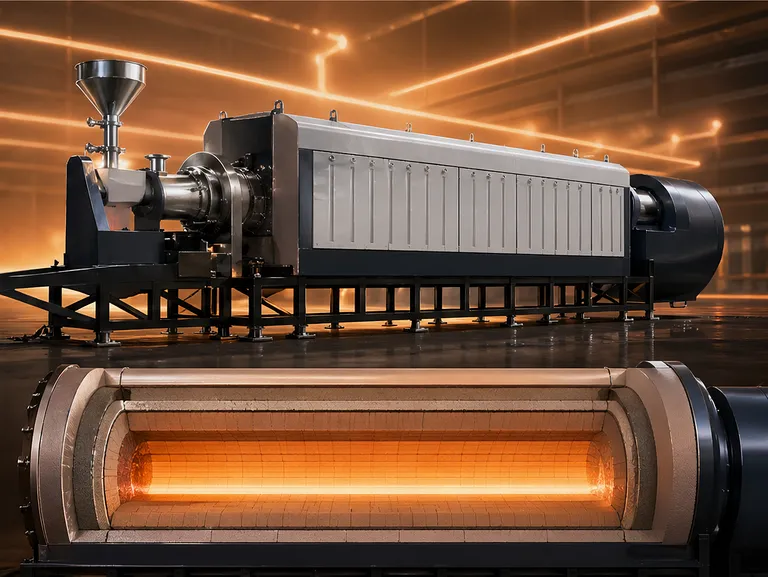
When you solve the root cause of kiln failure, something remarkable happens. The kiln ceases to be a source of constant anxiety and becomes a reliable, predictable asset. The benefits extend far beyond just avoiding repairs:
- Predictable Maintenance: You can move from costly, reactive firefighting to planned, scheduled maintenance, minimizing disruptions to your operation.
- Maximized Throughput: Longer, uninterrupted production runs mean higher output and greater revenue.
- Process Confidence: You can run your kiln at its optimal temperature and speed, knowing the equipment is robust enough to handle it.
- Innovation Focus: Your engineering and maintenance teams are freed from the constant cycle of emergency repairs, allowing them to focus on process improvements and innovation that drive your business forward.
Your kiln challenges are unique, and a one-size-fits-all solution is no solution at all. It's time to end the expensive cycle of quick fixes and build a durable, long-term strategy tailored to your specific process and business goals. Contact Our Experts to discuss how we can help you transform your kiln from an unpredictable liability into a cornerstone of your operational success.
Related Products
- Electric Rotary Kiln Small Rotary Furnace Biomass Pyrolysis Plant
- Electric Rotary Kiln Continuous Working Small Rotary Furnace Heating Pyrolysis Plant
- Electric Rotary Kiln Small Rotary Furnace for Activated Carbon Regeneration
- Electric Rotary Kiln Pyrolysis Furnace Plant Machine Calciner Small Rotary Kiln Rotating Furnace
- Vacuum Sealed Continuous Working Rotary Tube Furnace Rotating Tube Furnace
Related Articles
- Mastering Rotary Kilns: A Comprehensive Guide to Operation, Applications, and Maintenance
- Your Rotary Kiln Process is Failing. The Problem Isn't Temperature—It's Purity.
- Your Rotary Kiln Isn't an Oven: The Secret to Consistent Thermal Processing
- Why More Fuel Isn't Fixing Your Rotary Kiln—And What Will
- Optimizing Industrial Processes: Rotary Kiln and Laboratory Furnace Solutions