It’s a frustratingly common scene in plants and labs around the world. One batch of material from the rotary kiln is perfect. The next, processed with what seems to be the exact same settings, is under-cooked or even burnt. You check the control panel: temperature is stable, the feed rate is correct, and the rotation speed is set to your standard 2 RPM. So why are your results a gamble?
This inconsistency isn’t just a technical puzzle; it’s a costly business problem. You're fighting a battle you can't seem to win, and it's time to understand why.
The Endless Cycle of Tweaking and Guessing
When faced with inconsistent kiln output, the reaction is almost always the same. We start tweaking the variables we can easily control.
- "Maybe the material is slightly different this time. Let's slow the rotation down to 1.5 RPM to give it more heating time."
- "Our throughput is too low. Let's push the speed up to 3 RPM and see if the quality holds."
- "Perhaps a small temperature adjustment will solve it."
This approach turns your process into an endless cycle of trial and error. You're making educated guesses, but they are guesses nonetheless. The consequences of this unpredictability are severe:
- Wasted Resources: Every failed batch means scrapped material, wasted energy, and lost production hours.
- Unpredictable Throughput: You can't confidently forecast output, leading to missed deadlines and supply chain disruptions.
- Accelerated Wear and Tear: Running the kiln too fast, even for short periods, puts unnecessary stress on the drive mechanism and refractory lining, leading to more frequent and costly maintenance.
These "solutions" fail because they are focused on the symptoms, not the underlying cause. You're adjusting the controls without a clear understanding of what you're truly trying to control.
It’s Not About Speed, It’s About Time
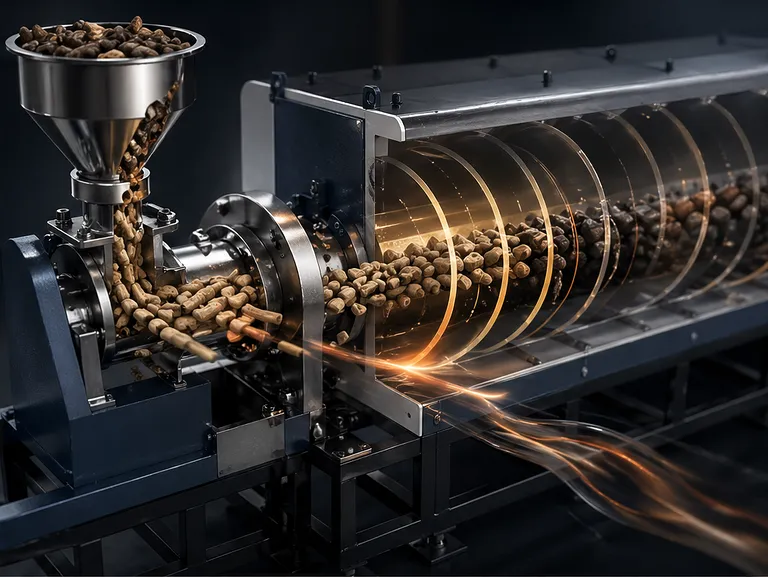
Here is the fundamental truth of rotary kiln operation: Your goal is not to find the perfect speed; it is to achieve the perfect retention time.
Retention time is the single most critical factor—it’s the total duration each particle of material spends inside the kiln, being heated and transformed. The rotational speed is merely one of two tools you use to control it. The other is the kiln's tilt angle.
Think of it like this: trying to perfect your process by only adjusting speed is like trying to bake a cake by only watching the mixer's speed dial, while completely ignoring the oven timer. The mixing speed matters, but the baking time is what ultimately determines success or failure.
This is why your previous attempts failed:
- Speeding up the kiln directly reduces retention time. If the material doesn't have enough time to undergo its chemical or physical change, the result is an incomplete, low-quality product.
- Slowing down the kiln increases retention time. While this can ensure a complete reaction, an unnecessarily slow speed can over-process or burn the material, while simultaneously crippling your production efficiency.
The "right" speed is meaningless in isolation. It is only "right" when it works in concert with the kiln's tilt to deliver the precise retention time your material needs. The question then becomes: how do you discover that perfect time without risking thousands of dollars in wasted product on your production-scale kiln?
From Guesswork to Guarantee: The Lab-Scale Advantage
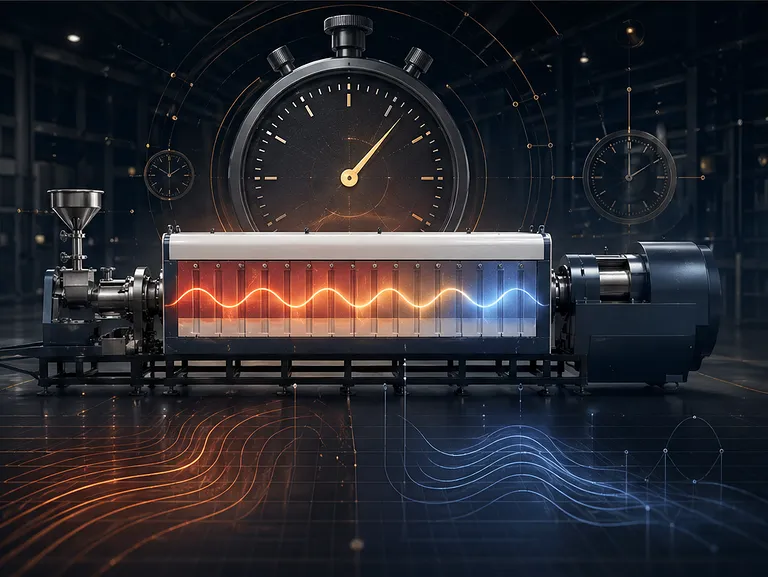
You stop guessing on the production floor and start defining the process in a controlled environment. To master retention time, you need a tool specifically designed for process modeling and optimization: a laboratory-scale rotary kiln.
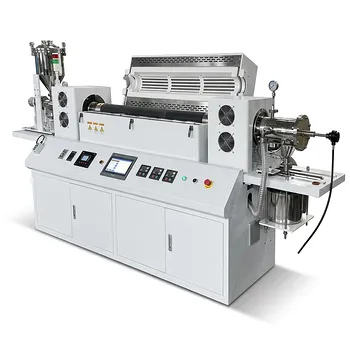
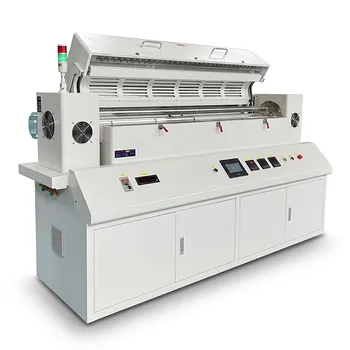
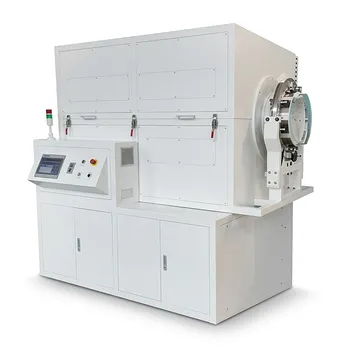
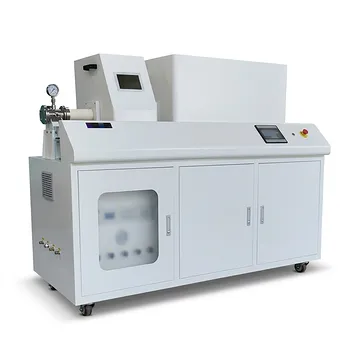
This is where KINTEK's laboratory equipment becomes your most valuable asset. Our lab-scale kilns aren’t just smaller versions of your production equipment; they are precision instruments engineered to give you data-driven answers.
They allow you to:
- Systematically Test Variables: Easily and affordably experiment with hundreds of combinations of rotational speed, tilt angle, and temperature profiles.
- Pinpoint Optimal Retention Time: Analyze small, inexpensive samples to determine the exact processing duration that yields the highest quality product.
- Build a Process Model: Develop a reliable "recipe" that tells you exactly how to set up your full-scale kiln for any given material, eliminating guesswork entirely.
By using a lab-scale kiln, you are no longer reacting to production problems. You are proactively designing a predictable, optimized process based on hard data. You’re finding the answers on a tabletop, not on the factory floor.
Beyond Troubleshooting: Turning Your Kiln into a Strategic Asset
Once you've demystified retention time, your rotary kiln transforms from an unpredictable "black box" into a precise and reliable strategic asset. The constant fire-fighting stops, and new possibilities open up.
- Maximize Throughput with Confidence: You can operate your production kiln at the fastest possible speed that still guarantees perfect quality, because you’ve already proven the parameters in the lab.
- Achieve Unwavering Consistency: Deliver the same high-quality product, batch after batch, strengthening customer trust and reducing scrap rates to near zero.
- Accelerate Innovation: When developing processes for new materials or products, you can determine the ideal kiln parameters in days, not months, dramatically speeding up your time-to-market.
Stop letting your kiln dictate your success. It's time to take control. Moving from a reactive, trial-and-error approach to a proactive, data-driven methodology is the key to unlocking the full potential of your operations, and it begins in the lab.
Let's discuss how to build a predictable, high-performance process tailored to your specific materials and business goals. Our team is ready to help you move beyond guesswork and achieve the consistency and efficiency you need. Contact Our Experts.
Related Products
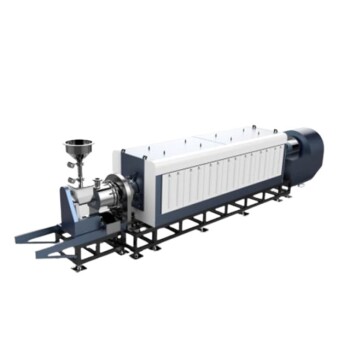
- Electric Rotary Kiln Small Rotary Furnace Biomass Pyrolysis Plant
- Electric Rotary Kiln Continuous Working Small Rotary Furnace Heating Pyrolysis Plant
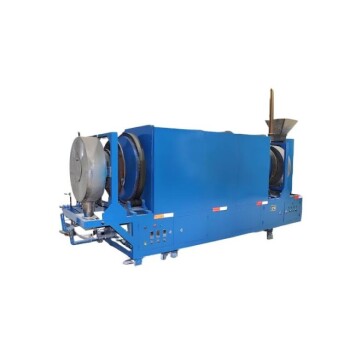
- Electric Rotary Kiln Small Rotary Furnace for Activated Carbon Regeneration
- Electric Rotary Kiln Pyrolysis Furnace Plant Machine Calciner Small Rotary Kiln Rotating Furnace
- Vacuum Sealed Continuous Working Rotary Tube Furnace Rotating Tube Furnace
Related Articles
- Mastering Rotary Kilns: A Comprehensive Guide to Operation, Applications, and Maintenance
- Your Rotary Kiln Isn't an Oven: The Secret to Consistent Thermal Processing
- Your Rotary Kiln Process is Failing. The Problem Isn't Temperature—It's Purity.
- Why More Fuel Isn't Fixing Your Rotary Kiln—And What Will
- Your Rotary Kiln is Wasting Energy and Money. The Reason is Hiding in Plain Sight.