You’ve spent weeks perfecting your new material formula. You meticulously load the powder into the lab's rotary kiln, dial in the target temperature, and begin the run. Hours later, you examine the output, only to find a frustratingly mixed bag. Some of the material is perfectly sintered, some is clearly under-processed, and a portion of it is scorched.
It's a story familiar to countless scientists and engineers. Your data is inconsistent, your results aren't repeatable, and you can't figure out why. Is it the raw material? The rotation speed? Or is the kiln itself simply unreliable?
The Cycle of Trial-and-Error: Why Common Fixes Fail
When faced with inconsistent results, the natural reaction is to start tweaking the most obvious variable: the temperature. You might nudge it up by 20°C on the next run, or perhaps down by 10°C, hoping to find that elusive sweet spot. You might adjust the kiln's rotation speed or change the feed rate.
But after days or even weeks of adjustments, the problem persists. The process feels more like alchemy than science.
This isn't just a scientific frustration; it has serious commercial consequences.
- Wasted Resources: Every failed run consumes valuable, often expensive, raw materials and burns through energy.
- Project Delays: What should be a straightforward characterization step turns into a major bottleneck, derailing project timelines and delaying innovation.
- Uncertain Scalability: If you can't get consistent results in a controlled lab environment, you can have zero confidence in scaling the process up for pilot or full-scale production.
These troubleshooting efforts often fail because they are based on a fundamental misunderstanding of how a high-performance rotary kiln actually works.
The Root Cause: It's Not About Heat, It's About Zones
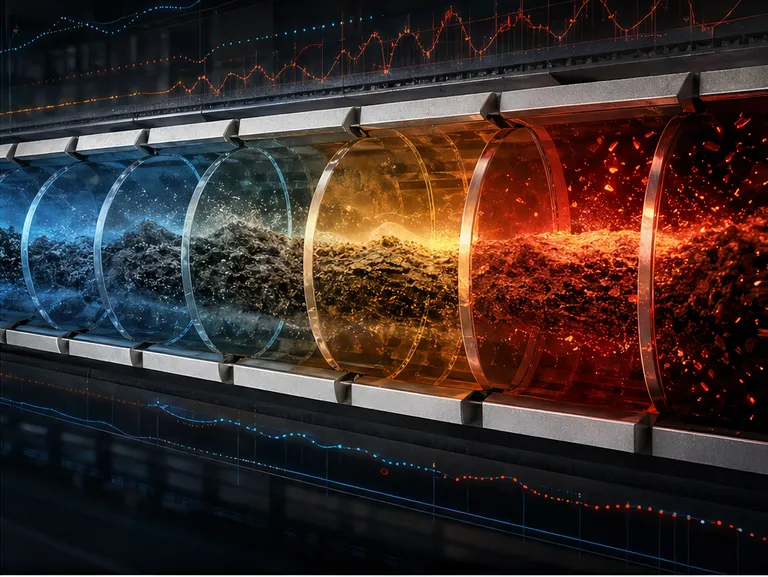
The common mistake is to think of a rotary kiln as a simple, rotating oven—a single chamber that just needs to be held at one temperature. But the truth is, a rotary kiln is not an oven; it's a sophisticated thermal reactor.
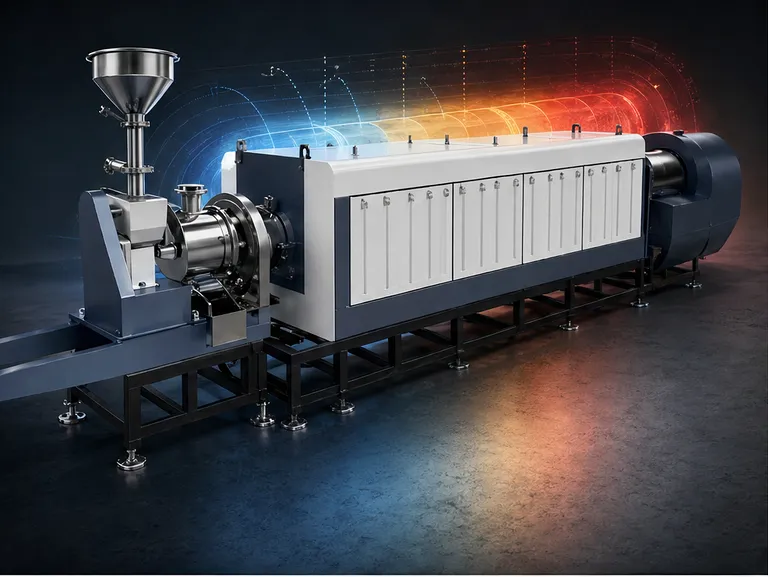
Its purpose is not just to heat material, but to guide it through a precisely choreographed thermal journey. This journey is divided into distinct temperature zones along the length of the kiln, each performing a critical task:
- The Preheating Zone: The first stop on the journey. Here, at lower temperatures (e.g., ~200°C), moisture is driven off and the material is gradually prepared for the intense reactions to come.
- The Calcination Zone: In the middle, the temperature rises significantly. This is where the core chemical changes begin, like the decomposition of carbonates. It’s a crucial transformation stage.
- The Sintering Zone: At the end of the journey, the kiln reaches its highest temperature (often 1200°C to 2500°C). This extreme heat completes the chemical transformation and fuses the material into its final, desired state.
Your inconsistent results aren't happening because the kiln "can't get hot enough." They are happening because these zones are not being kept separate and stable.
When cool air leaks into the kiln—often through inadequate seals at the feed and discharge ends—or when heat bleeds uncontrollably between sections, the entire thermal profile collapses. The preheating zone becomes too hot, the sintering zone becomes too cool, and the carefully planned journey turns into a chaotic tumble. You are no longer running a precision process; you are just cooking material in a leaky, inefficient tube.
This is why simply tweaking the main temperature controller fails. You're adjusting the thermostat in one room while the windows and doors of the entire house are wide open.
The Right Tool for a Precision Job: Mastering the Thermal Journey
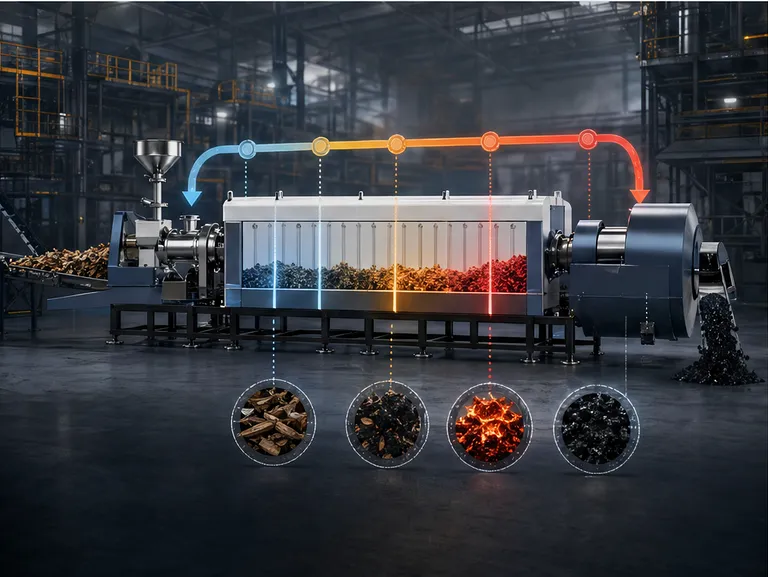
To solve this, you don't need more brute-force heat. You need control. You need a system engineered from the ground up to establish and protect a stable, multi-zone thermal profile.
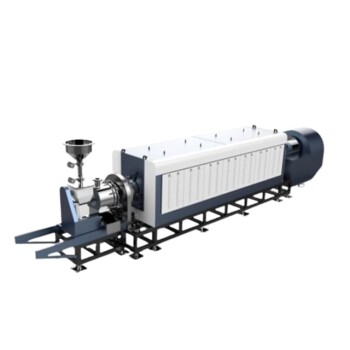
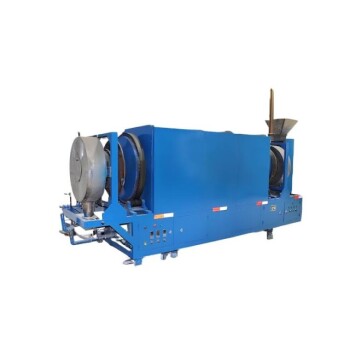
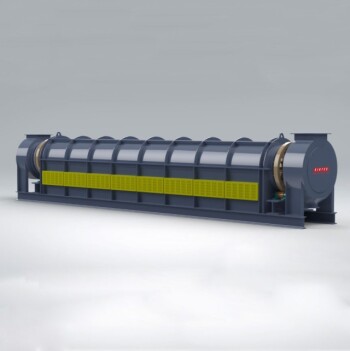
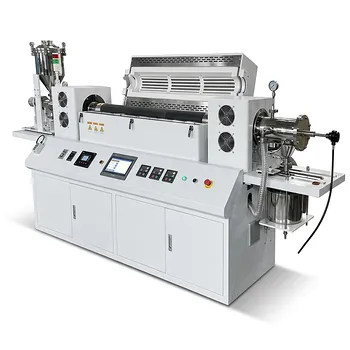
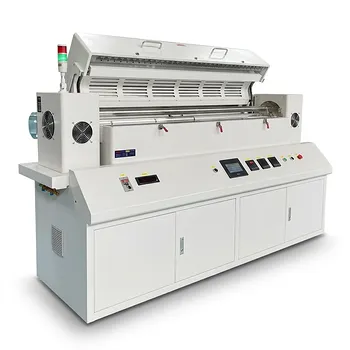
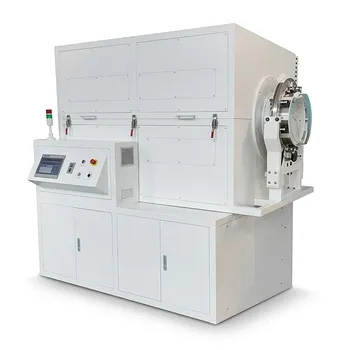
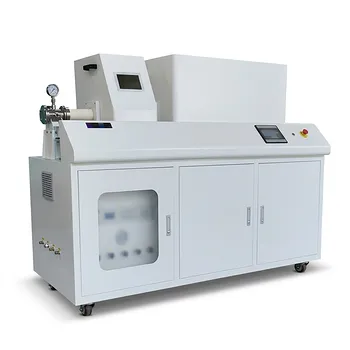
This is precisely the principle behind KINTEK’s laboratory rotary kilns. They are not designed as simple ovens, but as integrated thermal processing systems. They address the root cause of inconsistency by focusing on zone integrity:
- Independent Zone Control: Each section of the kiln can feature its own heating elements and controls, allowing you to build the exact thermal profile your process requires, whether it's a slow ramp or a steep thermal cliff.
- Superior Insulation: Using advanced refractory materials, our kilns minimize heat loss to the environment and prevent thermal bleed between adjacent zones, ensuring each section does its job without interfering with the next.
- High-Performance Sealing: This is a critical, non-negotiable feature. Our kilns incorporate robust sealing mechanisms that prevent cold ambient air from being sucked into the system. This stops the process-killing temperature drops and energy waste that plague lesser designs.
A KINTEK kiln isn’t a magic bullet. It is the logical tool for the job, built on a fundamental understanding of what it truly takes to achieve repeatable, high-quality results in thermal processing.
From Troubleshooting to Innovation: What's Possible with Reliable Results
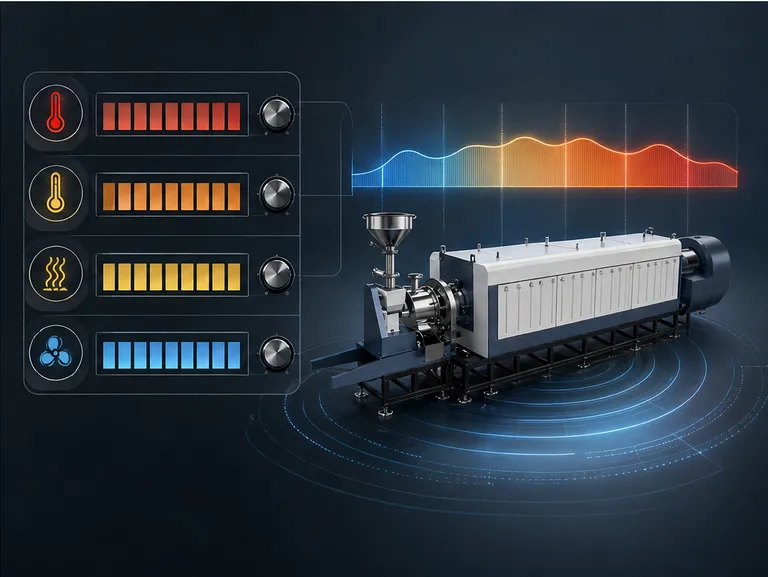
When your rotary kiln stops being a source of variability and becomes a dependable, precise instrument, your entire focus shifts. You stop fighting your equipment and start accelerating your research.
With a properly engineered kiln, you can:
- Achieve True Repeatability: Confidently replicate results from run to run, knowing the thermal journey is identical every time.
- Develop Complex Processes: Run longer, more intricate thermal profiles to create advanced materials that are impossible to produce in a simple furnace.
- Generate Scalable Data: Produce lab-scale results that accurately predict how your process will behave at pilot and production scales, drastically reducing the risk of scale-up.
- Process High-Purity Materials: Utilize kiln designs that minimize contamination, unlocking new possibilities for sensitive applications in electronics, ceramics, and specialty chemicals.
Solving the thermal profile challenge is more than a technical victory; it’s about making your entire R&D process more predictable, scalable, and cost-effective. If you're ready to move past the limitations of your current setup and achieve the results your materials deserve, our team is here to help design a solution for your specific application. Contact Our Experts.
Related Products
- Electric Rotary Kiln Small Rotary Furnace Biomass Pyrolysis Plant
- Electric Rotary Kiln Continuous Working Small Rotary Furnace Heating Pyrolysis Plant
- Electric Rotary Kiln Small Rotary Furnace for Activated Carbon Regeneration
- Electric Rotary Kiln Pyrolysis Furnace Plant Machine Calciner Small Rotary Kiln Rotating Furnace
- Vacuum Sealed Continuous Working Rotary Tube Furnace Rotating Tube Furnace
Related Articles
- Mastering Rotary Kilns: A Comprehensive Guide to Operation, Applications, and Maintenance
- Your Rotary Kiln Process is Failing. The Problem Isn't Temperature—It's Purity.
- Your Rotary Kiln is Failing You. The Reason is Simpler Than You Think.
- Your Lab Process Fails to Scale? The Rotary Kiln Sizing Mistake You're Probably Making
- Your Rotary Kiln is Wasting Energy and Money. The Reason is Hiding in Plain Sight.