It’s a scenario familiar to many process engineers and lab technicians. You've spent weeks dialing in a new calcination process. On Monday, the results are perfect—the material has the exact properties you need. On Tuesday, running the same parameters, the product is under-processed and useless. You check the temperature logs, the rotation speed, and the feed rate. Everything looks identical. Yet the results are wildly inconsistent.
If this sounds familiar, you're not alone. This is one of the most frustrating challenges in thermal processing.
The Endless Cycle of Troubleshooting
When faced with inconsistency, the natural response is to hunt for a single culprit. You begin a process of elimination that often looks like this:
- You inspect the drive motor: Is the rotation speed fluctuating?
- You check the refractory lining: Are there cracks causing heat loss?
- You examine the seals: Is cold air leaking in and disrupting the temperature profile?
Each check takes time. Each adjustment feels like a potential solution, but the core problem of unpredictability remains. This "whack-a-mole" approach to maintenance isn’t just frustrating; it has serious business consequences. It leads to wasted high-value materials, blown project deadlines, and a critical loss of confidence in the process itself. Promising R&D projects stall simply because the results cannot be reliably reproduced, making it impossible to scale up.
The reason this approach fails is that you're chasing symptoms. The real problem is deeper.
The Root Cause: Your Kiln Isn't a List of Parts, It's a Dynamic System
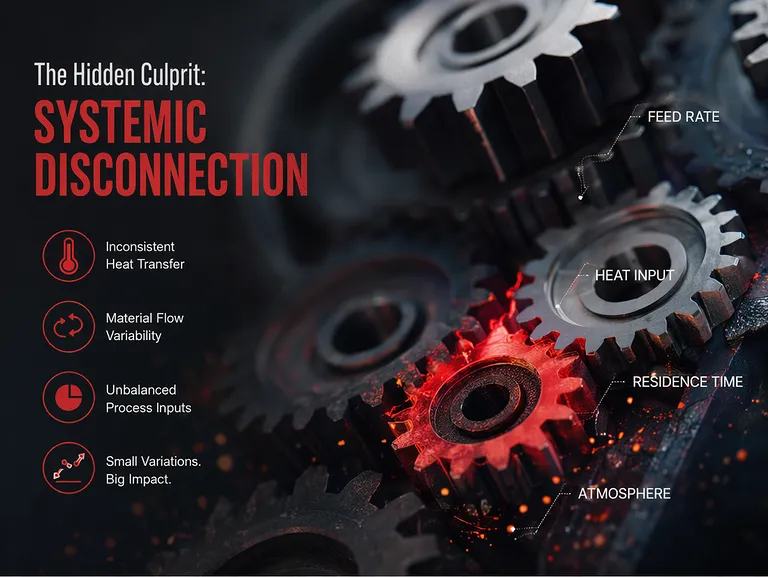
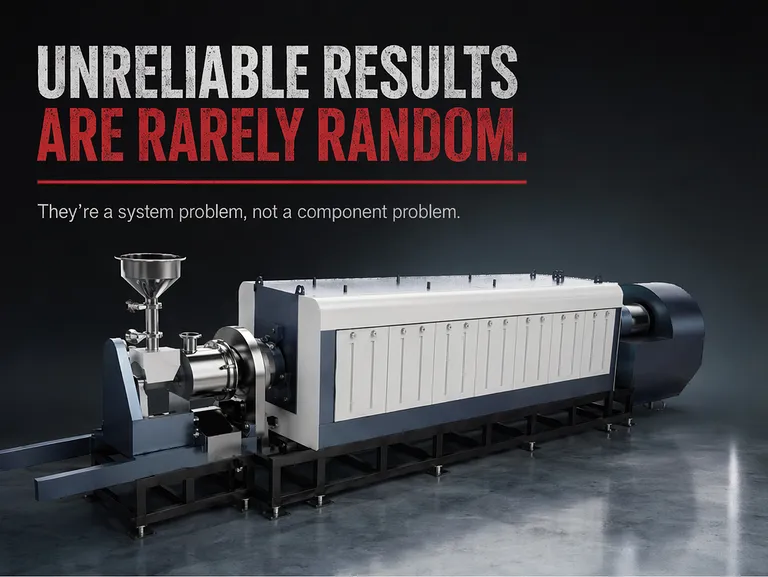
The source of the inconsistency isn't a single faulty component. The root cause is viewing the kiln as a collection of independent parts rather than the single, dynamic system it truly is.
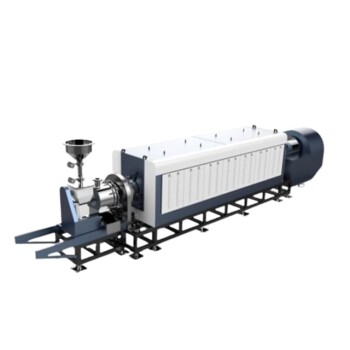
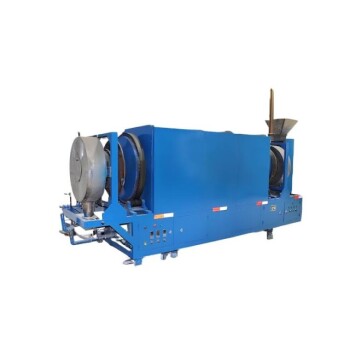
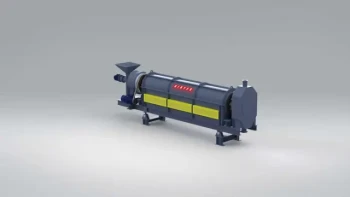
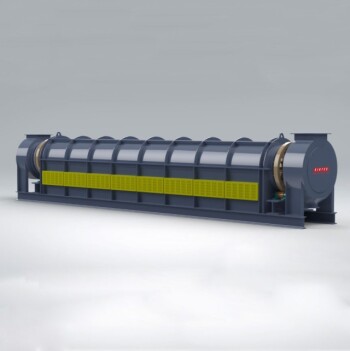
A rotary kiln is a delicate dance of immense forces. Think about its basic setup: a massive, heavy steel tube (the shell), tilted at an angle, rotating slowly. Gravity is constantly pulling it downhill. The immense heat inside causes expansion, while the weight of the material creates mechanical stress.
Here’s how these forces create a chain reaction that isolated troubleshooting always misses:
- A Minor Misalignment: A support roller is just a fraction of a millimeter out of alignment.
- Uneven Stress: This tiny error places uneven pressure on the support tyre (riding ring) and causes the entire kiln shell to flex slightly with every rotation.
- System-Wide Damage: This constant flexing, invisible to the naked eye, creates micro-cracks in the internal refractory lining. The seals at either end of the kiln, which are designed to connect a rotating shell to a stationary housing, can no longer maintain a perfect closure against the warped shell.
- Process Chaos: Cold air now leaks in, creating cold spots and throwing off your temperature uniformity. The drive motor has to work harder to turn a slightly warped tube. The result? The inconsistent product quality you’ve been fighting all along.
You could replace the refractory bricks or recalibrate the motor a dozen times, but the problem will keep returning because you haven’t addressed the underlying systemic misalignment. You are fixing the symptoms, not the disease.
From Fighting Your Equipment to Mastering Your Process
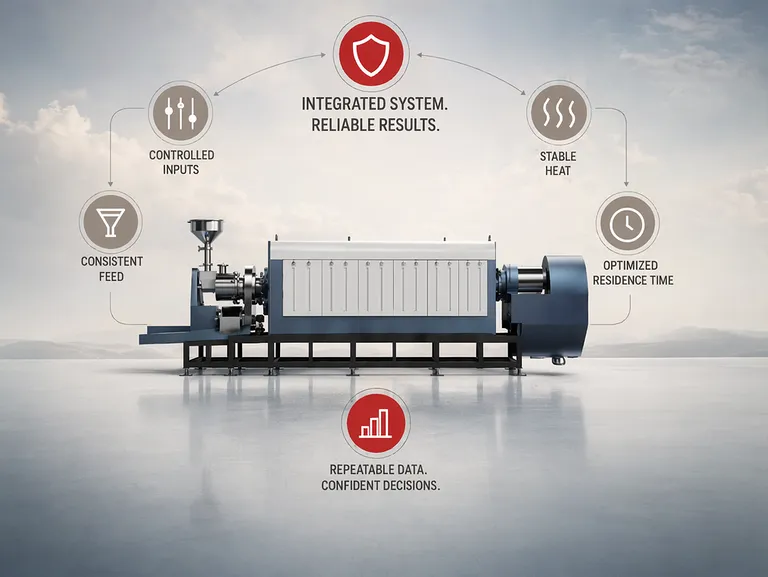
To achieve true consistency, you don’t need to become a master mechanical engineer. You need a tool that was built with a systemic understanding from the ground up. You need a kiln where every component is pre-engineered to work in perfect harmony.
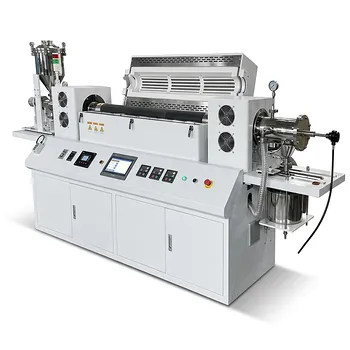
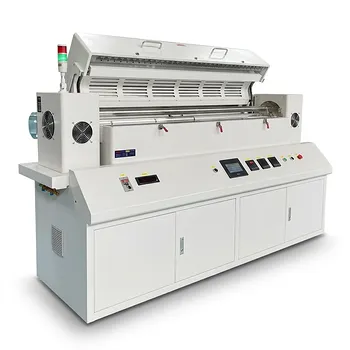
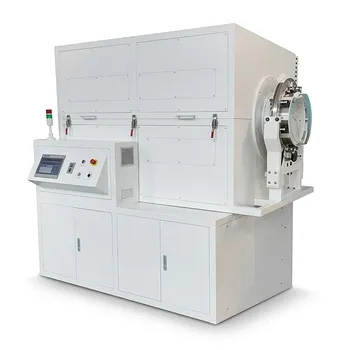
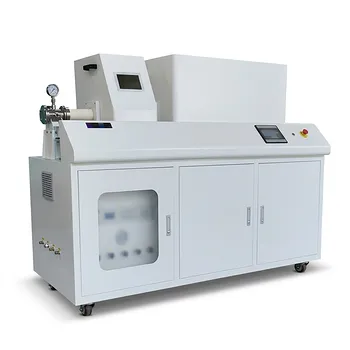
This is the core philosophy behind KINTEK’s laboratory and pilot-scale rotary kilns. We don't just assemble parts; we deliver a precisely integrated processing platform.
- Harmonized Foundation: Our systems are built on a rigid, unified frame that ensures the support rollers, thrust rollers, and drive assembly remain in perfect alignment, eliminating the root cause of shell flexing and mechanical stress.
- Thermal Integrity: By preventing shell distortion, our advanced sealing systems can do their job properly, stopping cold air infiltration and guaranteeing the thermal uniformity essential for repeatable results.
- Focus on Chemistry, Not Mechanics: Because the mechanical system is inherently stable, you are freed from the cycle of troubleshooting. You can finally trust your equipment and focus on what truly matters: optimizing your process chemistry, residence time, and temperature profiles to achieve your research goals.
Our kilns are designed to be a stable, predictable environment. They are the solution born from a deep understanding of why so many others fail.
Beyond Stability: What's Possible When Your Kiln Just Works?
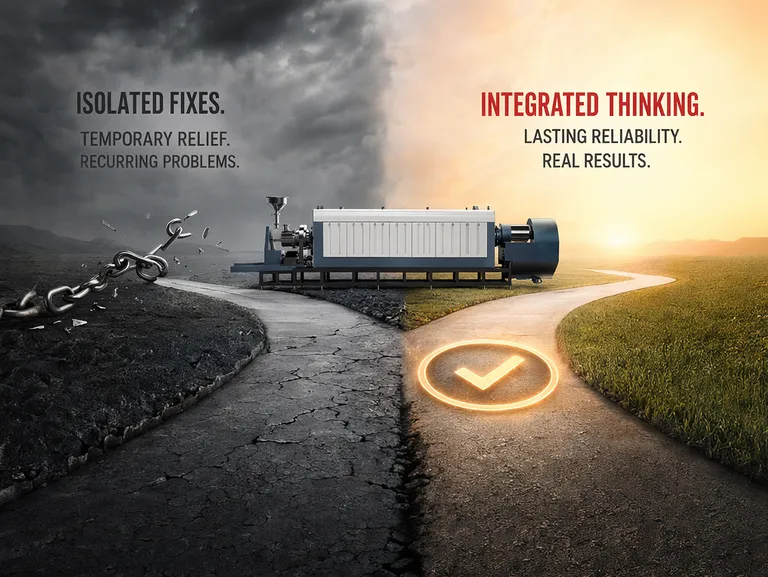
When you are no longer fighting your equipment, a new world of possibilities opens up. The conversation shifts from "Can we make this work?" to "How far can we push this?"
With a truly stable and reliable system, you can:
- Run long-duration tests for weeks at a time with full confidence that your parameters are holding steady.
- Directly compare small batch variations, knowing that any change in the output is due to your material science, not a random equipment fluctuation.
- Confidently scale up your process from the lab to a pilot plant, because your baseline data is accurate and trustworthy.
- Accelerate your innovation cycle, moving from idea to proven concept faster than ever before.
Solving the systemic issues in your kiln is about more than just getting better data; it's about empowering your team to innovate faster and more effectively. If you're ready to break free from the endless cycle of troubleshooting and unlock the full potential of your thermal processing projects, we're here to help. Our specialists can discuss the unique challenges you face and explore how an integrated system approach can transform your work. Contact Our Experts
Related Products
- Electric Rotary Kiln Small Rotary Furnace Biomass Pyrolysis Plant
- Electric Rotary Kiln Continuous Working Small Rotary Furnace Heating Pyrolysis Plant
- Electric Rotary Kiln Small Rotary Furnace for Activated Carbon Regeneration
- Electric Rotary Kiln Pyrolysis Furnace Plant Machine Calciner Small Rotary Kiln Rotating Furnace
- Vacuum Sealed Continuous Working Rotary Tube Furnace Rotating Tube Furnace
Related Articles
- Your Rotary Kiln Works Perfectly—So Why Are Your Results Contaminated?
- Your Rotary Kiln is Failing You. The Reason is Simpler Than You Think.
- Your Rotary Kiln is Wasting Energy and Money. The Reason is Hiding in Plain Sight.
- Why More Fuel Isn't Fixing Your Rotary Kiln—And What Will
- Your Rotary Kiln Is Costing More Than You Think—Here’s the Real Reason Why