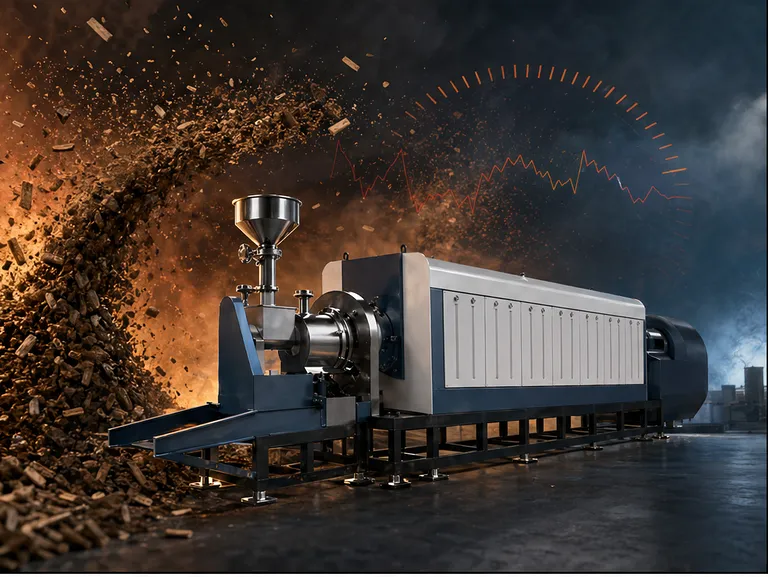
Picture this: After hours of careful setup and a long thermal cycle, you open your laboratory rotary kiln. Instead of the perfectly uniform, free-flowing powder you expected, you find a disaster. Part of the batch is a clumped, over-processed brick, while another part looks almost untouched, raw material still visible.
Sound familiar? It’s a frustratingly common scenario for R&D professionals and process engineers. You've wasted valuable material, precious time, and another day of data is lost.
The Vicious Cycle of Trial and Error
When faced with inconsistent results—incomplete reactions, scorching, clumping, or poor uniformity—the usual response is a frantic game of whack-a-mole.
- You tweak the temperature profile, hoping a few degrees higher will complete the reaction.
- You adjust the feed rate, thinking maybe the kiln was overloaded.
- You question the quality of the raw material itself, sending it for another round of analysis.
Each "fix" seems logical, but the inconsistency remains. This isn't just a scientific annoyance; it has serious business consequences. Projects are delayed, budgets are strained by wasted materials and energy, and you can’t confidently scale your process from the lab to pilot production because the foundational results are unreliable. You're stuck in a loop, unable to move forward.
The Real Culprit: It's Not Just Heat, It's Time
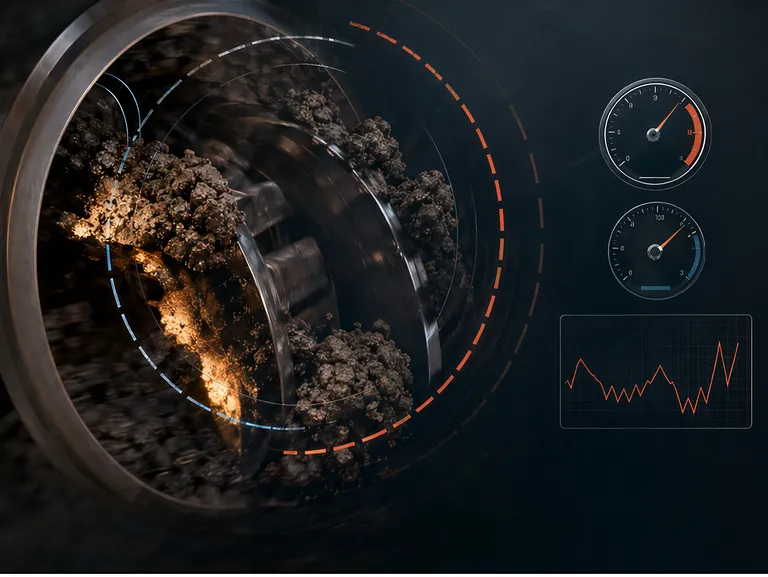
Here is the turning point: The root of the problem often isn’t the temperature itself, but how long each particle is exposed to that heat, and how uniformly it's exposed. This is the concept of retention time, and it’s governed by one master variable that is frequently misunderstood: the kiln's rotation speed (RPM).
Many treat RPM as a simple "on/off" or "fast/slow" setting. The truth is, it's the most precise lever you have to control the entire process. The slow, deliberate turn of the kiln—typically between 1 and 3 RPM—acts like a carefully calibrated conveyor belt.
- Too fast (>3 RPM): Material rushes through the hot zone. It doesn't have enough time to absorb the energy needed for a complete chemical or physical change. The result is an incomplete reaction and poor-quality product.
- Too slow (<1 RPM): Material lingers too long. It gets over-processed, leading to scorching, melting, or clumping. This also kills your throughput, making the process inefficient.
This is why simply raising the temperature often makes clumping worse, and why changing the feed rate doesn't solve the core issue of non-uniform heating. You're treating symptoms, not the underlying disease of uncontrolled retention time.
From Guesswork to Precision: The Right Tool for the Job
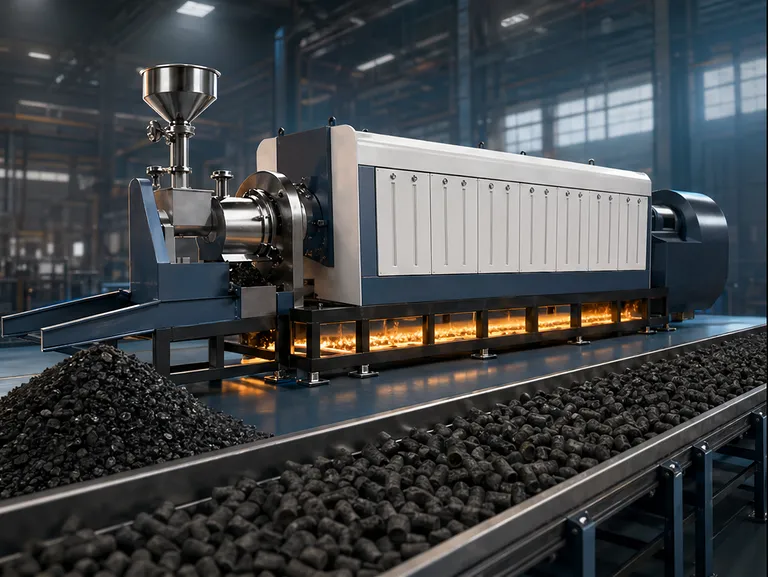
To solve this, you don’t need more guesswork. You need precise, stable, and repeatable control over the kiln's rotation. You need to be able to set the RPM to 1.5 and know that it is 1.5, for the entire duration of the run, and for every run after that.
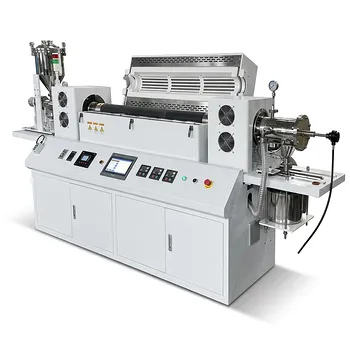
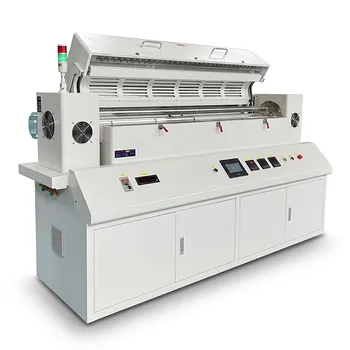
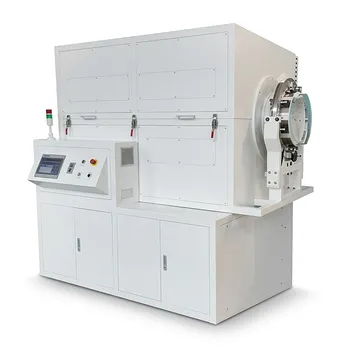
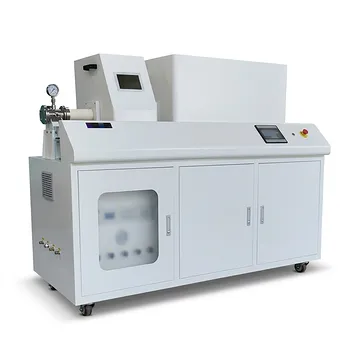
This is precisely why KINTEK's laboratory rotary kilns are engineered for success. They aren't just heating chambers; they are precision instruments designed to give you direct command over the process variables that truly matter.
Our kilns are built to provide the exact, unwavering rotational stability required for demanding applications. By enabling you to dial in and maintain the optimal RPM, you are no longer at the mercy of your equipment. Instead, you are directly controlling the two factors essential for success:
- Uniform Heat Exposure: The constant, gentle tumbling ensures every single particle gets the same thermal treatment, eliminating hot spots and unprocessed sections.
- Controlled Retention Time: You can precisely dictate how many minutes your material spends in the hot zone, guaranteeing a complete and efficient transformation.
With a KINTEK kiln, you are moving from a black box of random outcomes to a predictable system where you control the inputs and can therefore guarantee the outputs.
Beyond Troubleshooting: Unlocking New Process Potential
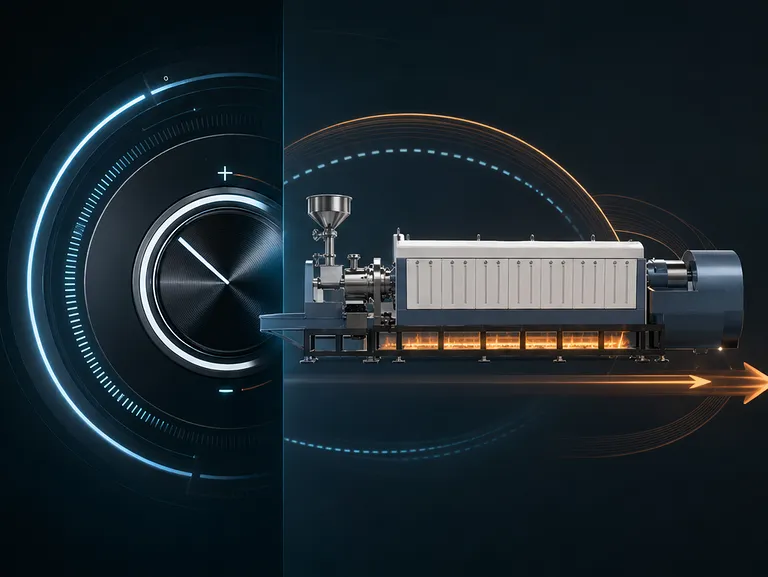
When you move from fighting your equipment to mastering your process, everything changes. Inconsistency is no longer the norm. Instead of repeating failed experiments, you can:
- Develop new material formulations with confidence, knowing you can precisely replicate the thermal conditions required.
- Reliably scale your lab-scale findings to pilot production because your process is stable and well-documented.
- Drastically reduce project timelines by eliminating weeks or months of troubleshooting.
- Tackle more sensitive materials that require an exceptionally narrow processing window, opening up new avenues for innovation.
Ultimately, solving the RPM problem isn't just about getting a better powder. It's about unlocking the full potential of your R&D efforts and accelerating your path to market.
Mastering your thermal process is about more than just avoiding bad batches; it's about accelerating innovation and building confidence in your results. If you're ready to stop troubleshooting and start achieving breakthrough outcomes, our team is here to help you configure the perfect system for your unique materials and goals. Contact Our Experts.
Related Products
- Electric Rotary Kiln Small Rotary Furnace Biomass Pyrolysis Plant
- Electric Rotary Kiln Continuous Working Small Rotary Furnace Heating Pyrolysis Plant
- Electric Rotary Kiln Small Rotary Furnace for Activated Carbon Regeneration
- Electric Rotary Kiln Pyrolysis Furnace Plant Machine Calciner Small Rotary Kiln Rotating Furnace
- Vacuum Sealed Continuous Working Rotary Tube Furnace Rotating Tube Furnace
Related Articles
- Your Rotary Kiln Isn't an Oven: The Secret to Consistent Thermal Processing
- Your Rotary Kiln Process is Failing. The Problem Isn't Temperature—It's Purity.
- Mastering Rotary Kilns: A Comprehensive Guide to Operation, Applications, and Maintenance
- Your Rotary Kiln is Wasting Energy and Money. The Reason is Hiding in Plain Sight.
- Why More Fuel Isn't Fixing Your Rotary Kiln—And What Will