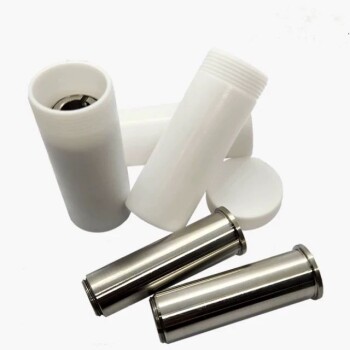
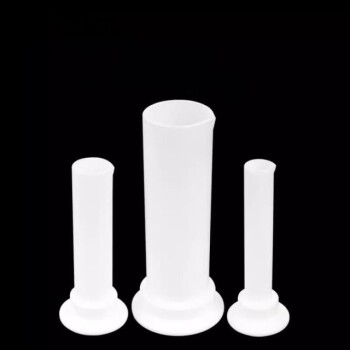
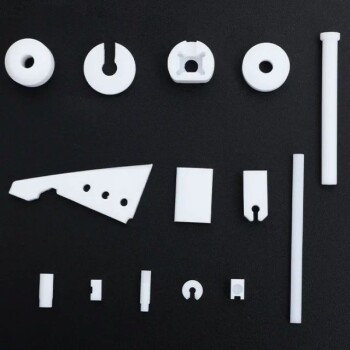
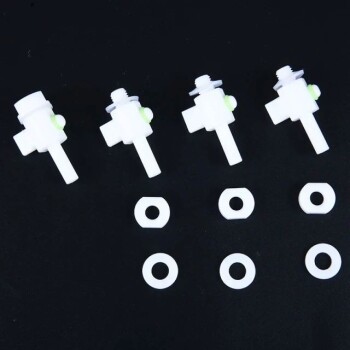
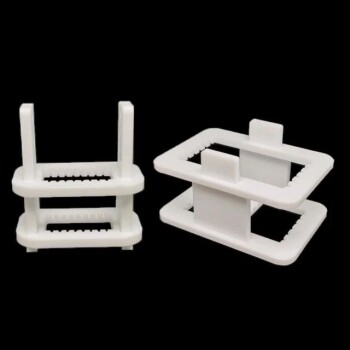
PTFE (Teflon) guide sleeves serve as critical isolation interfaces within solid-state battery molds, functioning primarily to prevent short circuits while ensuring precise component alignment. These sleeves act as an insulating liner between the conductive stainless steel mold and the active battery materials, specifically preventing the lithium metal anode from contacting the mold walls.
The core value of the PTFE sleeve lies in its ability to maintain electrical isolation during high-pressure assembly, allowing for the coaxial stacking of electrodes and electrolytes without compromising the cell's chemical stability.
The Critical Functions in Assembly
Electrical Insulation and Short Prevention
The stainless steel typically used for battery molds is highly conductive. The PTFE sleeve creates a necessary non-conductive barrier inside the mold cylinder.
Its most vital role is preventing the lithium metal anode from making direct contact with the internal walls of the steel mold. This isolation effectively eliminates the risk of internal short circuits between the positive and negative current collectors.
Coaxial Alignment of Components
Solid-state batteries rely on the precise stacking of multiple layers. The sleeve acts as a physical guide to center the electrolyte pellets and electrodes.
By constraining these materials, the sleeve ensures that all components remain coaxially aligned—stacked perfectly on top of one another—throughout the assembly process.
Geometric Shaping of Powder
Beyond insulation, the sleeve plays a mechanical role in "powder molding." It acts as the defining boundary for the compressed powder.
The sleeve ensures that when pressure is applied, the powder compacts into the specific geometric shape required for the battery cell.
Why Material Selection Matters
Unmatched Chemical Stability
Solid-state battery materials, particularly electrolytes and lithium, are chemically sensitive. PTFE is utilized because of its high chemical inertness.
This stability ensures that the sleeve remains non-reactive when in contact with active battery materials, preventing contamination of the cell or degradation of the mold liner.
Operational Considerations and Trade-offs
The Liner vs. Mold Dynamic
Using a PTFE sleeve introduces a multi-component system rather than a simple single-piece mold. This is a necessary trade-off to combine the mechanical strength of steel with the insulating properties of polymer.
The sleeve essentially decouples the high-pressure structural requirements (handled by the steel) from the delicate surface chemistry and insulation requirements (handled by the PTFE).
Making the Right Choice for Your Goal
- If your primary focus is Electrical Integrity: Prioritize the sleeve's wall thickness and fit to ensure a robust barrier between the lithium anode and the conductive steel mold.
- If your primary focus is Geometric Precision: Ensure the sleeve is machined to exact tolerances, as it acts as the primary mold surface that defines the final shape of the compressed powder.
The PTFE sleeve is not merely an accessory; it is the enabling component that allows conductive, high-pressure molds to safely produce chemically sensitive solid-state cells.
Summary Table:
| Function | Description | Key Benefit |
|---|---|---|
| Electrical Insulation | Creates a non-conductive barrier between steel mold and lithium | Prevents internal short circuits |
| Coaxial Alignment | Acts as a physical guide for stacking electrodes and electrolytes | Ensures precise component centering |
| Powder Shaping | Defines the boundary for the compressed powder | Maintains consistent cell geometry |
| Chemical Stability | High inertness prevents reaction with battery materials | Avoids contamination and degradation |
Elevate Your Battery Research with KINTEK Precision
Maximize the safety and precision of your solid-state battery assembly with KINTEK’s high-performance laboratory solutions. As experts in battery research tools and consumables, we provide the critical components you need—from PTFE guide sleeves and hydraulic presses for pelletizing to high-temperature furnaces and vacuum systems for material synthesis.
Whether you are refining powder molding or ensuring electrical integrity, KINTEK offers a comprehensive range of PTFE products, ceramics, and crucibles designed to withstand the rigors of advanced battery development. Partner with us for reliable, high-quality equipment that drives innovation.
Ready to optimize your assembly process? Contact KINTEK today for expert guidance and tailored solutions!
Related Products
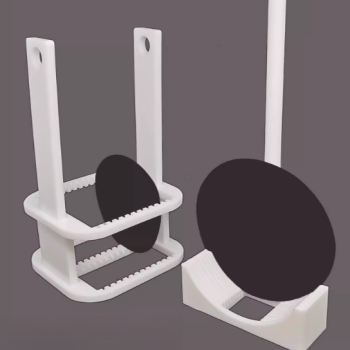
- Customizable PTFE Wafer Carriers for Semiconductor and Lab Applications
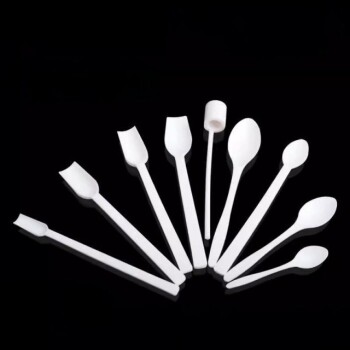
- Custom PTFE Teflon Parts Manufacturer for Sampling Solution Sample and Dry Powder Spoons
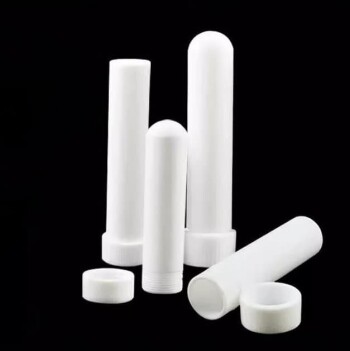
- Custom PTFE Teflon Parts Manufacturer for Centrifuge Tubes
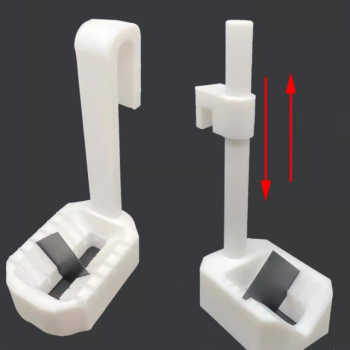
- Custom PTFE Wafer Holders for Lab and Semiconductor Processing
- Custom PTFE Teflon Parts Manufacturer for Gaskets and More
People Also Ask
- How is PTFE utilized for insulation in Alloy 22 corrosion setups? Ensure Signal Purity & Accuracy
- What are the specific applications of PTFE in micro-batch slug flow systems? Enhance Your Microfluidic Reaction Purity
- Is PTFE corrosion resistant? Discover the Ultimate Chemical Resistance for Your Lab
- What is the function of a customized PTFE cap in IL-TEM? Bridge the Gap Between Microscopy and Electrochemistry
- Why are PTFE wafer fixtures used after diamond nucleation? Ensure Purity and Protect Fragile Nucleation Layers