To establish a controlled environment for testing material durability, a DC power supply and an electrolytic cell are integrated to form an electrochemical hydrogen charging circuit. The DC power supply acts as the driver, maintaining a constant current density (typically 15 mA/cm²), while the electrolytic cell houses the high-entropy alloy sample as the cathode within a dilute sulfuric acid solution. This collaboration triggers a reduction reaction that forces active hydrogen atoms to diffuse into the alloy's matrix, simulating harsh environmental conditions during mechanical testing.
The core value of this setup is the ability to perform in-situ hydrogen charging, where hydrogen is actively injected into the material simultaneously with tensile stress application. This allows researchers to quantify exactly how thermal treatments impact a specific alloy's susceptibility to hydrogen embrittlement.
The Mechanics of the Collaboration
The collaboration between these two components relies on a precise balance of electrical control and chemical reaction.
The Role of the DC Power Supply
The DC power supply serves as the precision controller for the experiment. Its primary function is to maintain a constant current density, such as the 15 mA/cm² cited in standard protocols.
By regulating the current, the power supply ensures a steady rate of electron flow to the alloy sample. This consistency is vital for maintaining a predictable rate of hydrogen generation throughout the duration of the test.
The Function of the Electrolytic Cell
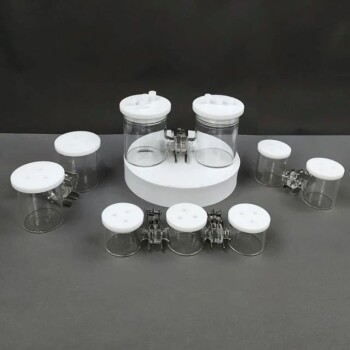
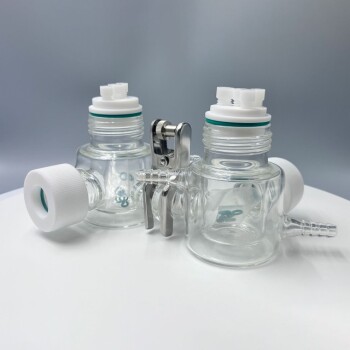
The electrolytic cell provides the physical and chemical environment necessary for the reaction. It contains a dilute sulfuric acid solution which acts as the electrolyte.
Within this cell, the high-entropy alloy sample is connected as the cathode (negative electrode). This configuration creates the potential difference required to attract positive ions from the solution to the metal surface.
The Electrochemical Mechanism
Once the circuit is active, a specific chain of atomic events occurs that leads to embrittlement.
Triggering the Reduction Reaction
As current flows from the DC supply, an electrochemical reduction reaction is triggered at the surface of the alloy. Protons from the sulfuric acid solution accept electrons from the alloy cathode.
This reaction converts the ionic hydrogen in the solution into active hydrogen atoms right on the surface of the metal.
Forced Diffusion into the Matrix
Unlike gaseous hydrogen exposure, which relies on passive absorption, this setup creates a high concentration of active hydrogen on the surface. The electrochemical force drives these atoms to diffuse directly into the alloy's lattice structure (matrix).
This infiltration disrupts the metal's internal cohesion, leading to the phenomenon known as hydrogen embrittlement.
Integrating with Mechanical Testing
The collaboration between the power supply and the cell is rarely done in isolation; it is usually part of a broader mechanical evaluation.
Real-Time In-Situ Simulation
The setup allows for "in-situ" testing, meaning the electrochemical charging happens while the material is undergoing tensile testing.
This simulates real-world scenarios where components are subjected to both mechanical load and corrosive, hydrogen-rich environments simultaneously.
Quantifying Thermal Treatment Effects
A critical outcome of this testing method is the evaluation of material processing. Researchers use this setup to determine how different thermal treatments affect the alloy.
By comparing the tensile strength of charged samples against uncharged ones, engineers can quantify the hydrogen embrittlement sensitivity of specific heat-treated microstructures.
Understanding the Trade-offs
While effective, this electrochemical approach introduces specific variables that must be managed to ensure data integrity.
Sensitivity to Current Density
The accuracy of the simulation is entirely dependent on the stability of the DC power supply. Deviations from the target current density (e.g., 15 mA/cm²) can alter the hydrogen uptake rate, skewing the embrittlement data.
Electrolyte Management
The concentration of the dilute sulfuric acid must be monitored. As the test progresses, local changes in pH or electrolyte depletion near the cathode surface can affect the efficiency of the hydrogen generation.
Making the Right Choice for Your Goal
To maximize the value of this experimental setup, align your parameters with your specific testing objectives.
- If your primary focus is Simulating Harsh Environments: Ensure your DC power supply is calibrated to maintain a strict constant current density to guarantee consistent hydrogen injection rates.
- If your primary focus is Material Optimization: Use the setup to systematically test alloys with different thermal treatments to identify which microstructure offers the highest resistance to hydrogen diffusion.
Ultimately, the precision of your power supply and the stability of your electrolytic cell determine the reliability of your embrittlement data.
Summary Table:
| Component | Role in Setup | Key Function |
|---|---|---|
| DC Power Supply | Precision Driver | Maintains constant current density (e.g., 15 mA/cm²) for steady hydrogen generation. |
| Electrolytic Cell | Reaction Environment | Houses the dilute sulfuric acid electrolyte and the alloy cathode. |
| Alloy Sample | Cathode (Negative) | Serves as the site for hydrogen reduction and atomic diffusion. |
| Sulfuric Acid | Electrolyte | Provides the proton source for electrochemical hydrogen production. |
| In-Situ Testing | Integration Method | Enables simultaneous hydrogen charging and tensile stress application. |
Advance Your Material Science Research with KINTEK
Precise data starts with reliable equipment. KINTEK specializes in high-performance laboratory solutions designed for rigorous electrochemical and thermal testing. Whether you are evaluating the hydrogen embrittlement resistance of high-entropy alloys or developing next-generation materials, our comprehensive range of electrolytic cells, electrodes, and high-temperature furnaces provides the stability and control your research demands.
From battery research tools to advanced crushing and milling systems, we empower labs to simulate harsh environments with absolute accuracy. Don't let equipment variability compromise your findings.
Ready to elevate your lab's efficiency? Contact us today to discover how KINTEK’s precision consumables and equipment can optimize your testing protocols!
References
- Shulu Feng, Lei Han. Effect of Annealing and Hot Isostatic Pressing on the Structure and Hydrogen Embrittlement Resistance of Powder-Bed Fusion-Printed CoCrFeNiMn High-Entropy Alloys. DOI: 10.3390/met13030630
This article is also based on technical information from Kintek Solution Knowledge Base .
Related Products
- PTFE Electrolytic Cell Electrochemical Cell Corrosion-Resistant Sealed and Non-Sealed
- Super Sealed Electrolytic Electrochemical Cell
- Electrolytic Electrochemical Cell with Five-Port
- H Type Electrolytic Cell Triple Electrochemical Cell
- Electrolytic Electrochemical Cell Gas Diffusion Liquid Flow Reaction Cell
People Also Ask
- What is the necessity of selecting a PTFE electrolytic cell? Ensure Precise Graphene Corrosion Testing Accuracy
- What is the proper method for cleaning the surface of an all-PTFE electrolytic cell? Ensure Accurate Results with a Pristine Surface
- How should an all-PTFE electrolytic cell be stored after use? Expert Maintenance Tips for Long-Lasting Performance
- What is the proper cleaning method for an all-PTFE electrolytic cell? Essential Tips for Surface Integrity
- What are the standard opening specifications for all-PTFE electrolytic cells? A Guide to Sealed vs. Non-Sealed Ports