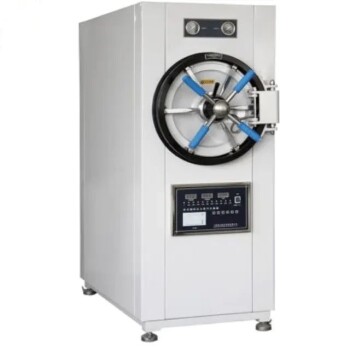
Batch high-pressure autoclaves facilitate the catalytic hydrogenation of glucose to sorbitol by creating a sealed, high-pressure hydrogen environment that ensures rigorous contact between the gas, liquid, and solid catalyst phases. This specialized vessel allows for precise temperature regulation and kinetic monitoring, enabling the reaction to proceed efficiently even at high glucose concentrations.
Core Takeaway: The primary value of using a batch high-pressure autoclave for this reaction is the ability to achieve sorbitol selectivity of over 99%. By strictly controlling pressure and temperature in a closed system, the reactor optimizes the interaction between phases, minimizing byproducts and maximizing yield.
The Mechanics of the Reaction Environment
Optimizing Three-Phase Contact
The hydrogenation of glucose involves three distinct phases: hydrogen gas, a liquid glucose solution, and a solid catalyst.
For the reaction to occur, these phases must interact simultaneously. The autoclave facilitates efficient contact between them, ensuring the hydrogen gas is effectively dissolved and available at the catalyst surface where the glucose is present.
Enhancing Diffusion Kinetics
The high-pressure conditions within the autoclave serve a dual purpose.
First, they force hydrogen into the liquid phase, increasing its concentration. Second, as noted in general high-pressure chemistry, these conditions enhance diffusion kinetics, allowing the system to overcome energy barriers that would otherwise slow down atomic rearrangement.
Maintaining Liquid Phase at High Temperatures
A critical function of the autoclave is its ability to keep the reaction solvent in a liquid state, even at temperatures significantly exceeding its normal boiling point.
This allows the reaction to benefit from the increased reaction rates associated with higher temperatures without the solvent evaporating. This thermal control is essential for driving the hydrogenation process forward efficiently.
Operational Control and Selectivity
Strict Kinetic Monitoring
In batch operation mode, the autoclave provides a unique advantage regarding process visibility.
Operators can perform strict monitoring of reaction kinetics throughout the entire cycle. This level of control allows for adjustments that prevent the degradation of glucose or the formation of unwanted byproducts.
Achieving High Selectivity
The ultimate output of this controlled environment is superior product purity.
By precisely managing the reaction parameters, batch autoclaves enable a high sorbitol selectivity of over 99%. This remains achievable even when processing elevated concentrations of glucose, making the process robust for demanding production requirements.
Understanding the Trade-offs
Batch vs. Continuous Processing
While batch autoclaves offer superior control and selectivity, they operate in finite cycles.
This means the system must be filled, reacted, emptied, and cleaned for each run. For scenarios requiring massive, uninterrupted throughput, this cyclical nature can be a bottleneck compared to continuous flow reactors, despite the high purity achieved.
Complexity of High-Pressure Systems
Operating at high pressures introduces significant safety and maintenance considerations.
The equipment requires robust construction and strict safety protocols to manage the stored energy of compressed hydrogen gas. This increases both the initial capital expenditure and the operational complexity compared to atmospheric pressure reactions.
Making the Right Choice for Your Goal
To determine if a batch high-pressure autoclave is the right tool for your hydrogenation process, consider your specific production targets.
- If your primary focus is Product Purity: The strict kinetic monitoring and environmental control of batch autoclaves are ideal for achieving >99% selectivity.
- If your primary focus is High Concentration Processing: These reactors are specifically capable of handling elevated glucose concentrations without sacrificing efficiency.
By leveraging the precise control of a batch high-pressure environment, you ensure that the thermodynamic and kinetic conditions are perfectly aligned for maximum sorbitol yield.
Summary Table:
| Feature | Benefit in Glucose Hydrogenation |
|---|---|
| Three-Phase Contact | Ensures optimal interaction between H2 gas, liquid glucose, and solid catalyst |
| High-Pressure Environment | Enhances hydrogen solubility and diffusion kinetics for faster reactions |
| Thermal Regulation | Maintains liquid phase above boiling point to accelerate reaction rates |
| Kinetic Monitoring | Allows precise control to achieve over 99% sorbitol selectivity |
| Process Robustness | Handles high glucose concentrations without loss of efficiency |
Elevate Your Chemical Synthesis with KINTEK Precision
Maximize your laboratory's productivity and achieve industry-leading product purity with KINTEK’s advanced batch high-pressure reactors and autoclaves. Specifically designed for demanding applications like catalytic hydrogenation, our equipment provides the rigorous temperature and pressure control necessary to reach >99% selectivity.
Why choose KINTEK?
- Comprehensive Reactor Range: From high-temperature high-pressure autoclaves to specialized CVD and induction melting systems.
- Complete Lab Solutions: We offer everything from crushing and milling systems to hydraulic presses and essential ceramic consumables.
- Unmatched Expertise: Tailored solutions for battery research, material science, and pharmaceutical development.
Ready to optimize your glucose-to-sorbitol conversion? Contact our technical experts today to find the perfect high-pressure system for your research goals!
References
- Léa Vilcocq, Daniel Duprez. Transformation of Sorbitol to Biofuels by Heterogeneous Catalysis: Chemical and Industrial Considerations. DOI: 10.2516/ogst/2012073
This article is also based on technical information from Kintek Solution Knowledge Base .
Related Products
- Mini SS High Pressure Autoclave Reactor for Laboratory Use
- High Pressure Laboratory Autoclave Reactor for Hydrothermal Synthesis
- Stainless High Pressure Autoclave Reactor Laboratory Pressure Reactor
- Desktop Fast High Pressure Laboratory Autoclave Sterilizer 16L 24L for Lab Use
- Portable High Pressure Laboratory Autoclave Steam Sterilizer for Lab Use
People Also Ask
- Why use high-pressure reactors for molecular sieve synthesis? Unlock Superior Crystallinity and Framework Control
- Why are high-pressure reactors or autoclaves necessary for the synthesis of new functional materials? Unlock Precision.
- What is the function of a high-pressure reactor autoclave? Enhancing Cu/N Co-Doped Carbon Catalyst Synthesis
- What are the advantages of using a high-pressure reactor like an autoclave? Maximize Liquefaction Speed & Yield
- How are high-pressure reactors used to prepare metaphosphate electrocatalysts? Master In-Situ Precursor Growth