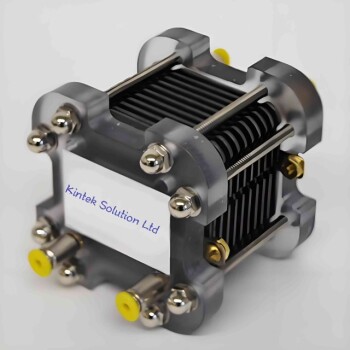
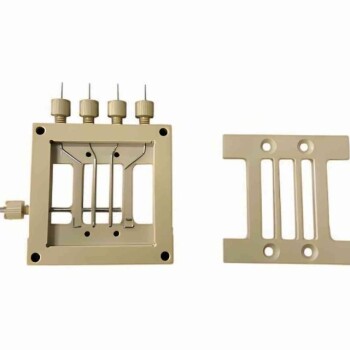
Benchtop double-chamber electrolytic cells act as a precision instrument for isolating catalyst performance. They assist in stability evaluation by creating a rigorously controlled environment where pH, temperature, and electrolyte composition can be regulated independently. This isolation ensures that any observed degradation is due to the intrinsic properties of the electrocatalyst, rather than external fluctuations or cross-contamination.
By simulating fuel cell operating conditions while excluding microbial interference, these devices provide the objective data necessary to verify the chemical tolerance and long-term activity retention of non-noble metal and carbon-based catalysts.
Creating a Standardized Testing Environment
To determine if a new catalyst is viable for real-world application, you must first separate its chemical behavior from environmental noise.
Independent Regulation of Variables
The primary advantage of the double-chamber design is the ability to fine-tune the electrochemical environment.
Researchers can precisely control pH levels, temperature, and electrolyte composition within the cell. This allows for stress testing under exact specifications, ensuring that the conditions match the intended operational parameters of a fuel cell.
Simulating Fuel Cell Conditions
Laboratory research requires more than just theoretical modeling; it requires simulation.
These cells allow researchers to mimic simulated fuel cell operating conditions on a benchtop scale. This bridges the gap between material synthesis and full-scale device integration, providing an early indicator of how the material will handle operational stress.
Methodologies for Measuring Durability
Stability is not just about surviving; it is about maintaining performance over time. Double-chamber cells facilitate specific electrochemical protocols to measure this.
Long-Term Cyclic Voltammetry
One of the most effective ways to test catalyst fatigue is through long-term cyclic voltammetry (CV) scans.
By repeatedly cycling the potential, researchers can observe changes in the active surface area and reaction kinetics. This reveals how well the catalyst retains its activity after thousands of operation cycles.
Chronoamperometry Tests
While CV tests cycling, chronoamperometry evaluates performance under constant stress.
This method holds the potential steady to measure current response over an extended period. It provides definitive data on the degradation rate of the catalyst, helping to predict its lifespan in a commercial device.
Eliminating External Variables
A common pitfall in electrocatalysis research is the misinterpretation of data due to contamination.
Excluding Microbial Interference
In open or less controlled systems, biological contaminants can skew results.
Benchtop double-chamber cells are designed to exclude interference from microbial factors. This ensures that the current measured is generated solely by the electrocatalytic reaction, not by biological activity.
Focusing on Non-Noble Materials
This exclusion is particularly critical when evaluating non-noble metal or carbon-based catalysts.
These materials can be sensitive to their environment. The double-chamber setup allows researchers to objectively evaluate their chemical tolerance and stability without the "noise" that often plagues less robust testing setups.
Optimizing Your Experimental Strategy
When designing your stability protocols, tailor your approach to the specific data you need to capture.
- If your primary focus is determining lifespan: Prioritize chronoamperometry tests to observe how current density degrades over a continuous timeline under constant potential.
- If your primary focus is chemical resilience: Utilize long-term cyclic voltammetry while varying the pH and temperature to define the operational limits of your catalyst.
By leveraging the isolation and control of a double-chamber cell, you transform stability testing from a guessing game into a precise, reproducible science.
Summary Table:
| Feature | Benefit for Stability Evaluation |
|---|---|
| Independent Regulation | Precise control of pH, temperature, and electrolyte composition |
| Dual-Chamber Design | Isolates catalyst performance and prevents cross-contamination |
| Simulated Conditions | Mimics fuel cell operations to bridge the gap to real-world use |
| Environmental Control | Excludes microbial interference for objective, noise-free data |
| Testing Versatility | Supports long-term Cyclic Voltammetry and Chronoamperometry |
Advance Your Electrocatalysis Research with KINTEK
Precision is the foundation of breakthrough material science. KINTEK specializes in high-performance laboratory equipment, including specialized electrolytic cells and electrodes designed for rigorous stability testing. Whether you are developing non-noble metal catalysts or carbon-based materials, our solutions ensure reproducible results and isolated environments.
From high-temperature furnaces for material synthesis to high-pressure reactors and precision cooling solutions, KINTEK provides the comprehensive tools needed for the most demanding electrochemical applications.
Ready to optimize your lab’s experimental strategy? Contact KINTEK today to discuss our custom cell designs and discover how we can enhance your research efficiency!
References
- K. Elangovan, Ramalinga Viswanathan Mangalaraja. Outline of microbial fuel cells technology and their significant developments, challenges, and prospects of oxygen reduction electrocatalysts. DOI: 10.3389/fceng.2023.1228510
This article is also based on technical information from Kintek Solution Knowledge Base .
Related Products
- Double Layer Five-Port Water Bath Electrolytic Electrochemical Cell
- Double-Layer Water Bath Electrolytic Electrochemical Cell
- H-Type Double-Layer Optical Electrolytic Electrochemical Cell with Water Bath
- Multifunctional Electrolytic Electrochemical Cell Water Bath Single Layer Double Layer
- PTFE Electrolytic Cell Electrochemical Cell Corrosion-Resistant Sealed and Non-Sealed
People Also Ask
- What does the routine maintenance of a double-layer water-bath electrolytic cell involve? A Guide to Ensuring Precision and Longevity
- When is professional repair required for a double-layer water-bath electrolytic cell? Protect Your Lab's Precision and Safety
- What are the key features of a double-layer water-bath electrolytic cell? Achieve Precise Temperature Control for Your Experiments
- What is the typical experimental system used with a double-layer water-bath electrolytic cell? Achieve Precise Electrochemical Control
- What are the procedures for after using a double-layer water-bath electrolytic cell? Ensure Equipment Longevity and Data Accuracy