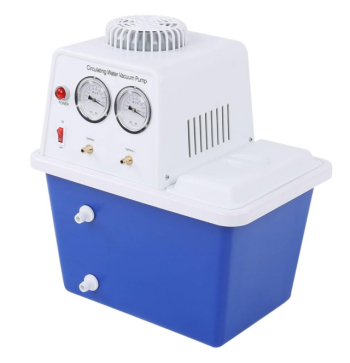
Constant temperature heating devices and circulation pump systems form the backbone of reliable PEMWE (Proton Exchange Membrane Water Electrolysis) single-cell performance evaluation. The heating units simulate high-temperature industrial environments to accelerate reaction kinetics, while circulation pumps maintain system stability by ensuring uniform reactant delivery and actively removing heat and gas bubbles.
Effective evaluation requires precise control over the electrochemical environment. While heating devices drive the reaction efficiency needed for meaningful data, circulation systems preserve that data's integrity by preventing gas accumulation and thermal gradients.
The Role of Thermal Management
To evaluate a catalyst effectively, you must replicate the conditions under which it is designed to operate.
Simulating Industrial Conditions
Constant temperature heating devices are essential for mimicking industrial electrolyzer operating temperatures, such as 80°C.
Testing at ambient temperature often yields insufficient data for industrial applications. By elevating the temperature to realistic levels, researchers can observe the cell's behavior in a representative environment.
Enhancing Reaction Kinetics
The primary electrochemical benefit of these heating devices is the enhancement of reaction kinetics.
Higher temperatures reduce the activation energy required for the electrolysis reaction. This allows for a more accurate assessment of the catalyst's intrinsic activity and efficiency without the bottleneck of sluggish kinetics found at lower temperatures.
The Function of Circulation Systems
While temperature drives the reaction, the circulation pump system manages the physical environment of the electrolyte solution.
Ensuring Reactant Uniformity
The circulation pump maintains a constant flow rate of the electrolyte solution across the cell.
This constant movement ensures that the concentration of reactants remains uniform throughout the testing area. Without this, local depletion of reactants could occur, leading to false performance readings that reflect mass transport limitations rather than true catalyst performance.
Managing Heat and Gas Byproducts
Electrolysis generates significant byproducts, primarily heat and gas bubbles (oxygen and hydrogen).
The circulation system actively removes these byproducts. By flushing away gas bubbles, the pump prevents them from blocking active sites on the catalyst. Simultaneously, the flow removes excess heat, helping to maintain the thermal stability of the testing system.
Critical Dependencies and Stability
The interaction between heating and circulation is what ultimately ensures a stable testing platform.
The Consequence of Poor Bubble Management
If the circulation system fails to remove gas bubbles effectively, the testing system loses stability.
Bubbles can adhere to the electrode surface, reducing the active area available for the reaction. This results in fluctuating voltage readings and unreliable performance data, masking the true capabilities of the cell.
Maintaining Thermal Equilibrium
While the heating device inputs energy, the circulation pump ensures that this thermal energy is distributed evenly.
This prevents the formation of "hot spots" within the cell. A consistent flow rate ensures that the temperature set by the heating device is the actual temperature experienced by the catalyst, ensuring the validity of the kinetic data.
Making the Right Choice for Your Goal
When designing or operating a PEMWE test bench, understanding the specific role of each component helps you prioritize your control parameters.
- If your primary focus is kinetic analysis: Prioritize the precision of your constant temperature heating device to ensure you are accurately reducing activation energy at target industrial temperatures (e.g., 80°C).
- If your primary focus is system stability: Prioritize the calibration of your circulation pump system to ensure flow rates are sufficient to sweep away gas bubbles and prevent mass transport limitations.
A robust evaluation strategy relies on the synergy between precise thermal simulation and active fluid management to yield data that is both accurate and reproducible.
Summary Table:
| Feature | Role in PEMWE Evaluation | Primary Benefit |
|---|---|---|
| Heating Devices | Simulates industrial temperatures (e.g., 80°C) | Accelerates reaction kinetics & reduces activation energy |
| Circulation Pumps | Maintains constant electrolyte flow rate | Ensures reactant uniformity & prevents mass transport limits |
| Bubble Management | Actively removes O2 and H2 gas bubbles | Maintains active catalyst sites & prevents voltage fluctuations |
| Thermal Control | Prevents localized 'hot spots' | Ensures data integrity through system-wide thermal equilibrium |
Elevate Your PEMWE Research with KINTEK Precision
High-performance PEMWE evaluation demands rigorous control over thermal and fluid dynamics. KINTEK specializes in advanced laboratory equipment designed to meet the exacting standards of electrochemical research. From high-temperature furnaces and high-pressure reactors for material synthesis to precise cooling solutions and homogenizers for system stability, we provide the tools you need for reproducible results.
Whether you are analyzing catalyst kinetics or optimizing system stability, our comprehensive portfolio of laboratory equipment and consumables—including PTFE products, ceramics, and electrolytic cells—empowers your laboratory to simulate industrial conditions with ease.
Ready to optimize your PEMWE test bench? Contact KINTEK today to discuss your equipment needs and discover how our expertise can accelerate your hydrogen energy research.
References
- Hui Su, Qinghua Liu. Tensile straining of iridium sites in manganese oxides for proton-exchange membrane water electrolysers. DOI: 10.1038/s41467-023-44483-6
This article is also based on technical information from Kintek Solution Knowledge Base .
Related Products
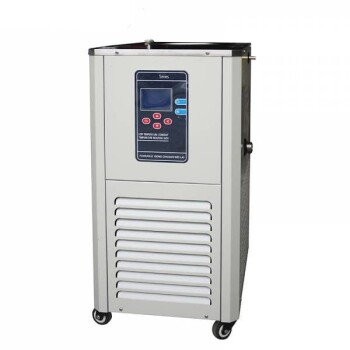
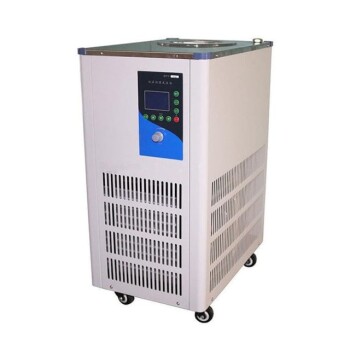
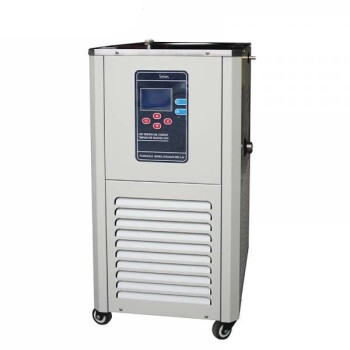
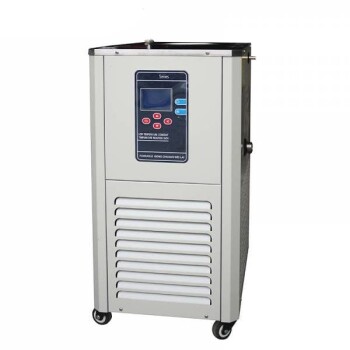
- High Temperature Constant Temperature Heating Circulator Water Bath Chiller Circulator for Reaction Bath
- 100L Heating Chilling Circulator Cooling Water Bath Circulator for High and Low Temperature Constant Temperature Reaction
- 10L Heating Chilling Circulator Cooling Water Bath Circulator for High and Low Temperature Constant Temperature Reaction
- 5L Heating Chilling Circulator Cooling Water Bath Circulator for High and Low Temperature Constant Temperature Reaction
- 20L Heating Chilling Circulator Cooling Water Bath Circulator for High and Low Temperature Constant Temperature Reaction
People Also Ask
- What is the necessity of a circulating water bath in chlorate production? Optimize Yield & Purity with Precision
- How do constant temperature circulators impact weight-loss immersion tests? Ensure Precision in Corrosion Analysis
- How does a constant temperature circulator support the leaching reaction of gold scrap? Optimize Gold Recovery Results
- Why is a constant temperature water bath used for precursor storage in CVD? Achieve Stable Nanocrystalline SiC Deposition
- Why is a high-precision constant temperature water bath necessary for anaerobic digestion? Ensure Success at 37±0.02°C