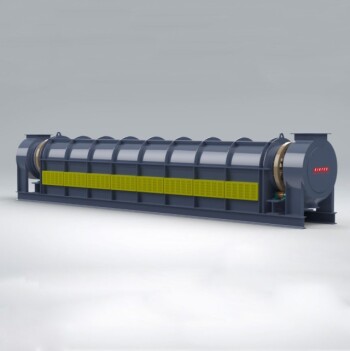
Reactor systems act as precise thermal processing chambers that dictate the physical evolution of microporous solid catalysts. By guiding aerosol droplets through a strict sequence of solvent evaporation, solute concentration, drying, and high-temperature pyrolysis, the reactor ensures that the final particle properties are directly derived from the initial droplet characteristics.
By effectively locking the final particle diameter to the size of the original droplet, spray pyrolysis allows for the production of fine, dispersed particles with highly controllable shapes and chemical compositions.
The Mechanism of Structure Formation
Sequential Thermal Processing
Inside the reactor, the raw material does not merely dry; it undergoes a complex evolution. The system forces droplets to transition through solvent evaporation and solute concentration first.
This is immediately followed by a drying phase and, finally, high-temperature pyrolysis. This specific sequence is critical for setting the internal structure of the catalyst.
Predetermined Particle Sizing
The most distinct influence of the reactor system is its ability to predetermine particle geometry. The diameter of the final solid particle is fixed by the size of the generated aerosol droplet.
This creates a direct correlation between the reactor's input settings (droplet generation) and the output product. It eliminates randomness in particle size distribution.
Controlling Catalyst Properties
Achieved Dispersity and Shape
Because the reactor processes distinct droplets, the resulting output consists of fine, dispersed particles. This prevents the agglomeration often seen in other synthesis methods.
The system allows you to manipulate the reactor environment to strictly control the shape and chemical composition of these particles.
From Powder to High Density
The reactor's influence extends to the post-processing potential of the material. The fine powders produced are specifically engineered to be sintered.
This sintering step transforms the dispersed particles into high-density catalytic powders, suitable for demanding applications requiring robust mechanical stability.
Understanding the Trade-offs
Rigidity of Droplet Dependence
The primary advantage of this system—predetermined sizing—is also its main constraint. Because the final diameter is locked to the original droplet, errors in droplet generation cannot be corrected inside the reactor.
If the aerosol generation is inconsistent, the reactor will faithfully reproduce those inconsistencies in the final solid catalyst.
Thermal Energy Requirements
The process explicitly relies on high-temperature pyrolysis to finalize the chemical composition. This implies that the reactor system must be capable of sustaining intense thermal loads to ensure complete conversion.
Insufficient temperature control during the pyrolysis stage can lead to incomplete solute concentration or inconsistent particle density.
Making the Right Choice for Your Goal
To maximize the efficacy of spray pyrolysis for your specific application, consider the following:
- If your primary focus is Precision Morphology: Prioritize the consistency of your aerosol generation, as the reactor will strictly translate droplet size into final particle diameter.
- If your primary focus is High-Density Performance: Ensure your downstream sintering process is calibrated to the specific chemical composition fixed during the reactor's pyrolysis stage.
The reactor system is not just a drying vessel; it is a geometry-locking tool that defines the ultimate potential of your catalyst.
Summary Table:
| Feature | Influence on Final Properties | Benefit to Catalyst |
|---|---|---|
| Sequential Thermal Processing | Governs evaporation, drying, and pyrolysis stages | Ensures stable internal structure and purity |
| Droplet Size Locking | Directly predetermines the final particle diameter | Eliminates randomness in size distribution |
| Dispersity Control | Processes distinct droplets to prevent agglomeration | Produces fine, uniform, and dispersed powders |
| Pyrolysis Intensity | Finalizes chemical composition and density | Enables high-performance sintering outcomes |
Elevate Your Catalyst Synthesis with KINTEK Precision
Unlock unparalleled control over your material morphology and chemical composition. KINTEK specializes in advanced laboratory equipment designed for the rigorous demands of spray pyrolysis and catalyst research.
Whether you need high-temperature furnaces (tube, muffle, or CVD) to perfect your pyrolysis stages, crushing and milling systems for precursor preparation, or high-pressure reactors and autoclaves for downstream processing, our comprehensive portfolio ensures your research translates into high-density, high-performance results.
Ready to refine your particle engineering? Contact our technical experts today to find the ideal solution for your laboratory needs.
References
- Seham A. Shaban. Catalysis and Nanotechnologies. DOI: 10.21608/ejchem.2012.1168
This article is also based on technical information from Kintek Solution Knowledge Base .
Related Products
- Electric Rotary Kiln Small Rotary Furnace Biomass Pyrolysis Plant
- Electric Rotary Kiln Continuous Working Small Rotary Furnace Heating Pyrolysis Plant
- Customer Made Versatile CVD Tube Furnace Chemical Vapor Deposition Chamber System Equipment
- Electric Rotary Kiln Pyrolysis Furnace Plant Machine Calciner Small Rotary Kiln Rotating Furnace
- Microwave Plasma Chemical Vapor Deposition MPCVD Machine System Reactor for Lab and Diamond Growth
People Also Ask
- What is the temperature of a rotating kiln? It Depends on Your Material and Process Goal
- What are the different types of calciners? A Guide to Selecting the Right Thermal Processing Equipment
- What are the principles of a rotary kiln? Master the Mechanics of High-Temperature Processing
- How are rotary kilns heated? Direct vs. Indirect Heating Methods Explained
- Is rotary kiln a furnace? Discover the Key Differences for Industrial Processing