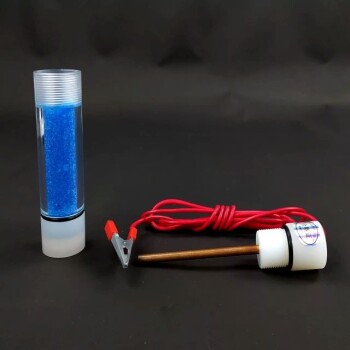
Salt bridges combined with potassium chloride (KCl) agar gels act as a critical protective interface in electrochemical cells. This setup physically isolates sensitive reference electrodes from harsh experimental environments—specifically high-temperature electrolytes—while preserving the necessary electrical connection through ionic conductivity.
By decoupling the reference electrode from the heat and chemical aggression of the main cell, this configuration ensures data stability and prevents sensor degradation during extended testing.
The Dual Mechanism of Protection
Physical Isolation from Heat
The primary threat to reference electrodes in many electrolysis setups is thermal damage.
Salt bridges create a necessary physical distance between the electrode and the high-temperature electrolyte.
By placing the electrode outside the hot zone and connecting it via the bridge, you prevent the heat from compromising the electrode's structural integrity or internal chemistry.
Maintaining Ionic Conductivity
While physical separation is necessary for protection, electrical isolation would ruin the experiment.
KCl agar gels provide a conductive medium that allows ions to flow freely between the separated compartments.
This ensures the circuit remains complete, allowing for the accurate monitoring of the anode potential without direct liquid-to-liquid contact.
Ensuring Measurement Stability
Preventing Potential Drift
Reference electrodes rely on stable internal conditions to provide a constant baseline voltage.
Exposure to high temperatures can cause significant interference with the reference potential, leading to drifting or erratic data.
The salt bridge acts as a thermal buffer, keeping the reference electrode at a stable, lower temperature to ensure the readings reflect the cell's activity, not the sensor's reaction to heat.
Durability for Extended Electrolysis
Long-term experiments are particularly prone to sensor failure.
Direct exposure to the electrolyte over extended electrolysis periods can lead to contamination or degradation of the reference electrode.
The agar gel matrix slows down the diffusion of contaminants, allowing for longer monitoring periods without the need for frequent sensor replacement or recalibration.
Understanding the Trade-offs
Added Resistance
While the agar gel allows ionic flow, it is less conductive than a pure liquid solution.
Introducing a salt bridge adds internal resistance (IR drop) to the measurement circuit, which may require compensation in highly sensitive setups.
Maintenance Requirements
The agar gel is not permanent; it can dry out or degrade over time.
Operators must ensure the gel remains hydrated and structural integrity is maintained, specifically in very long experiments where the gel itself might eventually break down.
Making the Right Choice for Your Experiment
This setup is not required for every electrochemical cell, but it is essential for specific conditions.
- If your primary focus is high-temperature electrolysis: Use a salt bridge with KCl agar to prevent thermal destruction of your reference electrode.
- If your primary focus is long-term monitoring: Implement this setup to minimize signal drift and electrode contamination over extended periods.
This approach allows you to obtain accurate anode potential data without sacrificing your sensors to the harsh environment of the cell.
Summary Table:
| Feature | Protection Mechanism | Primary Benefit |
|---|---|---|
| Salt Bridge | Physical Separation | Isolates electrode from high temperatures and corrosive environments. |
| KCl Agar Gel | Ionic Conductivity | Maintains circuit continuity while preventing direct liquid-to-liquid contact. |
| Thermal Buffering | Temperature Control | Prevents potential drift and ensures a constant baseline voltage measurement. |
| Agar Matrix | Diffusion Barrier | Slows contaminant infiltration, extending the lifespan of sensitive sensors. |
Maximize Your Electrochemical Precision with KINTEK
Don't let high temperatures or long electrolysis cycles compromise your research data. KINTEK specializes in advanced laboratory solutions, providing the high-quality electrolytic cells, electrodes, and consumables necessary to maintain stable and accurate measurements in the most demanding environments.
Whether you are conducting battery research, high-temperature electrolysis, or precise material testing, our comprehensive portfolio—including high-temperature reactors, ceramic crucibles, and specialized sensors—is designed to meet the rigorous standards of your lab.
Enhance your experimental integrity today. Contact our technical experts at KINTEK to find the perfect equipment and consumables for your specific electrochemical applications!
References
- Mika Sahlman, Mari Lundström. Detachment and flow behaviour of anode slimes in high nickel copper electrorefining. DOI: 10.37190/ppmp/186194
This article is also based on technical information from Kintek Solution Knowledge Base .
Related Products
- Reference Electrode Calomel Silver Chloride Mercury Sulfate for Laboratory Use
- Multifunctional Electrolytic Electrochemical Cell Water Bath Single Layer Double Layer
- Square Lab Press Mold for Laboratory Applications
- Laboratory CVD Boron Doped Diamond Materials
- Copper Sulfate Reference Electrode for Laboratory Use
People Also Ask
- What is the function of a reference electrode? Master Precision in Three-Electrode Reactor Reconstruction
- What is the recommended maintenance for the filling solution of a reference electrode? A Guide to Stable & Accurate Readings
- Which electrode is used as a ground reference? Master the Key to Accurate Electrochemical Measurements
- What is the reference electrode in potentiometry? The Key to Stable & Accurate Measurements
- Which electrode is used as a reference? A Guide to Accurate Electrochemical Measurements