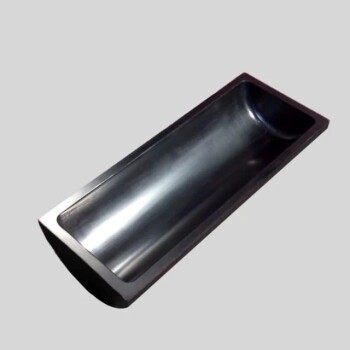
Precision thermal management is the defining factor in the success of Supercritical Water Gasification (SCWG). Semi-cylindrical electric heating modules improve performance by physically contouring to the reactor tube, creating a uniform thermal field that ensures biomass rapidly reaches the supercritical state. When paired with ceramic fiber insulation, the system minimizes heat dissipation, significantly boosting energy efficiency while protecting external control components from thermal damage.
Core Takeaway Achieving the supercritical state requires maintaining extreme temperatures (650-700°C) without fluctuation. The combination of form-fitting heaters and high-grade insulation creates a stable, energy-efficient thermal envelope that maximizes reaction rates and prevents damage to sensitive peripheral equipment.
Achieving Thermal Uniformity and Speed
The SCWG process demands a rapid transition to supercritical conditions to maximize gasification efficiency. The design of the heating element is critical to this goal.
The Advantage of the Semi-Cylindrical Design
Standard flat heaters often leave gaps between the heat source and the reactor wall. Semi-cylindrical modules are engineered to fit closely around tubular reactors.
This close contact eliminates air gaps, ensuring that heat transfer is direct and efficient. It creates a uniform thermal field along the length of the reactor, preventing cold spots that could stall the reaction.
Accelerating the Reaction
To achieve high gasification efficiency, water and biomass must reach the supercritical state quickly.
The form-fitting nature of these modules facilitates rapid heating rates. This speed ensures the reactants spend the maximum amount of time in the active supercritical phase, which is essential for breaking down complex biomass structures.
The Role of Ceramic Fiber Insulation
Generating heat is only half the equation; retaining it is equally important. High-performance ceramic fiber insulation addresses the deep need for system efficiency and safety.
Maximizing Energy Efficiency
SCWG operates at high temperatures, typically between 650-700°C. Without adequate insulation, the energy required to maintain this temperature would be prohibitive.
Ceramic fiber insulation acts as a high-performance thermal barrier. It drastically reduces heat dissipation into the environment, ensuring that the energy consumed by the electric heaters is directed solely toward the chemical reaction.
Protecting Peripheral Equipment
A reactor does not operate in a vacuum; it is surrounded by sensors, wiring, and control systems.
By minimizing external heat loss, the insulation protects these surrounding sensors and control components. This allows for precise management of temperature gradients without the risk of thermal interference or damage to delicate electronics.
Understanding the Operational Trade-offs
While this heating and insulation configuration is optimal for performance, it introduces specific engineering considerations that must be managed.
Accessibility vs. Efficiency
The tight fit of semi-cylindrical modules and the density of ceramic insulation create a highly efficient thermal "jacket." However, this makes visual inspection of the reactor tube surface difficult during operation.
Thermal Inertia
High-quality insulation retains heat exceptionally well. While this is good for efficiency, it can lead to high thermal inertia. This means the system may take longer to cool down for maintenance or emergency shutdowns compared to less insulated systems.
Making the Right Choice for Your Goal
To optimize your SCWG reactor design, align your component choices with your primary operational objectives.
- If your primary focus is Reaction Yield: Prioritize the fit and contact of the semi-cylindrical modules to ensure the uniform thermal field necessary for a complete reaction.
- If your primary focus is System Longevity: Focus on the quality and thickness of the ceramic fiber insulation to protect external electronics and reduce thermal stress on the facility.
Success in SCWG relies not just on generating heat, but on controlling it with absolute precision.
Summary Table:
| Feature | Benefit in SCWG | Impact on Performance |
|---|---|---|
| Semi-Cylindrical Design | Direct contact with reactor tubes | Eliminates cold spots and ensures uniform heating |
| Rapid Heating Rates | Faster transition to supercritical state | Increases reaction time and gasification yield |
| Ceramic Fiber Insulation | High-performance thermal barrier | Reduces energy waste and stabilizes core temperature |
| Thermal Protection | Minimizes heat dissipation | Protects sensors, wiring, and peripheral electronics |
Maximize Your SCWG Research Efficiency with KINTEK
Precision thermal management is the cornerstone of successful Supercritical Water Gasification. KINTEK specializes in advanced laboratory solutions, providing high-performance high-temperature high-pressure reactors and autoclaves equipped with custom-engineered heating and insulation systems.
Our comprehensive portfolio includes:
- High-Temperature Furnaces: Muffle, tube, and vacuum systems for diverse research needs.
- Precision Equipment: Crushing, milling, and hydraulic presses for material preparation.
- Specialized Lab Tools: Electrolytic cells, cooling solutions, and high-quality ceramic consumables.
Whether you are focusing on reaction yield or system longevity, our experts are ready to help you select the ideal configuration for your laboratory. Contact KINTEK today to optimize your thermal processes!
References
- Cataldo De Blasio, Andrea Magnano. Implications on Feedstock Processing and Safety Issues for Semi-Batch Operations in Supercritical Water Gasification of Biomass. DOI: 10.3390/en14102863
This article is also based on technical information from Kintek Solution Knowledge Base .
Related Products
- Customizable High Pressure Reactors for Advanced Scientific and Industrial Applications
- Customizable Laboratory High Temperature High Pressure Reactors for Diverse Scientific Applications
- Visual High-Pressure Reactor for In-Situ Observation
- Stainless High Pressure Autoclave Reactor Laboratory Pressure Reactor
- High Pressure Laboratory Autoclave Reactor for Hydrothermal Synthesis
People Also Ask
- What is the function of high-pressure reactors in the synthesis of MFI-type zeolites? Master Dry Gel Conversion.
- Graphene Fiber Synthesis: Key High-Pressure Reactor Processing Conditions Explained
- What is the primary function of a high-pressure reactor in NiMoO4 preparation? Optimize Hydrothermal Catalyst Synthesis
- What reactor is used for high pressure reactions? Select the Right Autoclave for Your Lab
- What are the hazards of high pressure reactors? A Guide to Managing Explosive Risks