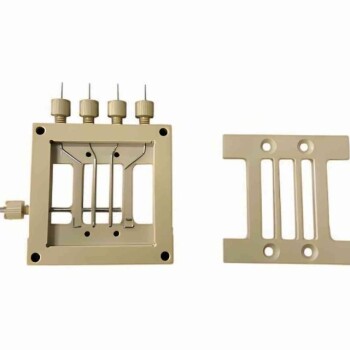
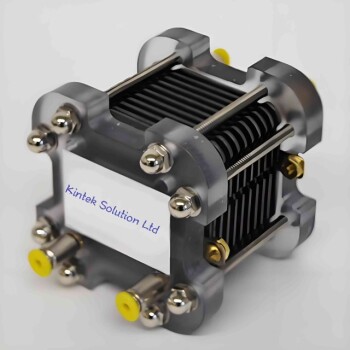
Precision is the defining characteristic of specialized electrolytic cells in corrosion testing. These devices facilitate potentiodynamic polarization by establishing a strictly controlled interface between the stainless steel specimen and the organic acid electrolyte. By ensuring consistent geometric contact, the cell eliminates physical variables that could otherwise distort electrochemical readings.
The primary value of a specialized cell lies in its ability to isolate the specific effects of solution chemistry—such as acid concentration and water content—by standardizing the physical contact between the electrode and the environment.
The Importance of Geometric Control
Standardizing the Interface
The core function of these specialized cells is to provide a highly controlled environment.
To obtain reproducible data, the contact area between the stainless steel and the organic acid solution must be exact.
These cells ensure consistent geometric contact, preventing edge effects or irregular wetting that can skew current density measurements.
Eliminating Environmental Noise
In open or unspecialized setups, external factors can interfere with the interaction between the metal and the acid.
Specialized cells isolate the specimen, ensuring that the measured current is solely a result of the electrochemical reaction with the specific electrolyte.
Critical Corrosion Parameters Identified
Determining Pitting Potential
One of the most vital metrics in stainless steel analysis is the pitting potential.
This parameter indicates the voltage at which the protective oxide layer breaks down, leading to localized corrosion.
Specialized cells allow researchers to pinpoint this value accurately by maintaining a stable testing environment.
Measuring Passivation Current Density
The cells are essential for accurately recording the passivation current density.
This measurement tells you how much current is required to maintain the protective film on the steel's surface.
Accurate readings here are necessary to judge the material's long-term resistance to the organic acid.
Assessing Film Stability
Beyond the initial formation of the protective layer, you must understand the stability of the passivation film.
The controlled nature of the cell allows for stress-testing this film under increasing potential.
This helps predict whether the passivation will hold up or degrade over time in the target environment.
Differentiating Chemical Variables
Isolating Acid Concentration Effects
Organic acids behave differently depending on their strength and concentration.
Because the physical setup is constant, any change in data can be directly attributed to varying organic acid concentrations.
This allows for precise comparative analysis between different chemical environments.
The Impact of Water Content
Water content in organic acids significantly alters corrosivity.
Specialized cells enable the differentiation of electrochemical responses based specifically on water content within the solution.
This helps in establishing safe operating limits for stainless steel in industrial organic acid applications.
Understanding the Trade-offs
Sensitivity to Sample Preparation
Because these cells rely on consistent geometric contact, they are highly sensitive to specimen preparation.
If the stainless steel sample is not polished or shaped to perfectly match the cell's design, the "controlled environment" is compromised.
This creates a risk of crevice corrosion artifacts that can mimic pitting, leading to false positives in the data.
Specificity of Application
While these cells excel at specific tasks, they are often designed for a narrow range of sample geometries.
A cell optimized for flat coupons may not accommodate curved sections of pipe or irregular shapes.
This lack of versatility means different sample types often require distinct, expensive specialized hardware.
Making the Right Choice for Your Goal
To maximize the utility of your electrochemical testing, align your analysis with your specific engineering objectives.
- If your primary focus is Material Selection: Prioritize measuring the pitting potential to determine which stainless steel grade resists localized breakdown in your specific acid.
- If your primary focus is Process Safety: Focus on the stability of the passivation film to ensure the material can withstand fluctuations in water content or acid concentration.
Specialized electrolytic cells transform variable conditions into a controlled experiment, turning raw electrochemical noise into actionable corrosion data.
Summary Table:
| Feature | Benefit in Electrochemical Testing |
|---|---|
| Geometric Control | Eliminates edge effects and ensures precise current density measurements. |
| Environmental Isolation | Minimizes external noise to focus solely on the metal-electrolyte reaction. |
| Parameter Accuracy | Facilitates exact determination of pitting potential and passivation current density. |
| Chemical Sensitivity | Allows for isolated study of acid concentration and water content effects. |
Elevate Your Corrosion Research with KINTEK Precision
Unlock more accurate and reproducible electrochemical data with KINTEK’s specialized laboratory solutions. Whether you are analyzing the passivation of stainless steel or the stability of protective films in harsh organic acids, our high-performance electrolytic cells and electrodes provide the geometric control and environmental isolation required for excellence.
From high-temperature high-pressure reactors to specialized battery research tools and cooling solutions like ULT freezers, KINTEK empowers researchers and industrial labs with a comprehensive range of equipment designed for precision.
Ready to optimize your testing accuracy? Contact our experts today to find the perfect electrochemical setup for your material selection and process safety needs!
References
- Aqeel Abbas, Rami K. Suleiman. Influence of Organic Acids and Related Organic Compounds on Corrosion Behavior of Stainless Steel—A Critical Review. DOI: 10.3390/met13081479
This article is also based on technical information from Kintek Solution Knowledge Base .
Related Products
- Customizable PEM Electrolysis Cells for Diverse Research Applications
- PTFE Electrolytic Cell Electrochemical Cell Corrosion-Resistant Sealed and Non-Sealed
- Quartz Electrolytic Electrochemical Cell for Electrochemical Experiments
- Electrolytic Electrochemical Cell for Coating Evaluation
- Electrolytic Electrochemical Cell with Five-Port
People Also Ask
- What are the risks of improper voltage control in an electrolysis cell? Avoid Costly Damage and Inefficiency
- What are the opening configurations for the non-sealed and sealed versions of the electrolysis cell? Optimize Your Electrochemical Setup
- What is an electrolysis cell? A Guide to Driving Chemical Reactions with Electricity
- What parameters must be strictly controlled during the electrolysis process? Ensure Precision and Efficiency
- What are the precautions for heating or sterilizing an electrolysis cell? Avoid Damaging Sensitive Components