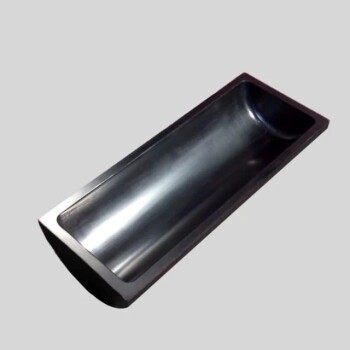
Graphite heaters are the primary thermal engines of high-pressure synthesis environments. By utilizing direct current (DC) to generate resistive heat, these heaters operate internally to maintain stable temperatures between 800°C and 1000°C while subjected to extreme pressures of up to 4 GPa. This specific combination of heat and pressure provides the necessary kinetic energy for precursor atoms to rearrange into specialized crystalline structures, such as rock-salt phase solid solutions.
The graphite heater functions as a precision resistive element that enables material synthesis by providing the thermal energy required for atomic diffusion under high-pressure conditions. This process allows researchers to overcome thermodynamic energy barriers, facilitating the creation of stable, high-performance lattices and the efficient exfoliation of carbon-based materials.
The Mechanics of Internal Resistive Heating
Converting Electrical Energy to Thermal Stability
A graphite heater operates on the principle of Joule heating, where the resistance of the graphite to a direct current (DC) produces a consistent thermal output. This internal heating method is essential because it allows for localized temperature control within the reaction chamber without compromising the structural integrity of the high-pressure vessel.
Operating Under Extreme Pressure
Maintaining temperatures between 800°C and 1000°C while under 4 GPa of pressure is a significant engineering feat. The graphite heater must remain structurally stable under these conditions to ensure that the thermal gradient remains uniform across the precursor material.
Precise Temperature Control
The ability to maintain a steady temperature is critical for material synthesis. This stability ensures that the energy input is predictable, allowing for the consistent formation of complex regular lattice arrangements in the resulting material.
Catalyzing Material Transformation
Overcoming Phase Transition Barriers
High-pressure synthesis requires atoms to move through a solid or semi-solid state to reach their final configuration. The heat provided by the graphite element increases diffusion kinetics, giving precursor atoms enough energy to overcome the phase transition energy barriers that would otherwise prevent the formation of a rock-salt phase solid solution.
Facilitating Exfoliation and Synthesis
In some high-pressure reactors, the heater works in tandem with mechanical forces to process carbon-based materials like spent graphite. The thermal energy helps weaken the van der Waals forces between graphite layers, making it easier for the reactor to exfoliate the material into high-value products like graphene or reduced graphene oxide (rGO).
Enabling Advanced Solid Solutions
By providing a controlled environment, the graphite heater allows for the synthesis of materials with specific structural properties. This is particularly important for creating solid solutions, where different elements must be perfectly integrated into a single, cohesive crystalline phase.
Understanding the Trade-offs and Limitations
Material Degradation and Lifespan
While graphite is chosen for its high-temperature resilience, it is not immune to oxidative degradation or structural fatigue over multiple high-pressure cycles. The heater is often considered a consumable component that must be replaced to ensure the purity and consistency of the synthesis process.
Chemical Reactivity Risks
At temperatures nearing 1000°C, graphite can become chemically reactive with certain precursors or atmospheric contaminants. This necessitates the use of protective sleeves or inert environments within the reaction chamber to prevent the heater from contaminating the material being synthesized.
Energy Efficiency vs. Thermal Uniformity
Resistive heating is highly efficient for internal applications, but achieving perfect thermal uniformity across a large sample can be difficult. Variations in the graphite's density or thickness can lead to "hot spots," which may cause localized defects in the synthesized material.
Making the Right Choice for Your Synthesis Goal
The implementation of a graphite heater should be tailored to the specific crystalline or structural outcome required for your project.
- If your primary focus is phase transition and lattice stability: Use the heater to maintain a steady 800-1000°C range to ensure atomic diffusion is sufficient to overcome the energy barriers of your specific precursors.
- If your primary focus is the exfoliation of graphene or rGO: Prioritize the use of the heater in conjunction with high-intensity shear or oxidation methods to effectively overcome van der Waals forces.
- If your primary focus is high-purity solid solution synthesis: Implement secondary shielding around the graphite element to prevent carbon contamination from migrating into your sample at peak temperatures.
By mastering the thermal output of the graphite heater within the high-pressure chamber, you can precisely dictate the final structural characteristics of your synthesized materials.
Summary Table:
| Feature | Specification/Mechanism | Benefit for Synthesis |
|---|---|---|
| Heating Method | Joule (Resistive) Heating via DC | Precise, localized thermal control within the chamber |
| Temperature Range | 800°C to 1000°C | Increases diffusion kinetics for atomic rearrangement |
| Pressure Stability | Up to 4 GPa | Facilitates the formation of stable, high-performance lattices |
| Key Applications | Solid solutions, Graphene exfoliation | Enables creation of rock-salt phases and rGO |
| Component Role | Internal Thermal Engine | Overcomes thermodynamic energy barriers efficiently |
Elevate Your Synthesis Precision with KINTEK
Unlock the full potential of your material research with KINTEK’s advanced thermal and pressure solutions. Whether you are synthesizing high-performance solid solutions or mastering the exfoliation of carbon-based materials, our specialized equipment—including high-temperature high-pressure reactors, autoclaves, and precision hydraulic presses—is engineered to withstand the most demanding lab environments.
Why choose KINTEK?
- Comprehensive Range: From muffle and vacuum furnaces to CVD and induction melting systems.
- Precision Engineering: High-durability graphite heaters and ceramic consumables designed for uniform thermal gradients.
- Expert Support: We help researchers overcome thermodynamic barriers with reliable tools for battery research, material crushing, and sample preparation.
Ready to optimize your high-pressure synthesis? Contact KINTEK today to discuss your specific requirements and discover how our laboratory expertise can accelerate your next breakthrough.
References
- Nikolai O. Taibarei, А. Н. Баранов. High-Pressure Synthesis of Cubic ZnO and Its Solid Solutions with MgO Doped with Li, Na, and K. DOI: 10.3390/ma16155341
This article is also based on technical information from Kintek Solution Knowledge Base .
Related Products
- Carbon Graphite Boat -Laboratory Tube Furnace with Cover
- High Purity Pure Graphite Crucible for Evaporation
- High Temperature Constant Temperature Heating Circulator Water Bath Chiller Circulator for Reaction Bath
- Horizontal High Temperature Graphite Vacuum Graphitization Furnace
- Vertical High Temperature Graphite Vacuum Graphitization Furnace
People Also Ask
- What is the use of graphite furnace? Achieve Extreme-Temperature Processing for Advanced Materials
- Why is graphite used in furnaces? For Extreme Heat, Purity, and Efficiency
- What core conditions do high-temperature graphite tube furnaces provide during the pressureless sintering of Boron Carbide (B4C)?
- What is the use of graphite tube? Essential for Extreme Heat & Corrosive Environments
- What is the disadvantage of graphite furnace? Managing Reactivity and Contamination Risks